Amla Powder Benefits: Indian Gooseberry for Hair, Immunity and Digestion
Amla (Indian gooseberry) is one of Ayurveda's most revered herbs, packed with Vitamin C and antioxidants that may support immunity, hair health and digestion. Here is what the evidence says about amla powder and how to use it.

Amla powder (Indian gooseberry, Phyllanthus emblica) is one of Ayurveda's most celebrated herbs, rich in Vitamin C, ellagitannins and antioxidants. It is traditionally used to support immunity, hair health, digestion and liver function. One teaspoon a day in warm water or mixed with honey is a common way to take it.
- Amla (Phyllanthus emblica) is one of Ayurveda's most important herbs and one of the three fruits in Triphala.
- Amla powder is traditionally used to support immunity, digestive health and hair nourishment.
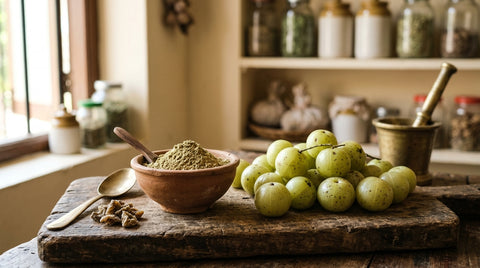
- Genuine amla powder is pale yellow-green in colour, tastes sour then astringent, and has a characteristic sour-sweet aroma.
- Amla does not change skin tone or whiten skin; claims of fairness from amla are not supported by evidence.
- People taking diabetes or blood-pressure medicines should consult their doctor before taking amla powder regularly, as it may interact with those medications.
What is amla?
Amla, known in Sanskrit as Amalaki or Dhatri, is a small, greenish-yellow fruit from the tree Phyllanthus emblica (synonym Emblica officinalis). It is one of the most important herbs in Ayurvedic medicine and is one of the three fruits that make up Triphala — alongside harad (Terminalia chebula) and baheda (Terminalia bellirica). The name "Dhatri" means "nurse" or "foster mother" in Sanskrit, reflecting its deep importance as a nourishing herb in traditional texts.
The fruit is sour, astringent and dense with nutrients. In India it is eaten fresh, pickled, dried and powdered. As a powder it is convenient to use year-round and retains a good deal of the fruit's nutritional profile.
Names in different languages
| Language | Name |
|---|---|
| Hindi | आंवला (Amla) |
| Sanskrit | आमलकी (Amalaki), धात्री (Dhatri) |
| English | Indian Gooseberry |
| Tamil | நெல்லிக்காய் (Nellikai) |
| Marathi | आवळा (Awala) |
| Bengali | আমলকি (Amloki) |
| Botanical | Phyllanthus emblica syn. Emblica officinalis |
How to identify genuine amla powder
The market is full of adulterated herb powders. Here is how to check that your amla powder is the real thing:
- Colour: good amla powder is pale yellow-green. If the powder looks grey, dull brown or unnaturally bright, it is likely old, adulterated or mixed with something else.
- Taste: real amla tastes sharply sour first, then astringent (it dries the mouth). If it tastes only sour or has no astringency at all, something is off.
- Aroma: authentic amla powder has a characteristic sour-sweet, slightly tangy smell. A stale or musty smell means the powder is old.
- Texture: fine, smooth and slightly hygroscopic (it may clump in humidity).
Nutrition: why amla is so valued
Fresh amla is one of the richest plant sources of Vitamin C — widely reported to contain around 600–700 mg per 100 g of fresh fruit, though the exact concentration varies significantly by variety, season and processing method. For comparison, a fresh orange has around 50 mg per 100 g, making amla approximately 10–14 times richer in Vitamin C by weight. The Vitamin C in amla is also more stable than that in many other fruits because it is bound to tannins, which may slow its oxidation.
Beyond Vitamin C, amla is rich in:
- Ellagitannins and gallotannins — potent antioxidant polyphenols
- Quercetin and kaempferol — flavonoids with antioxidant and anti-inflammatory properties in traditional use
- Fibre — supports digestive regularity
- Chromium — a trace mineral of interest for blood sugar support
Amla powder benefits
1. Immunity support
Vitamin C is well established as a nutrient important for normal immune function. It supports the production and activity of white blood cells and acts as an antioxidant throughout the body. Amla's high Vitamin C content, combined with its ellagitannins, makes it one of Ayurveda's go-to herbs for building what practitioners call ojas — overall vitality and resilience. Amla powder may help the body cope with seasonal infections when taken as part of a balanced diet, though it is not a cure or treatment for any illness.
2. Hair health
Amla is probably the most widely used herb in Indian hair care. It is traditionally used to nourish hair follicles, reduce hair fall, strengthen the hair shaft and support scalp health. Regular use of amla powder — both internally and applied externally as a hair mask — is a long-standing practice across India.
Amla is also traditionally used to address premature greying. Important note: amla may support pigmentation pathways traditionally, but it does not reverse greying that is caused by genetics. If your greying is hereditary, amla will not change it. Early or stress-related greying may respond differently, but this should not be overstated.
How to use amla powder as a hair mask: Mix 2–3 tablespoons of amla powder with enough water (or coconut oil, or plain yogurt) to make a smooth paste. Apply it to the scalp and along the hair length. Leave it on for 30–60 minutes, then rinse thoroughly with plain water and a mild shampoo. Use once or twice a week.
3. Skin health
Amla's antioxidant properties may support healthy skin by reducing oxidative stress, which contributes to cellular aging. It is traditionally used in Ayurveda as a rasayana — a rejuvenating herb — and is included in many formulations intended for skin health.
Important — amla does not change or whiten skin tone. Claims that amla powder lightens or "fairens" skin are not supported by scientific evidence. Amla is an antioxidant herb; it does not alter melanin production in a way that changes skin colour. If you see products claiming amla will give you fair skin, those claims are not evidence-based. Amla supports general skin health as part of a nourishing diet, and that is its appropriate role.
4. Digestive health
Amla is a natural source of dietary fibre, which supports bowel regularity and helps prevent constipation. In Ayurveda, amla is considered an important herb for balancing Pitta dosha, which governs digestive fire. It is used to cool and soothe the digestive tract and may support a healthy gut environment. As part of Triphala, it is one of Ayurveda's most prescribed formulations for digestive health. For more about another good digestive herb, see our guide on giloy benefits.
5. Blood sugar support
Amla contains chromium, a trace mineral that may support insulin sensitivity. Some traditional Ayurvedic formulations for blood sugar balance include amla as an ingredient. Research on amla for blood sugar is at an early stage and results vary.
Critical note: if you have diabetes and take medication, do not take amla powder regularly without consulting your doctor first. Amla may lower blood sugar and, combined with medication, could cause it to drop too low. Amla powder is not a substitute for prescribed diabetes medication.
6. Heart health
The antioxidants in amla, particularly its tannins and Vitamin C, may help reduce the oxidation of LDL cholesterol, which is a process associated with cardiovascular risk. Amla is traditionally used as a heart tonic in Ayurveda, included in formulations intended to strengthen the heart muscle and support circulation. This is a traditional use; amla is not a treatment for any heart condition and should not replace medical care.
7. Eye health
Vitamin C is an important nutrient for eye health — it is found in high concentration in the lens of the eye and helps protect against oxidative damage. Amla is traditionally used in Ayurvedic eye formulations, and Triphala (which contains amla) is used as an eyewash in traditional practice. If you have any eye condition, always see an eye specialist rather than relying on home remedies.
8. Liver support
Amla is traditionally used as a liver tonic in Ayurveda. Its antioxidant compounds may support liver cell health by reducing oxidative stress. It is often included in Ayurvedic formulations for liver function alongside other herbs. This is a traditional use and amla should not replace medical treatment for any liver condition.
How to use amla powder
| Method | How to do it | Notes |
|---|---|---|
| With warm water | Stir 1 tsp amla powder into a glass of warm water. Drink on an empty stomach in the morning. | The most common daily use. May taste quite sour at first. |
| With honey | Mix 1 tsp amla powder with raw honey to make a paste. Take directly or stir into water. | Honey softens the sourness. A traditional Ayurvedic combination. |
| Hair mask | Mix 2–3 tbsp amla powder with water, coconut oil or yogurt to a paste. Apply to scalp and hair. Leave 30–60 min, then rinse. | Use once or twice a week. May temporarily tint light hair. |
| In food or smoothies | Add ½–1 tsp to a smoothie, lassi, or dal. Stir into warm (not boiling) drinks to preserve Vitamin C. | Heat above ~70°C can degrade some Vitamin C. |
| As Triphala | Combine equal parts amla, harad and baheda powders. Take ½–1 tsp at night with warm water. | A classic Ayurvedic digestive formula. Consult a practitioner for the right dose. |

Amla powder vs fresh amla vs amla juice
| Amla Powder | Fresh Amla | Amla Juice | |
|---|---|---|---|
| Availability | Year-round | Seasonal (Oct–Feb) | Year-round |
| Vitamin C | Good, some loss in drying | Highest | Variable; check for added sugar |
| Convenience | Easy to store; easy to use in hair masks | Best eaten fresh; harder to store | Ready to drink |
| Fibre | Yes — whole fruit powder | Yes | Low — fibre mostly removed |
| Best for | Daily internal use, hair masks, Triphala | Direct consumption, pickling | Quick dose of antioxidants |
| Price | Economical per dose | Seasonal and regional | Often more expensive per dose |
Amla in Ayurveda
Amla holds a unique place in Ayurveda as one of the few herbs that is said to contain five of the six tastes (sour, sweet, bitter, pungent and astringent — all except salty). It is classified as a tridoshic rasayana, meaning it is traditionally considered balancing for all three doshas (Vata, Pitta and Kapha). It is one of the primary ingredients in Chyawanprash, the traditional Ayurvedic herbal jam that has been used in India for centuries as a general tonic. See our overview of moringa powder benefits for another highly valued tonic herb.
Side effects and precautions
Amla is widely considered safe at normal food and supplement doses. However, there are some precautions to be aware of:
- Blood-thinning effect: amla may have mild blood-thinning properties. If you are due to have surgery, stop taking amla powder at least two weeks beforehand and inform your surgeon.
- Diabetes medication interaction: amla may lower blood sugar. If you take insulin or oral diabetes medicines, combining them with amla could cause blood sugar to drop too low. Always consult your doctor before taking amla regularly.
- Iron supplement interaction: amla's tannins may reduce the absorption of iron supplements if taken together. If you take iron supplements, space them at least two hours apart from amla.
- Pregnancy: amla as a food (small amounts in diet) is generally considered safe, but large supplemental doses are not recommended in pregnancy. Consult your doctor.
- Excessive use: too much amla powder can cause loose stools, acidity or stomach upset. Stick to 1 teaspoon (approximately 3–5 g) per day unless advised otherwise by a practitioner.
- Blood pressure medicines: some early research suggests amla may affect blood pressure. If you are on BP medication, speak to your doctor before taking amla regularly.
When to see a doctor
Amla is a food-grade herb and is generally safe, but please see a doctor if you experience any of the following: persistent digestive issues, unexplained loose stools lasting more than a few days, unusual bleeding or bruising, signs of very low blood sugar (dizziness, sweating, confusion) if you are on diabetes medication, or any severe or unexpected reaction after starting amla. If you are managing diabetes, high blood pressure, a liver condition or are pregnant, always discuss taking amla with your doctor before starting.
Amla and other classic Ayurvedic herbs
Amla pairs well with many other traditional herbs. In Triphala it works alongside harad and baheda for digestive support. It is also commonly combined with ashwagandha in energy and immunity formulations. For a deeper look at another adaptogenic herb, read our guide on gokhru (small caltrops) benefits. For mulethi, another classic soothing herb, see our mulethi benefits guide. And for kalonji, read about kalonji (nigella) benefits.
Buy amla powder
Dhanyawad Ayurved stocks Amla Powder (Indian Gooseberry) at ₹85 per 100 g, delivered across India. Our amla powder is pure, without additives or fillers. For the best experience, store it in an airtight jar away from moisture and use within six months of opening.
Frequently Asked Questions
What are the benefits of amla powder?
Amla powder is traditionally used to support immunity, hair health, digestion, skin health and liver function. It is rich in Vitamin C, ellagitannins and antioxidant flavonoids. As part of a balanced diet and healthy lifestyle, it may support overall vitality. It is not a treatment for any disease, and results vary between individuals.
How do you use amla powder for hair?
Mix 2–3 tablespoons of amla powder with enough water, coconut oil or yogurt to form a smooth paste. Apply it to your scalp and hair, leave it on for 30–60 minutes, then rinse thoroughly with water and a mild shampoo. Use once or twice a week for best results. This is a traditional practice and outcomes vary.
How much amla powder should I take daily?
A common starting dose is one teaspoon (approximately 3–5 g) mixed into warm water, once daily. Most traditional texts and practitioners suggest not exceeding one tablespoon per day without guidance. Start with a small amount to see how your body responds, and increase gradually. If you have any health condition, consult your doctor first.
Can amla powder be taken on an empty stomach?
Yes, and this is the traditional way to take it — one teaspoon in a glass of warm water first thing in the morning on an empty stomach. Some people with sensitive stomachs may find it slightly acidic at first; if that happens, take it with food or dilute it more. The sourness usually becomes less noticeable over time.
Is amla powder good for diabetes?
Amla contains chromium and has been studied for possible blood sugar support, but the evidence is not conclusive. More importantly, amla may interact with diabetes medications and could cause blood sugar to drop too low if taken alongside them. If you have diabetes, you must consult your doctor before taking amla powder regularly. It is not a substitute for prescribed medication.
Does amla powder have side effects?
At normal doses (around 1 tsp per day), amla powder is generally well tolerated. Possible side effects include loose stools or mild acidity if taken in large amounts. It may interact with blood-thinning medicines, diabetes medications and iron supplements. Avoid large doses in pregnancy. Always stop taking it before planned surgery and inform your healthcare provider.
What is the difference between amla powder and fresh amla?
Fresh amla has the highest Vitamin C content and is available only seasonally (roughly October to February in India). Amla powder is made from dried, ground amla and is available year-round. It retains most nutritional benefits and includes the whole fruit's fibre, making it more practical for daily use. Fresh amla is ideal when in season; powder fills the gap year-round.
Can amla powder whiten skin?
No. Amla does not change skin tone or whiten skin. Claims that amla "fairens" skin are not supported by scientific evidence. Amla's antioxidants support healthy skin as part of a balanced diet, and that is its real benefit. It does not alter melanin production in a meaningful way that changes skin colour. Any product claiming amla will lighten your complexion is making an unsupported claim.
Sources
Written by the Dhanyawad Ayurved team and reviewed by Vaidya Ravinder Arora (40+ years), Dhanyawad Ayurved Vatika, Dwarka, New Delhi. This article describes traditional uses for general information. It is not medical advice. Consult a qualified doctor or Ayurvedic practitioner before using any herb therapeutically.