
Moringa Powder Benefits: Daily Dose, Best Time & Who Should Avoid It
What moringa powder does, how much to take daily, best time, who should avoid it and possible side effects.
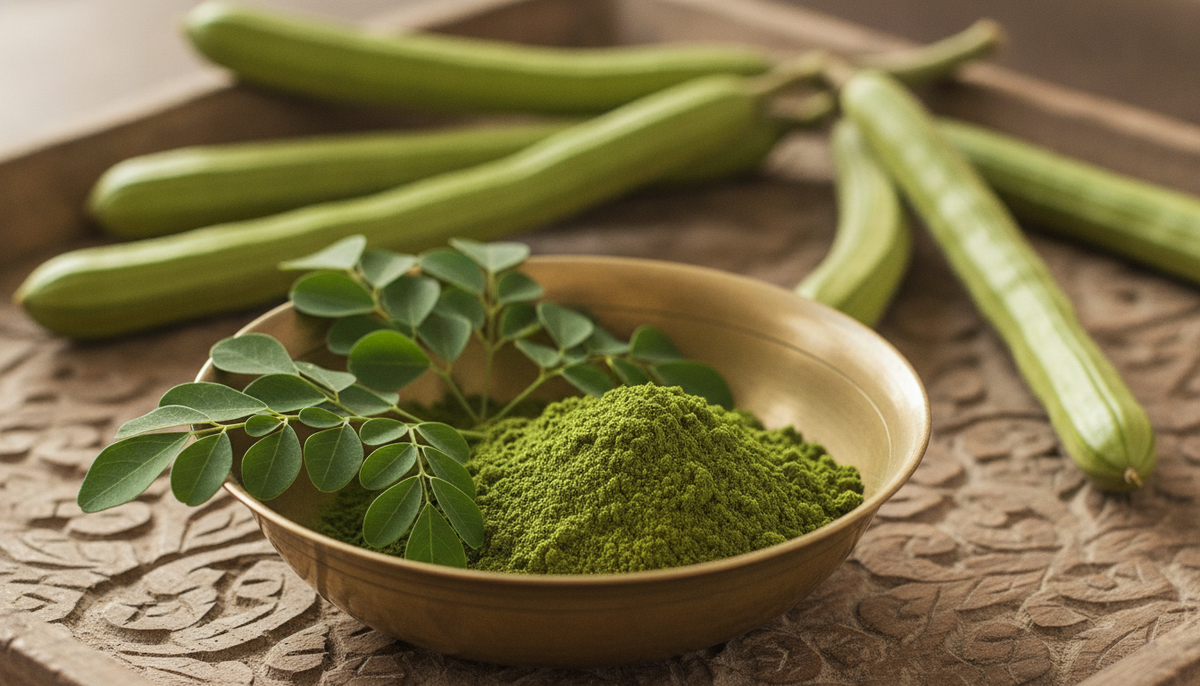
Moringa powder is made from dried leaves of the drumstick tree (Moringa oleifera). It is traditionally used to support energy, immunity and overall nutrition because it is rich in iron, calcium, vitamins and antioxidants. A typical daily dose is half to one teaspoon (2–5 g) mixed in water or food.
- Moringa powder comes from dried leaves of the drumstick tree (Moringa oleifera), traditionally used as a nutrient-rich supplement.
- It is high in iron, calcium, vitamins A and C, and plant-based protein, making it popular for daily nutrition support.
- Typical dose is half to one teaspoon (2–5 g) per day, taken with water, smoothie or food.
- Take it in the morning or early afternoon; some people feel too alert if taken at night.
- Pregnant or breastfeeding women, people on blood-thinning or diabetes medicine, and those with thyroid conditions should consult a doctor first.
What is moringa powder?
Moringa powder is the dried, ground leaf of the Moringa oleifera tree, known in India as sahjan or drumstick tree. The leaves are harvested, shade-dried and powdered to preserve their nutrients. Moringa has been used in Ayurveda and traditional medicine across Asia and Africa for centuries.
| Language | Name |
|---|---|
| English | Moringa, Drumstick leaf |
| Hindi | सहजन (Sahjan), मोरिंगा |
| Botanical | Moringa oleifera |
Moringa powder nutritional value
Moringa is called a "superfood" because a small amount packs many nutrients. According to published analyses, 100 g of dried moringa leaf powder contains approximately:
| Nutrient | Amount (per 100 g dried leaf) |
|---|---|
| Protein | 27–29 g |
| Iron | 25–28 mg |
| Calcium | 2,000–2,500 mg |
| Vitamin A (as beta-carotene) | 18–20 mg |
| Vitamin C | 15–17 mg |
| Potassium | 1,300–1,500 mg |
| Fibre | 19–21 g |
Because you take only a teaspoon (about 3–5 g) per day, actual intake is a fraction of these values, but it still adds useful nutrients to your diet.
Main benefits of moringa powder
1. Supports daily nutrition
The high concentration of vitamins, minerals and plant protein makes moringa a convenient supplement for people who may not eat enough leafy vegetables. It is especially valued as a source of plant-based iron.
2. May support energy levels
Iron and B vitamins in moringa support red blood cell formation and energy metabolism. Users often report feeling less fatigued, though individual responses vary.
3. Rich in antioxidants
Moringa contains quercetin, chlorogenic acid and beta-carotene, all of which are antioxidants. Antioxidants may help protect cells from oxidative stress.
4. Traditional use for immunity
In Ayurveda, moringa is considered a rasayana (rejuvenative). The vitamin C and zinc content may support normal immune function.
5. May support healthy blood sugar
Some studies suggest moringa leaf extract may help maintain blood sugar levels already within the normal range. This is not a replacement for diabetes medication. If you take medicine for blood sugar, consult your doctor before adding moringa.
6. May support heart health
Research indicates moringa may help maintain healthy cholesterol levels. Again, this does not replace prescribed medication.
Moringa powder benefits for skin
Moringa is popular in skincare because of its antioxidant and vitamin A content. Traditional uses include:
- Applying moringa oil or paste for dry skin.
- Taking moringa powder internally to support skin nutrition from within.
- Using it in face packs mixed with honey or curd.
These are traditional and anecdotal uses; results vary person to person.
Moringa powder benefits for hair
Iron deficiency is a common cause of hair fall, especially in women. Because moringa is iron-rich, some people take it hoping to support hair health. Moringa oil is also applied directly to hair and scalp. Scientific evidence specific to hair is limited, but nutritional support may help overall hair condition.
How to take moringa powder
- Start with half a teaspoon (about 2 g) per day for the first week.
- Increase to one teaspoon (4–5 g) if tolerated well.
- Mix in a glass of water, smoothie, juice or sprinkle over food.
- Take in the morning or early afternoon. Moringa may feel energising, so avoid late evening if you have sleep issues.
Best time to take moringa powder
| Goal | Suggested time | With |
|---|---|---|
| Energy support | Morning, empty stomach or with breakfast | Water or smoothie |
| Nutrition boost | With any meal | Sprinkle on food |
| Weight management | 30 minutes before meal | Water |
Avoid taking it close to bedtime if you find it affects your sleep.
Moringa powder for weight loss
Moringa is low in calories and may help reduce cravings because of its fibre and nutrient density. Some people take it before meals with water to feel fuller. However, moringa alone does not cause weight loss. A balanced diet and regular physical activity remain essential. Moringa can be a supportive addition, not a shortcut.
Can you drink moringa powder daily?
Yes, many people take moringa daily. A dose of half to one teaspoon (2–5 g) is considered safe for most adults when taken with adequate water. Long-term studies are limited, so taking occasional breaks (for example, one week off every two months) is a sensible approach. If you have any medical condition or take regular medication, consult your doctor first.

Which is better: amla or moringa?
Both are nutrient-rich, but they serve different purposes:
| Moringa | Amla | |
|---|---|---|
| Best known for | Iron, protein, overall nutrition | Vitamin C, hair and skin |
| Taste | Earthy, slightly bitter | Sour, tangy |
| Form | Powder or tablets | Powder, juice, candy |
| Ayurvedic focus | Vata-Kapha balancing, rasayana | Pitta balancing, rasayana |
There is no single "better" choice; it depends on your needs. Some people take both.
Which organ is moringa good for?
Moringa is not specific to one organ. Its nutrients support overall health. Traditional uses highlight:
- Liver: Moringa extract has been studied for liver-protective properties in animal research.
- Heart: Antioxidants may support cardiovascular health.
- Gut: Fibre supports digestion.
These are supportive, not curative claims.
Side effects of moringa powder
- Digestive upset: Some people experience mild stomach discomfort or loose stools when starting, especially at higher doses. Start low.
- Bitter taste: The earthy flavour is strong; mix with smoothies or food if you find it unpleasant.
- Lower blood sugar: If you take diabetes medication, moringa may amplify the effect. Monitor your levels and consult your doctor.
- May affect thyroid: Some sources suggest moringa could influence thyroid function. If you have a thyroid condition, ask your doctor first.
- Drug interactions: Moringa may interact with blood-thinning medicines (anticoagulants) and antihypertensive drugs.
What to avoid while taking moringa
- Avoid consuming moringa root or bark; only the leaf powder is considered safe for regular use.
- Do not exceed recommended doses (more is not better).
- Avoid low-quality powders with added fillers; buy from trusted sources.
- Pregnant or breastfeeding women should consult a doctor before use (moringa root and bark are traditionally avoided in pregnancy).
Who should avoid moringa?
- Pregnant women (especially moringa root and bark; leaf powder only under doctor advice).
- People on blood-thinning medication like warfarin.
- Those with low blood pressure or on antihypertensive drugs.
- People with thyroid disorders (until cleared by a doctor).
- Anyone with a known allergy to moringa.
When in doubt, consult your healthcare provider.
Moringa powder vs moringa tablets
| Moringa Powder | Moringa Tablets | |
|---|---|---|
| Convenience | Needs mixing | Easy to swallow, no taste |
| Versatility | Can add to food, smoothies | Fixed dose |
| Absorption | Starts absorbing quickly | May take slightly longer |
| Shelf life | Good if stored dry | Often longer |
Both are effective. Tablets are better for travel or those who dislike the taste.
Moringa recipes
- Moringa smoothie: Blend half teaspoon moringa powder with banana, spinach, milk or yogurt.
- Moringa tea: Stir powder into warm water with honey and lemon.
- Moringa paratha: Mix powder into wheat flour dough.
- Energy balls: Combine moringa with dates, nuts and coconut.
Buy moringa tablets
Dhanyawad Ayurved offers Moringa Tablets made from pure moringa leaf extract, priced at ₹360 for 60 tablets. Each tablet provides a standardised dose, convenient for daily use. Pair with a balanced diet for best results. For digestive support, also explore Isabgol (psyllium husk) or Ayurvedic digestive herbs.
When to see a doctor
Moringa is a supplement, not a treatment. See a doctor if you experience:
- Unusual fatigue, dizziness or weakness that persists.
- Signs of low blood sugar (shakiness, confusion) if diabetic.
- Allergic reactions like rash, itching or breathing difficulty.
- Persistent digestive problems after reducing dose.
Frequently Asked Questions
What are the main benefits of moringa powder?
Moringa powder is rich in iron, calcium, vitamins A and C, and antioxidants. It traditionally supports energy, immunity and overall nutrition. Some studies suggest it may help maintain healthy blood sugar and cholesterol levels.
Can we drink moringa powder daily?
Yes, half to one teaspoon (2–5 g) daily is generally considered safe for most adults. Start with a lower dose and increase gradually. If you have any medical condition, consult your doctor.
What to avoid while taking moringa?
Avoid moringa root and bark (use only leaf powder). Do not exceed recommended doses. If you take blood-thinning, diabetes or blood pressure medication, consult your doctor first.
Which is better, amla or moringa?
Both are beneficial but different. Moringa is higher in iron and protein; amla is higher in vitamin C. Choose based on your needs, or take both on different days.
What is the disadvantage of moringa powder?
Some people experience digestive upset or find the taste bitter. It may interact with certain medications (blood thinners, diabetes drugs, thyroid medicines). Pregnant women should consult a doctor before use.
Which organ is moringa good for?
Moringa supports overall health rather than one specific organ. Traditional and preliminary research highlight liver-protective, heart-supportive and gut-friendly properties, but these are supportive, not curative.
Is moringa powder good for skin and hair?
Moringa is rich in antioxidants and iron, which may support skin and hair health from within. Moringa oil is also applied topically. Results vary and evidence is largely anecdotal.
How long does it take to see results from moringa?
Most people notice subtle changes in energy or digestion within 2–4 weeks of consistent use. Nutritional benefits build over time. Do not expect overnight results.
Sources
Written by the Dhanyawad Ayurved team and reviewed by Vaidya Ravinder Arora (40+ years), Dhanyawad Ayurved Vatika, Dwarka, New Delhi. This article describes traditional uses for general information. It is not medical advice. Consult a qualified doctor or Ayurvedic practitioner before using any herb therapeutically.

