
Ayurvedic Herbs for Piles: Nagkesar, Harad, Kutki, Triphala, Isabgol and More
A plain guide to the herbs Ayurveda uses for piles (arsh), from Nagkesar and Harad to Triphala and Isabgol, and how they're usually taken.
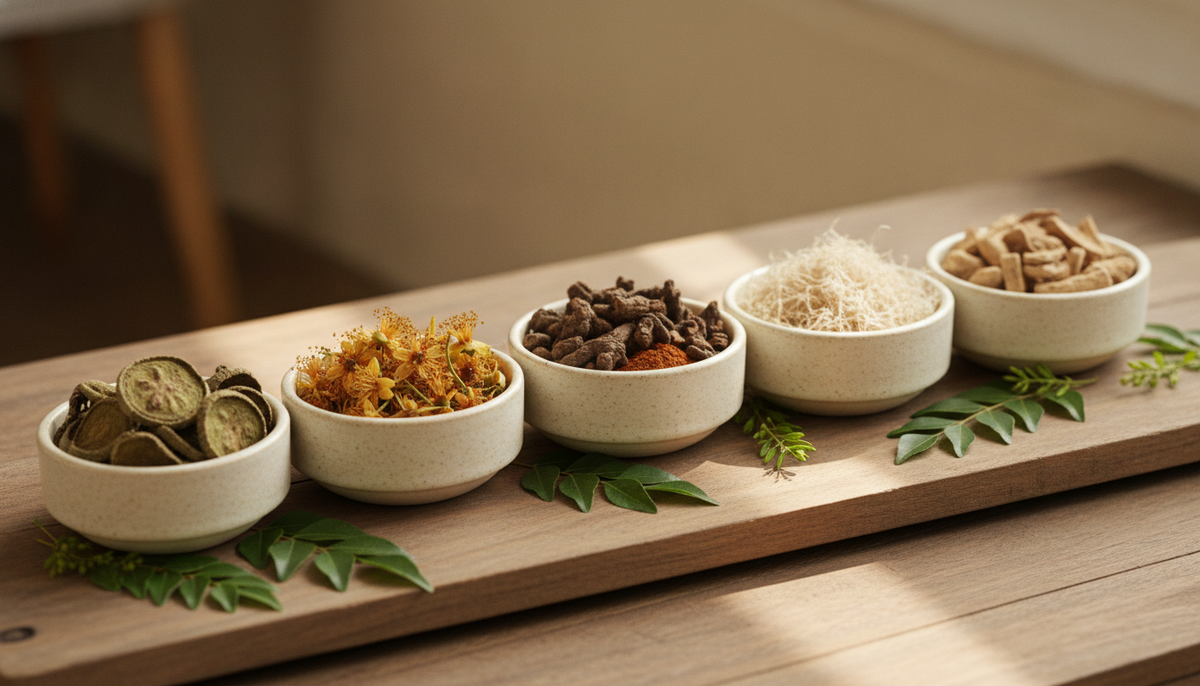
Ayurveda sees piles (arsh) as a problem of weak digestion and constipation, so the herbs used for it mainly support digestion and soft, regular bowel movements. The best known are Chhoti Harad, Triphala and Isabgol for regularity, Nagkesar as a classical astringent, and Kutki and Chitrak for digestion. Combination formulas like Arsh Kuthar Capsule bring several of these together.
- Ayurveda links piles (arsh) to weak digestion (mand agni) and constipation, so most herbs support digestion and easier bowel movements.
- Chhoti Harad, Triphala and Isabgol are traditionally used to keep stools soft and regular.
- Nagkesar is a classical astringent herb used in arsh formulas, especially for bleeding piles.
- Kutki and Chitrak are bitter and pungent herbs traditionally used to support digestion.
- Classical tablets such as Arshoghni Vati and Kankayan Vati should be taken on a vaidya's advice.
How Ayurveda looks at piles (arsh)
In Ayurveda, arsh is linked to mand agni (weak digestive fire) and constipation, which lead to straining and swelling. Care therefore focuses on three things: improving digestion, keeping stools soft, and soothing the area. Diet and daily habits come first (see our piles diet chart), with herbs as support.
8 herbs traditionally used for piles
| Herb | Botanical name | Traditional role |
|---|---|---|
| Chhoti Harad | Terminalia chebula | Gentle laxative for regular bowel movements |
| Nagkesar | Mesua ferrea | Classical astringent, used especially in bleeding piles (rakta arsh) |
| Kutki | Picrorhiza kurroa | Bitter herb for digestion and liver support |
| Chitrak | Plumbago zeylanica | Pungent herb used to strengthen agni; strong, so used in small amounts |
| Bakayan | Melia azedarach | Traditionally used in arsh formulas for its cleansing action |
| Niranjan phal | – | Traditionally used for hard stools and straining |
| Triphala | Amla, Harad, Baheda | Classic blend for regular bowel movements |
| Isabgol | Plantago ovata husk | Soluble fibre that softens stool; well studied |
How these herbs are usually taken
- Isabgol: 1–2 teaspoons in a glass of water or milk at bedtime, followed by another glass of water.
- Triphala churna: ½–1 teaspoon with warm water at night.
- Chhoti Harad: commonly ½ teaspoon of powder with warm water at night, or chewed.
- Nagkesar, Kutki, Chitrak, Bakayan: usually taken as part of a formula rather than alone, at doses set by the maker or a vaidya.

Classical formulas you may hear about
Ayurvedic pharmacies also sell classical tablets for arsh, such as Arshoghni Vati, Kankayan Vati and Arshkuthar Ras. Some of these contain minerals or strong purgatives, so they should be taken on a qualified vaidya's advice. Read our comparison of Arshkuthar Ras vs Arsh Kuthar Capsule.
A combined herbal option
Arsh Kuthar Capsule by Dhanyawad Ayurved combines six of these herbs (Niranjan phal, Kutki, Bakayan, Nagkesar, Chhoti Harad and Chitrak) in one capsule, taken 1–2 at a time with lukewarm water after meals.
Cautions
- Avoid laxative herbs such as Harad and Triphala during pregnancy unless your doctor advises them.
- Ask your doctor first if you take prescription medicines, especially for diabetes or blood thinning.
- Take Isabgol with plenty of water; too little water can make constipation worse.
- See a doctor for bleeding, severe pain, black stools or a lump that won't go back (see piles stages).
Frequently Asked Questions
Which Ayurvedic herb is best for piles?
There's no single best herb. Harad, Triphala and Isabgol support regular bowel movements, Nagkesar is the classical astringent for bleeding piles, and Kutki and Chitrak support digestion. Many people use a combination formula.
Is Triphala good for piles?
Triphala is traditionally used to keep bowel movements regular, which reduces straining. Take it at night with warm water, and avoid it during pregnancy unless advised.
Is Nagkesar used for bleeding piles?
Yes. Nagkesar (Mesua ferrea) is a classical astringent used in Ayurvedic formulas for bleeding piles (rakta arsh). Bleeding should still be checked by a doctor.
What are Arshoghni Vati and Kankayan Vati?
They are classical Ayurvedic tablets used for arsh. Take them only on the advice of a qualified Ayurvedic doctor.
Sources
Written by the Dhanyawad Ayurved team and reviewed by Vaidya Ravinder Arora (40+ years), Dhanyawad Ayurved Vatika, Dwarka, New Delhi. This article describes traditional uses for general information. It is not medical advice. Consult a qualified doctor or Ayurvedic practitioner before using any herb therapeutically.

