
Dhanyawad Blood Purifier Syrup: Manjishtha, Neem & What Ayurvedic Blood Purification Really Means
How Dhanyawad Blood Purifier Syrup works, the key Ayurvedic herbs inside it, how to take it correctly, and who should consult a doctor first.
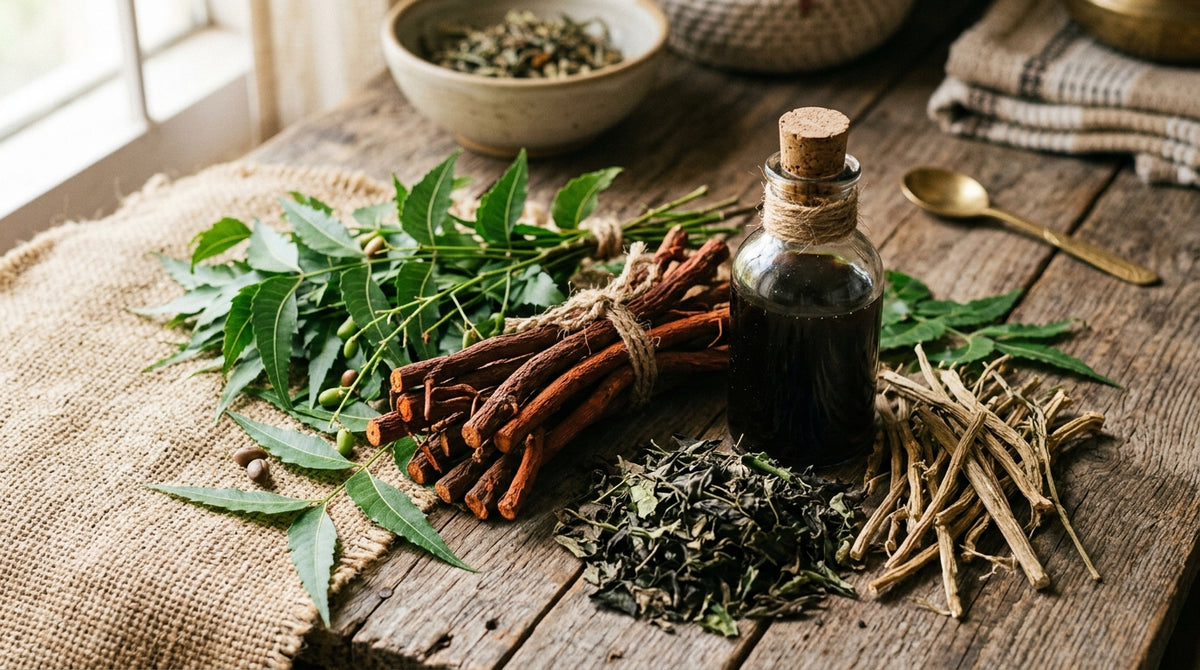
Dhanyawad Blood Purifier Syrup is an Ayurvedic formulation combining five traditional herbs—Manjishtha, Daru Haldi (Tree Turmeric), Chirata, Triphala and Neem—that are traditionally used to support the liver, skin and the body's natural detoxification processes. One 200 ml bottle contains approximately 20 standard doses and is priced at ₹190. It is a wellness supplement, not a treatment for any blood disorder.
- "Blood purification" in Ayurveda means supporting the liver, skin and kidneys in their natural detoxification role—it is not a claim about removing pathogens from the bloodstream.
- Manjishtha (Rubia cordifolia) is the cornerstone herb in Ayurvedic blood-purifier formulas, traditionally used for skin conditions, liver support and reducing inflammation.
- Neem and Chirata add broad-spectrum support for the skin, digestive tract and liver in traditional Ayurvedic formulations.
- The standard adult dose is 2 teaspoons (10 ml) twice daily after meals for a 4–8-week course; do not exceed the stated dose.
- People with diabetes, liver disease, pregnancy or anyone on regular medication should consult a doctor before using this syrup.
What does "blood purification" mean in Ayurveda?
The phrase "blood purifier" is common in Indian wellness, but it can be misleading if taken literally. In biomedical terms, healthy kidneys, liver and lymphatic system constantly filter and detoxify the blood without any supplement. Ayurveda uses the concept of rakta shodhana (रक्त शोधन)—literally "blood cleansing"—to describe a cluster of herbs that traditionally support these organs in their natural work.
Rakta shodhana herbs are generally used when the skin shows signs of imbalance—recurrent pimples, dullness or mild rashes—which Ayurvedic physicians attribute to excess pitta and ama (metabolic waste) in the body. The herbs below are not removing microorganisms or toxins from your veins; they are supporting the liver's clearance pathways and the skin's barrier, according to traditional use. No Ayurvedic syrup can substitute for medical care if you have a diagnosed blood condition.
What are the key herbs in Dhanyawad Blood Purifier Syrup?
The formulation contains five herbs with well-documented traditional profiles.
| Herb | Hindi / Sanskrit | Botanical name | Traditional role in the formula |
|---|---|---|---|
| Manjishtha | मंजीठ / मञ्जिष्ठा | Rubia cordifolia | Lead herb; traditionally supports skin clarity, liver and lymph |
| Daru Haldi (Tree Turmeric) | दारू हल्दी | Berberis aristata | Traditionally supports liver function and bile secretion |
| Chirata | चिरायता | Swertia chirayita | Bitter herb traditionally used for liver, digestion and fever |
| Triphala | त्रिफला | Blend of Emblica, Terminalia bellirica & T. chebula | Gut-cleansing, antioxidant blend that supports elimination |
| Neem | नीम | Azadirachta indica | Traditionally used for skin conditions, anti-inflammatory support |
What does each herb traditionally support?
Manjishtha is arguably the most important single herb in Ayurvedic skin-care formulas. The root contains anthraquinone glycosides that give it a deep red colour; it has been used in classical Ayurveda for rakta shodhana for centuries. It is also one of the herbs in several classical preparations like Mahamanjishtadyarishta.
Daru Haldi (Berberis aristata) is the bark of the Indian barberry and contains berberine—a bitter alkaloid with traditional use for liver conditions, bile-flow support and mild digestive complaints. Berberine has been extensively studied internationally, though the clinical evidence remains exploratory in humans.
Chirata (Swertia chirayita) is one of the most bitter herbs in the Ayurvedic pharmacopoeia. It is traditionally used for liver support, fever and promoting digestive secretions. Because it is intensely bitter, it is more effective in liquid form than capsules.
Triphala—the combination of Amla, Baheda and Harad—adds antioxidant support and helps ensure regular elimination, which is a core component of the Ayurvedic "blood purification" concept: if the gut is sluggish, ama accumulates. You can read more in our companion posts on Amla benefits and Mulethi.
Neem leaves contain nimbidin and azadirachtin, compounds studied for their traditional role in skin, liver and immune support. NCCIH notes that neem has a long history of traditional use in India, and limited clinical studies suggest possible benefits for oral health and skin conditions.
Blood purifier syrup for glowing skin: what to expect
The majority of people who use Ayurvedic blood purifier syrups do so because of skin concerns—acne-prone skin, post-acne marks, or a generally dull complexion. The traditional rationale makes sense: manjishtha, neem and chirata each have a traditional role in addressing pitta-driven skin conditions.
What you can reasonably expect from consistent use over 4–8 weeks: support for liver function (which affects how quickly the body processes hormones and dietary fats), and a mild bitter stimulus to bile and digestive secretions (from chirata and daru haldi). These together may reduce the internal burden on the skin. Do not expect an overnight transformation—Ayurvedic formulations are slow-acting, and individual responses vary widely.
If you have acne that is severe, scarring or accompanied by hormonal symptoms, please consult a dermatologist alongside any traditional remedy.

How to use Dhanyawad Blood Purifier Syrup
The Blood Purifier Syrup by Dhanyawad Ayurved Vatika (₹190 / 200 ml) comes with a standard adult protocol. Shake the bottle well before each use.
| Who | Dose | When | Duration |
|---|---|---|---|
| Adults (18+) | 2 teaspoons (10 ml) | Twice daily after meals | 4–8 week course |
| Adolescents (13–17) | 1 teaspoon (5 ml) | Twice daily after meals | 4 weeks; reassess |
| Children under 12 | Not recommended without a vaidya's advice | ||
Take with a glass of lukewarm water. Avoid taking on a completely empty stomach if you find the bitterness of chirata causes nausea.
What drink naturally supports blood detoxification?
Several everyday drinks are traditionally used alongside or instead of a formulated syrup:
- Neem leaf water: A few fresh neem leaves steeped in warm water—bitter and traditionally used to support skin and liver.
- Amla juice: Rich in Vitamin C; supports liver clearance and antioxidant activity. See our full post on Amla Indian Gooseberry.
- Giloy kadha: A decoction of giloy stems—traditionally used as an immune tonic and anti-inflammatory. Read more: Giloy benefits.
- Turmeric milk (haldi doodh): The curcumin in turmeric supports liver phase-I and phase-II detoxification enzymes according to animal studies.
These are traditional home remedies and should not replace medical treatment for diagnosed conditions.
Which herb is best to clean your blood, according to Ayurveda?
Classical Ayurvedic texts name Manjishtha (Rubia cordifolia) as the primary raktashodhaka (blood-purifying) herb, followed by Neem, Chirata and Guduchi (Giloy). The combination of these herbs in a single formulation—as in this syrup—is considered more effective than any single herb alone, because each acts on a different aspect of the detoxification pathway: manjishtha on the lymph and skin, neem on the liver and skin barrier, chirata on the liver and digestive secretions, and triphala on the gut.
Who should avoid blood purifier syrup?
Ayurvedic syrups are generally well-tolerated, but the following groups should consult a doctor before using:
- Pregnant and breastfeeding women: Chirata and neem have uterine-stimulating properties in high doses in animal models; safety in pregnancy is not established.
- People with diabetes: Chirata and neem may have blood-sugar-lowering effects; combined with diabetes medication they could lower blood sugar further. Do not stop your diabetes medication.
- People with liver disease: Consult your doctor before taking any herbal formulation—liver-active herbs need careful monitoring.
- People on medications: Berberine (from Daru Haldi) may interact with some antibiotic and heart medications.
- Children under 12: The bitter alkaloid content is not suitable without professional advice.
Red flags—see a doctor immediately if you develop jaundice, unusual fatigue, dark urine, severe stomach pain, or an allergic reaction (rash, itching, swelling) after taking this or any herbal syrup.
Frequently Asked Questions
What is the side effect of Safi blood purifier syrup?
Safi (Hamdard) is a Unani product. Common reported side effects include loose stools, nausea and stomach cramps if taken on an empty stomach—primarily because of its senna and bitter herb content. For Dhanyawad's formulation, the main cautions are around the bitter herbs (nausea if taken empty-stomach) and interactions with diabetes or liver medications. Always follow the stated dose.
Does blood purifier syrup help with acne?
Manjishtha, neem and chirata are traditionally used for acne-prone skin in Ayurveda because they may support liver function and reduce internal inflammation. Many users report clearer skin after a 4–8 week course. Clinical evidence is limited; results vary and the syrup does not replace dermatological treatment for severe or cystic acne.
Can I take blood purifier syrup every day?
The recommended protocol is a 4–8 week course, twice daily after meals. Avoid using it continuously for months without a break. Chirata, a primary ingredient, contains intense bitter alkaloids that can irritate the digestive mucosa with prolonged use in high doses. After completing a course, take a 2–4 week break before repeating.
How long before I see results?
Most traditional practitioners expect noticeable changes in skin texture and clarity after 3–4 weeks of consistent use. Digestive improvement (reduced bloating, more regular bowel movements) may be noticed sooner, in 1–2 weeks, because of Triphala. Do not expect instant results—Ayurvedic herbs are slow-acting and their effects build gradually.
Is this syrup safe for teenagers with acne?
Adolescents aged 13 and above can use it at half the adult dose (5 ml twice daily) for a 4-week course. However, if the acne is related to hormonal changes (as is common in teenagers), a dermatologist's advice alongside the traditional remedy is recommended. Do not give to children under 12 without a vaidya's guidance.
Can I take blood purifier syrup with other medicines?
Do not stop any prescribed medication. If you take medicines for diabetes, blood pressure, heart conditions, or liver disease, consult your doctor before adding any herbal syrup. Berberine (from Daru Haldi/Barberry) in particular can interact with several prescription drugs. Always inform your doctor about all supplements you are taking.
What is the best way to store the syrup?
Store in a cool, dry place away from direct sunlight. Once opened, keep the cap tightly closed. The syrup does not require refrigeration but should not be stored in temperatures above 30 °C. Do not use the product after the expiry date printed on the label.
Sources
Written by the Dhanyawad Ayurved team and reviewed by Vaidya Ravinder Arora (40+ years), Dhanyawad Ayurved Vatika, Dwarka, New Delhi. This article describes traditional uses for general information. It is not medical advice. Consult a qualified doctor or Ayurvedic practitioner before using any herb therapeutically.

