
Mulethi Benefits: Gut, Cough, Skin and How to Use Licorice Root
What mulethi is, its evidence-informed benefits for throat, gut, skin and immunity, how to use it, correct dose, side effects and who should not take it.
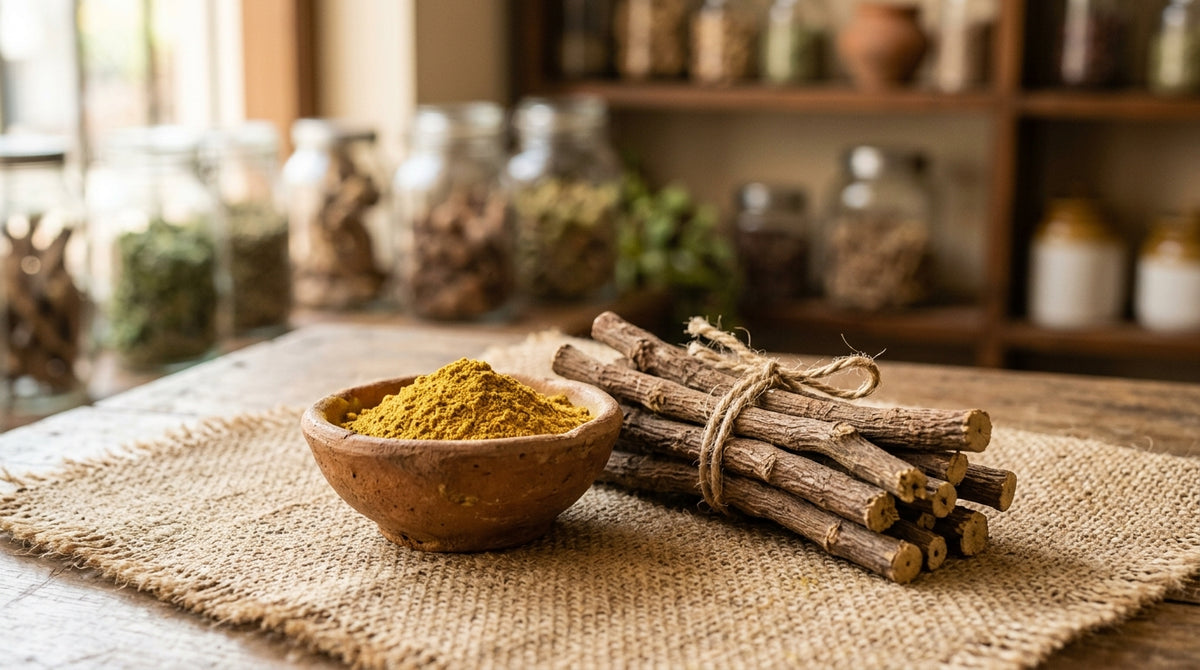
Mulethi (licorice root, Sanskrit: Yashtimadhu, botanical name: Glycyrrhiza glabra) is a root traditionally used across Ayurveda, Unani and Chinese medicine for thousands of years. Its key active compound, glycyrrhizin, supports mucous membrane soothing, making it effective for cough and throat irritation. It also traditionally supports digestion, skin health and immunity. The root is sold whole or as a powder, both readily available in Indian pansaris.
- Mulethi (licorice root, Glycyrrhiza glabra) contains glycyrrhizin, a compound 50 times sweeter than sugar that drives most of its traditional medicinal properties.
- It is traditionally used to soothe sore throat and dry cough by coating the mucous membrane and reducing irritation.
- For digestion it may help with acidity, mild gastric discomfort and gut lining protection, but should not replace medical treatment for GERD or ulcers.
- The standard daily amount is 3–5 g (½–1 teaspoon of powder) for adults; do not exceed 6 weeks of continuous use without a break.
- People with high blood pressure, heart disease, diabetes, pregnancy or kidney/liver conditions must consult a doctor before using mulethi regularly.
What is mulethi?
Mulethi is the dried root of Glycyrrhiza glabra, a perennial plant native to the Mediterranean, Central Asia and parts of India. The root contains glycyrrhizin (up to 14% by weight), which is approximately 50 times sweeter than table sugar — giving mulethi its characteristic sweet taste. It also contains flavonoids, saponins and phenolic compounds responsible for its anti-inflammatory and antioxidant properties.
| Language / Context | Name |
|---|---|
| Hindi | मुलेठी / मुलहठी (Mulethi / Mulhathi) |
| Sanskrit | यष्टिमधु (Yashtimadhu), मधुयष्टि |
| English | Licorice Root / Liquorice Root |
| Urdu / Persian | مُلیٹھی / شیرین بیان (Shirīn bayān) |
| Marathi | जेष्ठमध (Jeshthamadh) |
| Botanical name | Glycyrrhiza glabra |
How to identify genuine mulethi
Genuine mulethi root should be:
- Colour: Pale yellowish-brown outside, bright yellow-orange inside when broken
- Taste: Distinctly sweet, slightly earthy — the sweetness should be noticeable immediately
- Texture: Fibrous, stringy when chewed; the fibres do not dissolve completely
- Smell: Faintly anise-like, pleasant
- Powder: Yellow, not grey-brown (grey suggests old stock or adulteration)
Avoid mulethi powder that smells musty, looks grey, or has no sweetness — the sweetness is the best field test for freshness and purity.
Mulethi benefits
1. Soothes sore throat and dry cough
Mulethi is one of the most widely used Ayurvedic herbs for throat and respiratory health. Glycyrrhizin and glycyrrhizinic acid in the root coat the mucous membranes of the throat, reducing irritation and dryness. Traditionally, sucking on a small piece of mulethi stick is a first-line remedy for dry cough, hoarseness and throat inflammation. NCCIH notes that glycyrrhiza preparations have been used as expectorants and demulcents in traditional medicine worldwide.
2. Supports digestive health and reduces acidity
Mulethi has a long traditional use for gastric discomfort, mild acidity and gut lining protection. Glycyrrhizin derivatives support the mucus layer that protects the stomach and intestinal walls. For mild indigestion and post-meal bloating, mulethi powder in warm water is a traditional remedy. People with diagnosed GERD or peptic ulcers should consult their doctor before relying on mulethi — it is a support, not a treatment.
3. Boosts immunity
Flavonoids and saponins in mulethi are traditionally associated with immune system modulation. Mulethi is commonly included in Ayurvedic formulations for respiratory infections and seasonal colds. Preliminary research has examined glycyrrhizin for antiviral properties, though clinical evidence in humans is limited. Think of it as a traditional immune-support tonic, not a proven antiviral medicine.
4. Reduces inflammation
Mulethi has been used in Ayurvedic medicine as a broad anti-inflammatory herb. Its compounds inhibit certain inflammatory pathways, making it useful traditionally for arthritis-related discomfort, skin inflammation and gut inflammation. This is a support role — anyone with a diagnosed inflammatory condition should continue prescribed medication and consult their doctor before adding mulethi.
5. Supports liver health
In traditional Unani and Ayurvedic practice, mulethi is considered a liver tonic. Some laboratory studies have investigated glycyrrhizin for liver protection. However, paradoxically, excess mulethi over long periods can stress the kidneys and liver due to glycyrrhizin's effect on aldosterone. Use it in recommended amounts and take breaks. Anyone with diagnosed liver disease must consult their doctor before using mulethi.
6. Mulethi benefits for skin
Mulethi powder is applied topically in traditional practice for skin redness, irritation and hyperpigmentation. It contains glabridin, a compound studied for inhibiting the enzyme responsible for melanin synthesis in laboratory settings. Traditional use involves making a paste with rose water and applying to affected areas. It can reduce surface redness and calm irritated skin. It does not change your natural skin colour; it may help even tone in areas of post-inflammatory hyperpigmentation (dark spots after breakouts). Avoid using undiluted or on broken skin.
7. Oral health support
Mulethi stick has been used as a natural tooth-cleaning twig across South Asia and the Middle East for centuries. Its antimicrobial properties may help reduce oral bacteria linked to cavities and bad breath. Chewing a piece of mulethi stick and then rinsing is a traditional oral hygiene practice still used in many households.
8. Supports respiratory health (cough and congestion)
Beyond dry cough, mulethi is traditionally included in formulations for bronchitis and chest congestion. It is considered "kapha-balancing" in Ayurveda, meaning it helps thin and expel mucus from the airways. It works best for productive cough where mucus needs to be loosened, rather than completely dry, irritated cough. For persistent cough lasting more than 2–3 weeks, or cough with blood, see a doctor immediately.

How to use mulethi
| Form | Method | Best for |
|---|---|---|
| Raw stick (sucking) | Place a small piece in the mouth and suck gently | Sore throat, dry cough, oral health |
| Powder decoction | ½ tsp powder in 1 cup water, boil 5 min, strain, drink warm | Digestion, immunity, respiratory support |
| With honey | ½ tsp powder + 1 tsp honey, take on empty stomach | Cough, throat irritation |
| Milk preparation | ½ tsp powder in warm milk at bedtime | General tonic, stress support |
| Face paste (topical) | Mulethi powder + rose water paste, apply for 15 min, rinse | Skin redness, dark spots |
Standard adult dose: 3–5 g per day (roughly ½ to 1 teaspoon of powder). Do not use continuously for more than 4–6 weeks without a break of at least 2 weeks.
Mulethi powder vs whole root — which is better?
| Aspect | Whole Root | Powder |
|---|---|---|
| Use | Sucking, decoction, teeth cleaning | Decoction, paste, milk, face pack |
| Dose control | Approximate | Precise (by teaspoon) |
| Shelf life | Longer (2–3 years in dry storage) | Shorter (1–1.5 years, protect from moisture) |
| Convenience | Good for on-the-go cough relief | Better for daily preparations |
Where to buy mulethi
Dhanyawad Ayurved Vatika, Dwarka stocks Mulethi (Licorice Root) in both powder and whole raw root. Packs available: 50 g at ₹70 and 100 g at ₹135. The raw root is ideal for sucking or making decoctions; the powder is easier for daily use in tea, milk or face applications.
For more herb guides, read our Mulethi ke Fayde (Hindi guide), Giloy benefits and Gond Katira benefits.
Side effects and who should avoid mulethi
Mulethi is safe in culinary and traditional amounts for most healthy adults, but the following groups must take care:
- High blood pressure: Glycyrrhizin acts like aldosterone and can raise blood pressure — do not stop BP medication, consult your doctor.
- Heart disease: Risk of potassium loss (hypokalaemia) with high doses — see a doctor before regular use.
- Pregnancy: Do not use mulethi beyond normal food amounts — it may affect hormones.
- Diabetes: Mulethi is sweet and can affect blood sugar — monitor carefully and consult your doctor if on medication.
- Kidney disease: Reduced potassium and fluid retention effects can worsen kidney conditions.
- Liver disease: Excess glycyrrhizin can worsen some liver conditions — consult your doctor.
- Children under 12: Do not give without medical advice.
If you notice swelling, unusual fatigue, headaches or elevated blood pressure while using mulethi, stop and consult a doctor.
Frequently Asked Questions
Is mulethi good for skin?
Yes, traditionally. Mulethi contains glabridin, which in laboratory studies inhibits melanin synthesis. Applied topically as a paste, it can soothe redness and may help reduce post-inflammatory dark spots over time. It does not change your natural skin colour — it supports an even complexion in areas affected by inflammation or sun damage.
Does mulethi increase estrogen?
Mulethi contains phytoestrogens (plant compounds with mild estrogenic activity). The effect on hormones from food-level doses is minimal for most people, but those with hormone-sensitive conditions (PCOS, breast cancer history, endometriosis) should consult their doctor before using mulethi regularly.
Is mulethi good for hair?
Mulethi is traditionally used to improve scalp circulation and reduce hair fall linked to scalp inflammation. It is sometimes added to hair oils. However, evidence is from traditional practice. For clinically significant hair loss, see a dermatologist. Mulethi can be one part of a broader scalp care routine.
Can we drink mulethi water daily?
Yes, in moderate amounts and for limited periods. One teaspoon of mulethi powder decocted in water daily is a traditional practice. However, do not continue for more than 4–6 weeks continuously. After a break of 2 weeks, you can resume. Excessive daily intake increases the risk of blood pressure elevation and potassium loss.
Is mulethi hot or cold for the body?
According to Ayurveda, mulethi is sheeta (cooling) in nature. It pacifies pitta (heat-related conditions like acidity, inflammation, burning throat) and vata. It is not recommended in large amounts for people with dominant kapha constitution (prone to sluggish digestion, excess mucus) especially in winter.
Sources
Written by the Dhanyawad Ayurved team and reviewed by Vaidya Ravinder Arora (40+ years), Dhanyawad Ayurved Vatika, Dwarka, New Delhi. This article describes traditional uses for general information. It is not medical advice. Consult a qualified doctor or Ayurvedic practitioner before using any herb therapeutically.


