Kalonji Benefits: What Black Seed Does, How to Use It and Who Should Avoid It
Kalonji (Nigella sativa, black seed) is a small triangular black seed used in Ayurveda and Unani medicine for immunity, respiratory health, digestion, hair and skin. This guide covers benefits, how to use it, dosage, and who should avoid it.
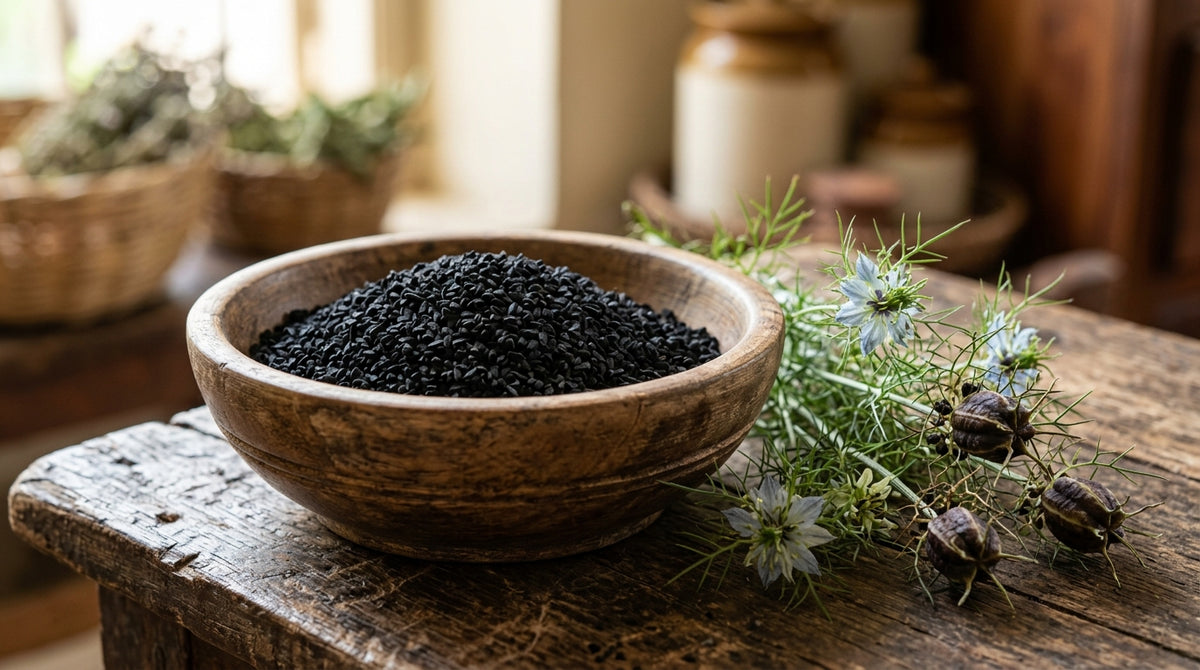
Kalonji (Nigella sativa) — also called black seed, black cumin or nigella — is a small triangular black seed traditionally used in Ayurveda, Unani and Islamic medicine for over two thousand years. It is traditionally used to support immunity, respiratory health, digestion, hair and skin, and its key active compound thymoquinone is linked to antioxidant and anti-inflammatory activity.
- Kalonji (Nigella sativa) is a small triangular black seed whose active compound thymoquinone gives it antioxidant and anti-inflammatory properties traditionally valued in Ayurveda, Unani and Islamic medicine.
- It is traditionally used to support immunity, respiratory health, digestion, hair growth and skin health — always with "traditionally used" framing, not as a cure.
- A typical adult dose is ¼–½ tsp (1–2 g) seeds per day with honey or warm water; kalonji oil is used externally for hair and skin.
- People taking diabetes or blood-pressure medicines should consult their doctor before regular use, as kalonji may lower blood sugar and blood pressure.
- Pregnant women, those scheduled for surgery, and anyone with a known allergy to Nigella should avoid kalonji without medical advice.
What Is Kalonji?
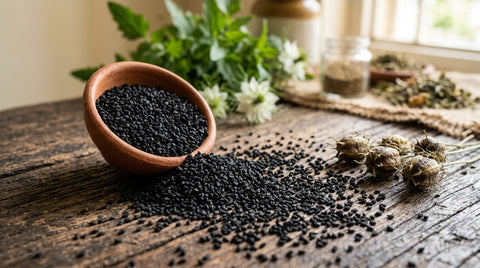
Kalonji is the seed of Nigella sativa, a small annual flowering plant in the buttercup family (Ranunculaceae). It is native to South and Southwest Asia and the Mediterranean, and grows widely across India. The seeds — harvested from distinctive swollen seed pods — are what you find in spice markets, pansari shops and Ayurvedic stores. They have a sharp, peppery-bitter aroma from their volatile oils, chiefly thymoquinone.
Kalonji should not be confused with black sesame (Sesamum indicum var.) or with kala jeera (black caraway). Each is a different seed with different properties.
| Language / Context | Name |
|---|---|
| Hindi | कलौंजी / Kalonji, Mangrela |
| English | Black Seed, Nigella Seeds, Black Cumin, Roman Coriander |
| Sanskrit | Krishnajeera (कृष्णजीर), Upakunchika |
| Arabic | Habbatus Sauda / Habbatul Baraka (حبة البركة) |
| Urdu | Kalonji (کلونجی) |
| Botanical name | Nigella sativa L. (family Ranunculaceae) |
How to Identify Genuine Kalonji
Most competition pages skip this — but knowing what to look for helps you avoid adulterated or misidentified seeds:
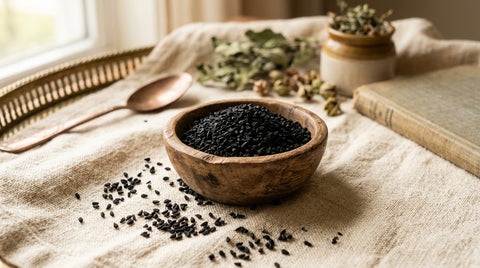
- Shape: Genuine kalonji seeds are small (1–3 mm), three-sided (triangular) and slightly angular. They are not flat or oval like black sesame seeds.
- Colour: Deep matte black on the outside, white or cream on the inside when cut. Shiny seeds can indicate coated or old stock.
- Aroma: A sharp, pungent, slightly thyme-like and bitter smell — this is thymoquinone. If seeds smell musty or have no aroma, they are likely stale or adulterated.
- Taste: Bitter and peppery, with a slight warming sensation. Not bland.
- Surface texture: The surface has fine longitudinal ridges under a magnifying glass.
Buy kalonji from a trusted pansari or certified Ayurvedic supplier. Packaged products should list Nigella sativa as the botanical name.
Key Benefits of Kalonji
1. Supports Immunity
Kalonji has been a cornerstone of Ayurvedic and Unani immunity support for centuries. Thymoquinone, the key active compound, is associated with immune-modulating effects in laboratory studies. A common traditional practice is taking ¼ tsp of kalonji seeds with honey on an empty stomach in the morning — particularly during seasonal transitions. This is a traditional wellness practice and not a substitute for vaccination or prescribed medical treatment.
2. Respiratory Health — Coughs, Colds and Congestion
In Unani medicine, kalonji is classified as a mucolytic and warming herb useful in cold and respiratory conditions. It is traditionally used for coughs, nasal congestion and chest tightness. Inhaling the steam of a few drops of kalonji oil in hot water is a widely used home remedy. For asthma, kalonji is used as a complementary support only — it does not replace prescribed inhalers or medicines. If you have a breathing condition, consult your doctor.
3. Digestive Support — Gas, Bloat and Indigestion
Kalonji is considered "deepaniya" (digestive-fire kindling) in Ayurveda, meaning it is traditionally used to improve appetite and ease digestive discomfort. It may help with gas, bloating and intestinal cramps. Chewing ¼ tsp of kalonji seeds with a pinch of rock salt after meals is a traditional remedy for indigestion. For persistent digestive issues, seek medical evaluation.
4. May Help Maintain Healthy Blood Sugar Levels
Several small clinical studies suggest kalonji may help support blood sugar levels in type-2 diabetes. However, evidence is still limited, and kalonji is not a replacement for prescribed diabetes medication. If you take insulin, metformin or any diabetes medicine, consult your doctor before adding kalonji regularly — combined use can cause blood sugar to drop too low. Do not stop or reduce your medication without medical advice.
5. May Support Healthy Blood Pressure
Some studies suggest kalonji may mildly support blood pressure regulation. If you are on antihypertensive medicines, consult your doctor before regular use — combined use may lower blood pressure excessively. Do not stop your prescribed medication.
6. Anti-inflammatory Action
Thymoquinone has been studied in laboratory settings for its anti-inflammatory pathways. Kalonji is traditionally used to support joint comfort and reduce general inflammation-related discomfort. For diagnosed arthritis or inflammatory conditions, use as a complement to — not a replacement for — medical treatment.
Kalonji for Hair
This is one of the most searched uses of kalonji, and with good reason — kalonji oil has long been used in traditional hair care across South Asia and the Middle East.
- Hair fall: Kalonji oil applied to the scalp is traditionally used to nourish hair follicles and may help reduce seasonal hair fall. Mix 5–10 drops of kalonji oil into 2 tablespoons of warm coconut oil or olive oil, massage into the scalp, and leave overnight before washing.
- Dandruff: The antifungal properties of thymoquinone are thought to support scalp health. For a scalp treatment, mix kalonji oil with a carrier oil and massage in before washing. See our full guide: Dandruff Home Remedies.
- Hair texture: Regular use of kalonji oil is traditionally associated with smoother, stronger hair over time.
- How often: 2–3 times per week as a scalp oil treatment is the typical traditional recommendation.
Note: results from topical kalonji oil are gradual — most traditional practitioners suggest consistent use over 4–8 weeks to notice a difference. Kalonji oil does not reverse genetic baldness.
Kalonji for Skin
Kalonji oil is traditionally used for various skin concerns:
- Acne-prone skin: Kalonji oil's anti-inflammatory and antimicrobial properties are used to calm inflamed spots. Dilute with a carrier oil before applying to the face — undiluted kalonji oil can irritate sensitive skin.
- Dry or itchy skin: Kalonji oil is used as a moisturising oil in traditional formulations. A small amount mixed with coconut oil can be applied to dry patches.
- Skin inflammation: Traditionally applied to areas of redness or eczema-like irritation — not as a treatment but as soothing support.
Important: Always do a patch test on your inner arm first and wait 24 hours. Stop use if you notice redness, burning or swelling. Kalonji oil does not alter or change skin tone — claims that kalonji changes complexion are unverified and not supported by evidence.

Kalonji Seeds vs Kalonji Oil — Which Should You Use?
| Feature | Kalonji Seeds | Kalonji Oil |
|---|---|---|
| Best for | Internal use (immunity, digestion, respiratory) | External use (hair, skin); also used internally in small doses |
| Typical dose | ¼–½ tsp (1–2 g) daily | 1 tsp internally (with honey/warm water); 5–10 drops diluted for external use |
| Shelf life | 1–2 years in airtight container, away from light | 1–1.5 years; store in a dark glass bottle, refrigerate after opening |
| Aroma / taste | Pungent, peppery-bitter | Strong, concentrated; slightly acrid |
| Cost | More affordable; ₹45 per 100 g approx. | More concentrated; cold-pressed oil costs more per ml |
| Use in cooking | Yes — in breads, dals, pickles, rice | Not typically used in cooking |
How to Use Kalonji
| Method | Amount | How |
|---|---|---|
| Raw seeds with honey | ¼–½ tsp (1–2 g) | Chew seeds with 1 tsp honey on an empty stomach in the morning |
| Kalonji water (soaked overnight) | ¼ tsp seeds | Soak in a glass of water overnight; drink the water in the morning; optionally chew the seeds |
| Kalonji tea | ¼ tsp seeds | Simmer seeds in 1 cup water for 5 minutes, strain, add honey; drink once daily |
| In cooking | ¼–½ tsp | Add to dals, sabzis, naan or pickles as a spice — part of daily diet |
| Kalonji oil (internal) | ½–1 tsp | Mix with warm water or honey; take once daily, not on a completely empty stomach |
| Kalonji oil (hair/scalp) | 5–10 drops in carrier oil | Mix with coconut or sesame oil; massage into scalp; leave 1–2 hours or overnight |
Who Should Avoid Kalonji / Side Effects and Safety
Kalonji is generally well tolerated at normal dietary amounts, but take note of these cautions:
- Diabetes: Kalonji may lower blood sugar. If you take diabetes medicines, consult your doctor before regular use — do not stop or reduce your medication without medical advice.
- Blood pressure medicines: Kalonji may lower BP. If you take antihypertensives, speak to your doctor; do not stop your prescribed medication.
- Pregnancy: High amounts of kalonji may stimulate uterine contractions. Avoid therapeutic doses during pregnancy. Small culinary amounts in food are generally considered safe, but consult your doctor.
- Breastfeeding: Insufficient safety data for large therapeutic doses. Consult your doctor.
- Surgery: Kalonji may slow blood clotting. Stop therapeutic use at least 2 weeks before any planned surgery and inform your surgeon.
- Allergies: Some individuals experience skin rash or allergic reactions to kalonji, especially the oil. Do a patch test before topical use. If you experience itching, swelling or breathing difficulty, stop immediately and seek medical attention.
- Liver and kidney disease: Use with caution; consult a doctor before therapeutic use.
- High doses: Excess kalonji (more than 3 g/day consistently) may cause nausea, stomach upset or irritation of the digestive tract.
When to See a Doctor
Kalonji is a traditional supportive herb — it is not a treatment for medical conditions. Seek medical attention promptly if:
- You have a persistent cough, fever, difficulty breathing, or chest pain — do not rely on kalonji alone.
- You experience dizziness, cold sweats or trembling (possible sign of low blood sugar, especially if on diabetes medicines).
- You develop a rash, itching, swelling of the face or lips, or any allergic reaction after taking kalonji.
- You are pregnant and have been taking kalonji in large amounts.
- Any existing health condition worsens while using kalonji.
Where to Buy Kalonji
Dhanyawad Ayurved stocks pure, raw Kalonji seeds — available online at ₹45 per 100 g. Also available in store at Dhanyawad Ayurved Vatika, Dwarka, Delhi. For the Hindi guide to kalonji uses, see: कलौंजी के फायदे. Also useful: Dandruff home remedies and Mulethi benefits.
Frequently Asked Questions
How do you use black cumin seeds (kalonji)?
The most common ways to use kalonji seeds are: chew ¼–½ tsp raw seeds with honey on an empty stomach each morning; soak overnight in water and drink the water plus seeds; add to cooking (dals, breads, pickles); or brew as a simple tea by simmering ¼ tsp seeds in a cup of water for 5 minutes, then straining. A typical daily amount is ¼–½ teaspoon (1–2 g) of seeds. Kalonji oil is used externally on hair and skin, or taken internally in ½–1 tsp doses mixed with warm water or honey.
What are the health benefits of kalonji (black seed)?
Kalonji is traditionally used to support immunity, respiratory health, digestion, hair and skin. Its active compound thymoquinone has antioxidant and anti-inflammatory properties studied in lab settings. It is also traditionally used to help maintain blood sugar and blood pressure levels. These are traditional uses — kalonji does not treat or cure any disease.
What is habbatus sauda and is it the same as kalonji?
Yes. Habbatus sauda (or habb-al-sauda) is the Arabic name for kalonji — Nigella sativa black seeds. In Islamic tradition, the Prophet Muhammad (PBUH) described it as "a remedy for every disease except death," which is why it is highly valued in Muslim communities across South Asia, the Middle East and Africa. Botanically, it is the same seed.
How do you use kalonji black seed oil?
Kalonji oil can be used internally (½–1 tsp mixed with warm water or honey, once daily) or externally on the skin and scalp. For hair, mix 5–10 drops in a carrier oil and massage into the scalp before washing. Always dilute before applying to the face. Do a patch test for skin use before full application.
What are the top benefits of kalonji oil specifically?
Kalonji oil is traditionally used for: scalp nourishment and hair strengthening, dry or irritated skin, immune support when taken internally, respiratory support (steam inhalation), and digestive comfort. The oil is a more concentrated source of thymoquinone than the seeds, which is why smaller amounts are used.
What is the side effect of kalonji?
At normal doses (¼–½ tsp seeds or ½–1 tsp oil per day), kalonji is generally well tolerated. Higher doses may cause nausea, stomach upset or heartburn. In people taking diabetes or blood-pressure medicines, kalonji can lower blood sugar or BP further. Skin or scalp application can occasionally cause allergic reactions — do a patch test first.
Can kalonji be taken every day?
Yes, kalonji is traditionally used daily as part of diet (in cooking) or as a morning tonic (seeds with honey or warm water). Most traditional practitioners suggest ¼–½ tsp seeds daily for adults. For oil, ½–1 tsp daily is typical. Take breaks periodically — continuous therapeutic use beyond 2–3 months should be reviewed with a practitioner.
Is kalonji safe during pregnancy?
Large therapeutic doses of kalonji are not recommended during pregnancy as they may stimulate uterine contractions. Small culinary amounts used in cooking are generally considered safe. If you are pregnant and want to use kalonji therapeutically, consult your gynaecologist first. Do not use kalonji oil internally during pregnancy without medical advice.
Kalonji water benefits — does soaking overnight make a difference?
Soaking kalonji in water overnight is thought to make the seeds easier to digest and may allow some of the water-soluble compounds to be absorbed into the water. Drinking overnight-soaked kalonji water on an empty stomach is a popular traditional practice for digestion, immunity and maintaining healthy blood sugar levels. It is a mild, convenient way to consume kalonji daily.
Sources
Written by the Dhanyawad Ayurved team and reviewed by Vaidya Ravinder Arora (40+ years), Dhanyawad Ayurved Vatika, Dwarka, New Delhi. This article describes traditional uses for general information. It is not medical advice. Consult a qualified doctor or Ayurvedic practitioner before using any herb therapeutically.