

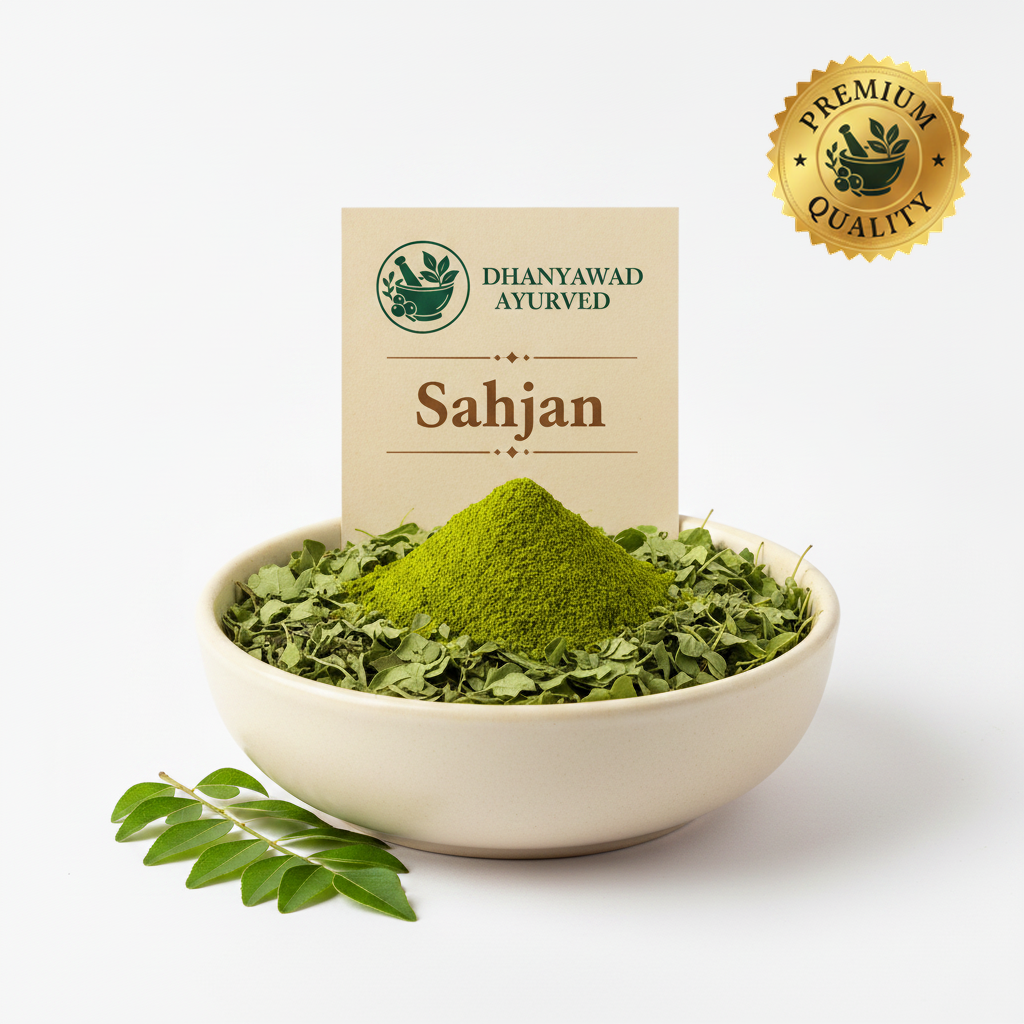
What is Moringa (Sahjan)?
Moringa oleifera is a fast-growing, drought-resistant tree native to the sub-Himalayan region of India, Pakistan and Bangladesh. It is one of the most nutrient-dense plants known — leaves, pods, seeds and roots all have traditional uses in food and medicine across South Asia, Africa and Southeast Asia. The dried leaf powder is the form with the highest concentration of vitamins and minerals and the one most widely studied. In Ayurveda, moringa is classified as shigru (from the Sanskrit for "swift" — reflecting how quickly the pods grow) and is considered a heating, light herb that supports digestion, joints and general vitality.
Names in Other Languages
| Language | Name |
|---|---|
| Hindi / Pansari | Sahjan / सहजन / Sehjan / Munga |
| English | Moringa / Drumstick Tree / Horseradish Tree |
| Sanskrit / Ayurveda | Shigru / Sobhanjana / Akshiva |
| Tamil | Murungai / Murungakkai |
| Telugu | Munagakaya / Munagaku |
| Kannada | Nuggekai / Nuggehante |
| Marathi | Shevaga / Moringa |
| Bengali | Sajne / Sajna |
| Botanical | Moringa oleifera Lam. (Moringaceae), dried leaves / powder |
How to Identify Genuine Moringa
Moringa powder is one of the most adulterated products in the market. Here is how to identify genuine material:
- Colour: Authentic moringa leaf powder is a vivid, bright olive-green. Dull, dark-brown or khaki-coloured powder is likely overheated during drying or stale.
- Smell: Fresh moringa powder has a grassy, slightly earthy, mild "green" smell. No rancid, musty or chemical smell.
- Taste: Slightly bitter and grassy. If it is entirely tasteless or very bitter, it may be mixed with filler powder.
- Texture: Fine and smooth. Gritty powder may contain added starch or grain powder.
- Water test: A small amount stirred into water should turn the water pale green and sink slowly — it should not clump or float in big chunks.
Traditional Uses
In Ayurvedic and Indian household practice, every part of the moringa tree has traditionally been used:
- Drumstick pods (sabzi): the fresh green pods are cooked in dal and sambar across South India — a traditional food source of vitamins and minerals.
- Dried leaves / leaf powder: traditionally added to dal, rotis, kadha and chutneys for their nutritional density; also used in Ayurvedic formulations for joint support and digestive wellness.
- Immunity and energy support: the leaf is a classical Ayurvedic ingredient for building ojas (vital energy) and supporting the immune system in seasonal transitions.
- Bone and joint support: traditionally used in classical formulations for joints, owing to its high calcium and phosphorus content.
- Skin and hair: moringa seed oil (ben oil) has traditional uses in skin and hair care; leaf powder is used topically in some traditional protocols for acne-prone or dull skin.
- Lactation support: moringa has traditionally been given to new mothers across India to support breast milk supply — this is one of its most documented cultural uses. Nursing mothers should consult a doctor before use.
These are traditional uses. Moringa is a food and a traditional wellness ingredient; it is not a medicine and does not treat or cure any disease.
How to Use Moringa
- Powder in water: ½–1 teaspoon (about 2–4 g) in a glass of water, juice or smoothie — a common daily supplement amount.
- In food: stir into dal, soup, rice or chapati dough — the mild bitterness disappears when cooked.
- Moringa tea: simmer ½ teaspoon powder in 1 cup water for 5 minutes; strain and drink with honey and lemon.
- With warm milk: ½ teaspoon powder in warm milk at night — a traditional way to take it as a general tonic.
- Daily culinary amount: 2–4 grams (½–1 tsp) per day is the most widely used food-supplement amount. Do not exceed 5–6 g/day without guidance.
Raw Dried Stem vs Moringa Powder — Which to Choose?
| Feature | Raw Dried Stem / Leaves | Moringa Powder |
|---|---|---|
| Concentration | Whole form; lower concentration | Concentrated; easier to measure exact dose |
| Use | Brew as kadha; add to dishes | Mix into drinks, smoothies, food |
| Shelf life | Longer if kept dry and sealed | 6–12 months sealed; protect from heat and humidity |
| Price | ₹165 / 100g | ₹165 / 100g |
| Best for | Traditional kadha, cooking | Daily supplement, smoothies |
Product Details
| Product | Sahjan | Moringa | Drumstick Tree | सहजन |
| Botanical source | Moringa oleifera Lam. (Moringaceae) |
| Part used | Dried leaves / stems |
| Pack size | 100g |
| Forms | Raw dried (whole/stem) and Powder |
| Price | ₹165 per 100g (both forms) |
| Storage | Airtight container, cool and dry, away from direct sunlight; use within 6–9 months of opening for best colour and potency |
| Sold by | Dhanyawad Ayurved Vatika, Sector 13, Dwarka, New Delhi |
| Delivery | Ships within 24 hours, delivered across India in 3–5 days |
For more traditional uses and dosage information, read the blog: Moringa Powder Benefits.
Safety
Moringa is safe in normal food amounts for most healthy adults. However:
- Pregnancy: moringa root and bark extracts have been traditionally associated with uterine stimulation and should be avoided in pregnancy. Leaf powder in food amounts is generally considered safe but consult your doctor before taking it as a supplement during pregnancy.
- Diabetes medicines: moringa may lower blood sugar — if you take diabetes medication, monitor your blood sugar and consult your doctor before use. Do not stop your medication.
- Blood pressure medicines: moringa may lower blood pressure — tell your doctor if you take it alongside antihypertensives.
- Thyroid conditions: moringa contains compounds that may affect thyroid function at high doses — consult your endocrinologist.
- Kidney disease: high oxalate content — people with kidney stones should limit intake and consult a doctor.
See a doctor immediately if you experience persistent nausea, skin rash or unusual weakness after starting moringa. Keep out of reach of small children.
Frequently Asked Questions
What are the top 10 benefits of moringa?
Moringa is traditionally used and studied for: (1) immunity support, (2) energy and vitality, (3) bone and joint health, (4) digestive support, (5) skin and hair wellness, (6) blood sugar maintenance, (7) anti-inflammatory support, (8) lactation support, (9) liver health, and (10) eye health. These are traditional and emerging research associations — moringa does not treat or cure any disease.
What happens if you take moringa every day?
Daily use of 2–4 g moringa leaf powder is widely practiced as a nutritional supplement. Regular use may support energy, immunity and overall nutritional intake. Start with a small amount and increase gradually. Long-term very high doses are not recommended without practitioner guidance.
Which organ is moringa good for?
Moringa is traditionally associated with liver support (its antioxidant compounds), joint health (calcium, anti-inflammatory properties), and digestive health. It is not specific to one organ — it functions as a general nutritive tonic in Ayurvedic practice. For any specific organ health concern, consult a doctor.
What to avoid while taking moringa?
Avoid combining moringa with diabetes medicines without monitoring your blood sugar closely. Avoid moringa root and bark during pregnancy. Do not take more than 5–6 g/day as a supplement without guidance. Stop use if you develop digestive discomfort, and see a doctor if symptoms persist.
Does moringa help with weight loss?
Moringa is sometimes associated with metabolism support in traditional use and some preliminary studies. However, there is no reliable clinical evidence that moringa causes significant weight loss. It supports a healthy diet and lifestyle — it does not replace them. Consult a doctor before using any supplement for weight management.
What are the side effects of moringa?
At normal food amounts, moringa is well tolerated. Possible side effects at higher doses include nausea, diarrhoea, or stomach cramps. It may lower blood pressure and blood sugar, which matters if you take medicines for these conditions. Moringa has a mild laxative effect in large quantities.
Is moringa powder or raw moringa better?
Both forms have the same traditional uses. Powder is more concentrated and easier to measure and add to drinks; raw dried stems and leaves can be brewed as a kadha or added whole to cooking. Choose the form that fits your usage — there is no significant difference in traditional benefit between the two at equivalent doses.
Information reviewed by Vaidya Ravinder Arora (40+ years), Dhanyawad Ayurved Vatika, Dwarka, New Delhi. Traditional uses only; not medical advice.

VEGAN

NATURAL INGREDIENTS

CRUELTY FREE

Ethically Sourced

No Artificial Flavors

Made with Love
You may also like


Disclaimer: The information provided is for educational purposes only and is not intended to replace medical advice. Always consult a qualified Ayurvedic practitioner before using any herbal product for therapeutic use, as individual responses may vary based on one’s health condition, dosha constitution, and imbalances.

- Choosing a selection results in a full page refresh.
- Opens in a new window.
