

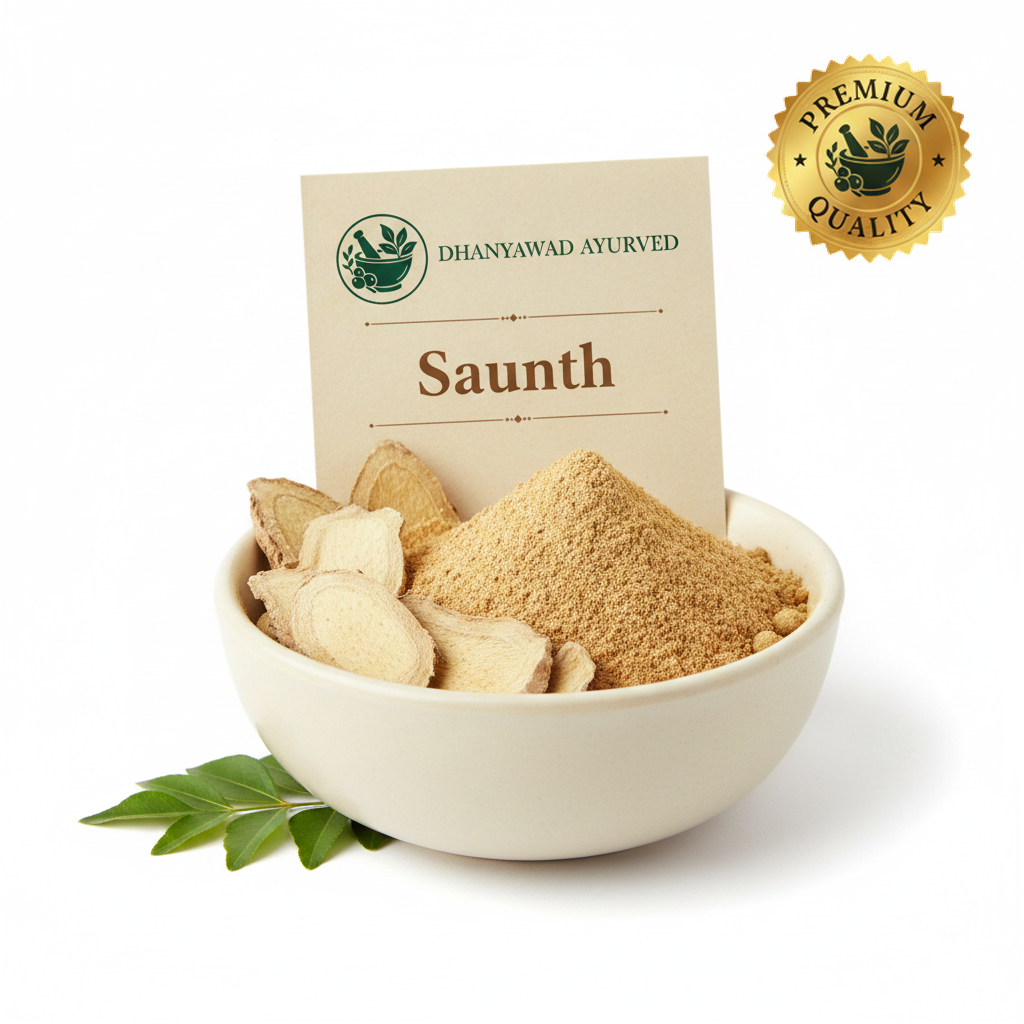
What Is Saunth (Dry Ginger)?
Saunth is fresh ginger (Zingiber officinale) that has been sun-dried or oven-dried, transforming its phytochemical profile in the process. While fresh ginger (Adrak) contains predominantly gingerols, drying converts many of them to shogaols and zingerone — compounds with more concentrated warming, anti-inflammatory and digestive properties. This is why Ayurveda treats Saunth and Adrak as distinct medicines with different therapeutic emphases.
In classical Ayurveda, Saunth (Shunti) is considered more powerful for Kapha and Vata disorders than fresh ginger. It appears as one of the three ingredients in Trikatu Churna (Saunth + Kali Mirch + Pippali) — one of Ayurveda's most foundational formulas for digestive fire and respiratory health. Saunth is classified as Ushna (heating), Kaphavatashamaka (Kapha and Vata-pacifying) and Deepana-Pachana (digestive stimulant).
Names in Other Languages
| Language / System | Name |
|---|---|
| Hindi / Urdu | सौंठ / سونٹھ (Saunth / Sonth) |
| Sanskrit / Ayurveda | Shunti, Vishvabheshaja, Ardraka (fresh) |
| English | Dry Ginger, Dried Ginger Root, Ground Ginger (powder) |
| Tamil | சுக்கு (Chukku / Sukku) |
| Telugu | శొంఠి (Shonthi) |
| Marathi / Gujarati | Suntha / Sunth |
| Botanical | Zingiber officinale Roscoe; family Zingiberaceae; dried rhizome |
How to Identify Genuine Saunth
- Appearance: Pale buff to light tan, irregularly shaped dried pieces with a light greyish or yellowish skin. The cut surface shows a pale yellow interior. Powder should be pale yellow to off-white.
- Aroma: Sharp, pungent, spicy aroma — stronger and more concentrated than fresh ginger. Good Saunth has a clearly peppery, warm note alongside the characteristic ginger fragrance.
- Taste: Hot, pungent and slightly sweet. The pungency (from shogaols) should be pronounced. Very mild taste indicates poor quality or stale material.
- Adulteration: Low-grade material may include exhausted (already-extracted) ginger fibre or sand to add weight. Rub a piece — it should not feel gritty.
Traditional Uses
Saunth is among the most widely referenced herbs in the Charaka Samhita, Sushruta Samhita and Ashtanga Hridayam:
- Digestive health (Deepana-Pachana): Saunth kindles Agni (digestive fire) and is used for indigestion, bloating, flatulence, nausea and sluggish digestion. It is a component of Trikatu — the foundational digestive formula in Ayurveda. Saunth tea or powder in warm water before meals is a classical digestive preparation.
- Joint pain (Vata-Kapha disorders): The warming, anti-inflammatory action of dry ginger's shogaols makes it one of the primary Ayurvedic herbs for joint stiffness, mild arthritis and muscular pain. If you have diagnosed arthritis or are on anti-inflammatory medication, consult your doctor before using Saunth as a supplement.
- Respiratory and cold (Kaphahara): Saunth is used in cold, cough and congestion formulations — classically in Trikatu and in decoctions with Tulsi and Mulethi. It warms the respiratory tract and helps expel accumulated Kapha.
- Nausea and morning sickness: Ginger's anti-nausea properties are its most well-studied modern application. Saunth in small doses is traditionally used for travel sickness and nausea. Pregnant women should consult their doctor about appropriate dose and form before using concentrated Saunth.
- Metabolism support: As a thermogenic herb, Saunth is included in weight management formulations to support metabolic rate and fat digestion.
These are traditional uses. Saunth is a spice and herbal material, not a medicine, and does not treat or cure any disease. Consult a qualified doctor or Ayurvedic practitioner for any diagnosed condition.
How to Use Saunth
- Saunth tea (Adrak Chai base): Boil ½–1g (a small pinch) of Saunth powder in 200ml water for 5–10 minutes. Add honey and lemon to taste. Drink before meals for digestive support or at the onset of cold symptoms.
- As Trikatu (with Kali Mirch and Pippali): Mix equal parts Saunth, black pepper and long pepper powder; take ¼–½g with honey before meals for digestive fire and metabolic support.
- Powder in warm water: ½–1g in warm water on an empty stomach for nausea and morning digestive sluggishness.
- In cooking: Saunth is a culinary spice used in Indian sweets (e.g., Panjiri, Panjeeri) and savoury dishes — an easy way to incorporate it daily.
Product Details
| Botanical source | Zingiber officinale Roscoe, Zingiberaceae |
| Part used | Dried rhizome |
| Pack size | 100g |
| Form | Whole dried pieces or powder |
| Price | ₹120 per 100g |
| Storage | Airtight container; cool, dry, dark place. Shelf life 12–24 months for whole dried; 6–12 months for powder. Discard if aroma fades. |
| Sold by | Dhanyawad Ayurved Vatika, Dwarka, New Delhi |
Buy Saunth online at Dhanyawad Ayurved.
Safety and Cautions
- Blood-thinning medication: Ginger has mild antiplatelet properties. People on blood-thinning drugs (warfarin, aspirin, clopidogrel) should consult their doctor before taking Saunth as a daily supplement.
- Pregnancy: Small culinary amounts are generally safe. High supplemental doses of dry ginger during pregnancy should be discussed with a doctor.
- Acid reflux / GERD: Saunth is heating; people with acid reflux, peptic ulcer or severe GERD may find it aggravates symptoms. Consult a practitioner about whether Saunth is appropriate for your condition.
- Gallstones: Ginger stimulates bile flow; consult a doctor if you have gallstones before taking large amounts.
- Diabetes medication: Saunth may have mild blood-sugar effects; inform your doctor if you use it alongside hypoglycaemic drugs.
See a doctor before using Saunth as a supplement if you are on blood-thinning, diabetes or blood pressure medication, have GERD or a peptic ulcer, or are pregnant.
Frequently Asked Questions
What are the benefits of Saunth (Dry Ginger)?
Saunth is traditionally used for digestive health (bloating, indigestion, nausea), joint pain and stiffness, respiratory conditions (cough, cold, congestion), nausea relief and metabolic support. It is one of the principal components of Trikatu Churna — Ayurveda's classic digestive and respiratory formula.
What is the difference between Saunth and fresh ginger (Adrak)?
Fresh ginger contains predominantly gingerols. Drying converts gingerols to shogaols and zingerone — more concentrated, more heating compounds. Ayurveda treats them as distinct medicines: Adrak (fresh) is milder and better suited for Pitta conditions; Saunth (dry) is more Kapha and Vata-reducing with stronger digestive and anti-inflammatory action.
How do I use Saunth for joint pain?
Traditionally, ½–1g of Saunth powder is taken with warm water or warm milk twice daily. It is also combined with equal parts turmeric powder for a warming joint support tea. Do not self-treat arthritis with Saunth alone; consult a doctor if you have diagnosed joint disease or are on anti-inflammatory medication.
Can Saunth be used for weight loss?
Saunth is a thermogenic spice used in traditional weight management formulations to support metabolism and fat digestion. It is not a weight-loss drug. Incorporate it as part of a balanced diet and active lifestyle. Consult a doctor if you have underlying health conditions.
Is Saunth safe to take daily?
In culinary amounts (as a spice in food), Saunth is safe for most healthy adults daily. As a supplement (½–2g), it is generally well tolerated for short periods. People with acid reflux, ulcers, blood-thinning medication or pregnancy should consult a doctor about appropriate use before taking it regularly.
What is Trikatu and does it contain Saunth?
Trikatu ("three pungents") is a classical Ayurvedic formula combining equal parts Saunth (dry ginger), Kali Mirch (black pepper) and Pippali (long pepper). It is one of Ayurveda's most important formulas for digestive fire, metabolism and Kapha-Vata disorders. Dhanyawad Ayurved also stocks Trikatu Powder as a ready-made blend.
Information reviewed by Vaidya Ravinder Arora (40+ years), Dhanyawad Ayurved Vatika, Dwarka, New Delhi. Traditional uses only; not medical advice.

VEGAN

NATURAL INGREDIENTS

CRUELTY FREE

Ethically Sourced

No Artificial Flavors

Made with Love
You may also like


Disclaimer: The information provided is for educational purposes only and is not intended to replace medical advice. Always consult a qualified Ayurvedic practitioner before using any herbal product for therapeutic use, as individual responses may vary based on one’s health condition, dosha constitution, and imbalances.

- Choosing a selection results in a full page refresh.
- Opens in a new window.
