Ayurvedic Shampoo: Benefits, Key Ingredients & How to Choose the Right One
What makes an ayurvedic shampoo different, the herbs that matter most, and how to pick one that suits your hair type and concern.
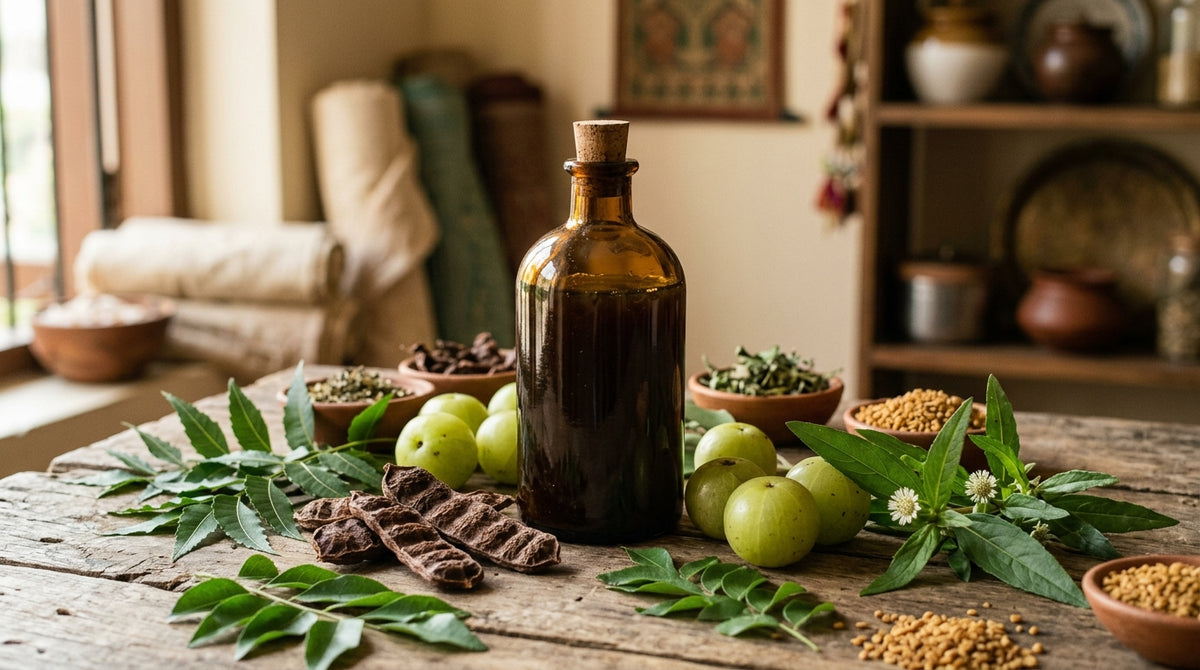
An ayurvedic shampoo uses traditional Indian herbs — Shikakai, Reetha, Bhringraj, Amla and Neem — as active cleansing and nourishing agents. These plant-based formulations are gentler than most synthetic shampoos and are traditionally used to support a healthy scalp, reduce breakage and keep hair looking nourished. Choose one that matches your scalp type — oily, dry or normal.
- Ayurvedic shampoos use plant-based cleansers like Shikakai and Reetha instead of synthetic sulphates, making them gentler on the scalp.
- Herbs like Bhringraj and Amla are traditionally used to support scalp health and may help reduce hair fall.
- Chemical-free does not always mean preservative-free; always check the ingredient list for parabens and SLS.
- Ayurvedic shampoos work best as part of a routine that includes oiling and a balanced diet.
- Persistent hair fall can have medical causes; consult a doctor if shedding exceeds 100 strands a day for more than a month.
What is ayurvedic shampoo?
Ayurvedic shampoo is a hair-cleansing product that replaces (or significantly reduces) synthetic surfactants with herbal extracts rooted in traditional Indian medicine. The cleansing action comes from naturally saponin-rich plants like Shikakai and Reetha rather than sodium lauryl sulphate (SLS).
| Feature | Conventional Shampoo | Ayurvedic Shampoo |
|---|---|---|
| Primary cleanser | SLS / SLES (sulphates) | Shikakai, Reetha (natural saponins) |
| Lather | Dense, abundant | Mild, moderate |
| Scalp pH effect | May disrupt acid mantle | Generally gentler; closer to natural pH |
| Active botanicals | Fragrance or minor extract | Bhringraj, Amla, Neem, Brahmi etc. |
| Suitable for | All types if well formulated | Especially sensitive scalps, colour-treated hair |
Not every product labelled "ayurvedic" is sulphate-free. Always read the ingredient list — look for Acacia concinna (Shikakai), Sapindus mukorossi (Reetha) and Eclipta alba (Bhringraj) high in the list.
Key ingredients in a good ayurvedic shampoo
The quality of an ayurvedic shampoo depends entirely on its ingredient profile. Here are the herbs to look for and what they traditionally do:
| Herb (Hindi / Botanical) | Traditional Role | Best For |
|---|---|---|
| Shikakai / Acacia concinna | Natural cleanser, low-lather saponin | All hair types; colour-treated hair |
| Reetha / Sapindus mukorossi | Cleansing saponin, adds shine | Oily scalp, dandruff |
| Bhringraj / Eclipta alba | Traditionally used to support scalp nourishment | Hair fall, weak roots |
| Amla / Phyllanthus emblica | Rich in Vitamin C; supports follicle health | Dull, brittle hair |
| Neem / Azadirachta indica | Traditionally used for scalp hygiene | Dandruff, itchy scalp |
| Brahmi / Bacopa monnieri | May help soothe scalp irritation | Sensitive, flaky scalp |
| Methi / Fenugreek | Traditionally used to condition hair | Dry, frizzy hair |
| Triphala (Amla+Haritaki+Bibhitaki) | Antioxidant blend; supports scalp health | General strengthening |
Benefits of ayurvedic shampoo for hair and scalp
Gentler cleansing without stripping natural oils
Natural saponins from Shikakai and Reetha clean the scalp without completely stripping its protective oil layer (sebum). This makes ayurvedic shampoos well-suited to everyday use and to those with a dry or sensitive scalp.
May support reduction of hair fall
Herbs like Bhringraj and Amla are traditionally used in Ayurveda to nourish hair roots and support scalp circulation. They may help reduce hair fall caused by a weak scalp or nutritional deficiency, though persistent or sudden hair loss should always be evaluated by a doctor.
Dandruff and itchy scalp
Neem and Reetha are traditionally used in Ayurvedic practice for scalp hygiene. Neem in particular has been studied for its properties that may help keep scalp flora balanced. For chronic dandruff, a medicated shampoo prescribed by a dermatologist may still be needed alongside herbal options.
May improve hair texture over time
Regular use of Amla and Methi-based formulations may improve hair texture, elasticity and shine over weeks. Results vary by hair type and overall diet.
Free from harsh sulphates and parabens (when properly formulated)
A well-made ayurvedic shampoo avoids SLS, SLES and parabens. This matters for people with psoriasis, eczema or chemically treated hair who need gentler cleansers.
How to choose the right ayurvedic shampoo for your hair type
There is no single best ayurvedic shampoo — the right one depends on your scalp condition and primary concern:
| Hair / Scalp Type | Look For | Avoid |
|---|---|---|
| Oily scalp with dandruff | Reetha, Neem, Triphala | Heavy conditioning agents like Methi oil |
| Dry, frizzy hair | Amla, Methi, Brahmi, Shikakai | Drying alcohols, heavy fragrance |
| Hair fall / weak roots | Bhringraj, Amla, Brahmi | SLS-based foaming agents |
| Normal / combination | Any balanced Shikakai + Bhringraj blend | Overly moisturising formulas |
| Colour-treated / chemically processed | Shikakai, Aloe Vera, Amla | Reetha (slightly alkaline, may affect colour) |

Which shampoo is best in Ayurveda?
There is no single "best" shampoo — Ayurveda itself recommends choosing herbs based on your prakriti (body constitution) and scalp condition. A Kapha-dominant oily scalp benefits from Reetha and Neem; a Vata-dominant dry scalp does better with Amla and Brahmi. Look for products where the key herbs appear in the first five ingredients, not just as trace additions for marketing.
Is ayurvedic shampoo chemical-free?
No manufactured product is entirely free of chemistry — water is a chemical. What the term really means is free from synthetic sulphates, parabens and artificial fragrances. A genuine ayurvedic shampoo uses plant-derived surfactants. However, many mass-market products add the word "ayurvedic" to shampoos that still contain SLS. The safest approach: read the INCI (ingredient) list, not just the front label.
How to use ayurvedic shampoo for best results
- Pre-oil the night before: Apply warm coconut, sesame or bhringraj oil to the scalp 6–8 hours before washing. This protects the hair shaft during cleansing.
- Wet hair thoroughly: Warm (not hot) water opens the cuticle gently.
- Dilute if needed: Herbal shampoos are often more concentrated than synthetic ones. Diluting 1:1 with water can help with even distribution and lather.
- Massage the scalp: Use fingertips (not nails) in circular motions for 2–3 minutes. This supports circulation.
- Rinse fully: Herbal residue left on the scalp can cause buildup or itching.
- Condition mid-lengths to ends: If your hair is dry, follow with an Amla or Aloe-based conditioner.
- Air dry where possible: Excessive heat styling counters the benefits of gentle cleansing.
Buy Dhanyawad Herbal Hair Shampoo
Dhanyawad's Herbal Hair Shampoo is formulated with traditional herbs including Bhringraj, Amla, Shikakai and Neem. It is free from SLS and paraben, making it suitable for regular use on all hair types. Available in 200 ml at ₹215. Pair it with regular oiling for best results. Order here.
For more on herbs that support hair and scalp health, read our guides on Multani Mitti for hair and scalp and Moringa Powder benefits.
When to see a doctor
Switching to an ayurvedic shampoo will not address hair loss that has a medical cause. See a dermatologist or doctor if you notice: sudden or patchy hair loss, shedding of more than 100 strands per day consistently for over 4 weeks, bald patches, scalp pain, redness or oozing, or if hair fall began after a major illness, hormonal change or new medication.
Frequently Asked Questions
Which ayurvedic shampoo is best for hair fall?
Look for formulations with Bhringraj (Eclipta alba), Amla and Brahmi high in the ingredient list. These herbs are traditionally used in Ayurveda to support scalp nourishment and may help with hair fall caused by a weak scalp. Medical causes of hair fall need a doctor's evaluation regardless of which shampoo you use.
Can I use ayurvedic shampoo every day?
Yes, gentle ayurvedic shampoos with Shikakai and Reetha as the primary cleanser are generally suitable for daily use because they do not strip natural oils the way SLS does. However, over-washing any type of hair can lead to dryness — 3–4 times per week is suitable for most people.
Are ayurvedic shampoos good for dandruff?
Shampoos containing Neem, Reetha and Triphala are traditionally used to support scalp hygiene and may help mild dandruff. For persistent or severe dandruff (seborrhoeic dermatitis), a medicated shampoo with ketoconazole or zinc pyrithione prescribed by a dermatologist is more effective. Herbal shampoos can be used alongside as a maintenance wash.
Which ayurvedic shampoo is 100% natural and chemical-free?
No commercial shampoo is 100% free of all chemistry, but some are free of synthetic sulphates, parabens and artificial fragrances. Look for products using Acacia concinna (Shikakai) and Sapindus mukorossi (Reetha) as the cleansing base. Check the full INCI ingredient list rather than trusting marketing claims on the front label.
Is ayurvedic shampoo good for men?
Absolutely. Scalp health is the same for men and women. Men who experience early hair thinning or an oily scalp often find that Bhringraj and Neem-based ayurvedic shampoos support scalp health. They work well as part of a routine that includes regular oiling and a protein-adequate diet.
Does ayurvedic shampoo help with hair growth?
Ayurvedic shampoos support the conditions for healthy hair growth — clean scalp, nourished follicles, reduced breakage — but they do not directly cause new hair to sprout. Hair growth depends heavily on diet, hormones and genetics. Think of the shampoo as one part of a broader routine, not a standalone solution.
Can I use ayurvedic shampoo on colour-treated hair?
Shikakai-based formulas are among the gentlest options for colour-treated hair because they cleanse without the high pH of SLS shampoos. Avoid Reetha-dominant formulas as soapnut is mildly alkaline and may dull colour. Always do a strand test before regular use on coloured hair.
Which is the best herbal hair shampoo?
The best herbal shampoo is the one whose ingredients match your scalp concern. For hair fall, look for a formulation where Bhringraj (Eclipta prostrata) and Amla appear high in the ingredient list. For dandruff and oiliness, prioritise Reetha and Neem. For general cleansing and shine, Shikakai is the most versatile plant-based cleanser available.
Which Ayurvedic brand is best for hair?
Rather than focusing on a brand name, evaluate any product by its ingredient list. A genuinely Ayurvedic formula will list plant extracts — Shikakai, Bhringraj, Amla — in the first five ingredients, not near the bottom as trace amounts. Dhanyawad's Herbal Hair Shampoo is one such formulation, built around these key herbs without SLS or parabens.
Sources
Written by the Dhanyawad Ayurved team and reviewed by Vaidya Ravinder Arora (40+ years), Dhanyawad Ayurved Vatika, Dwarka, New Delhi. This article describes traditional uses for general information. It is not medical advice. Consult a qualified doctor or Ayurvedic practitioner before using any herb therapeutically.