Hair Fall Solution: Causes, What Works at Home & When to See a Doctor
A practical guide to hair fall solutions — what causes hair loss, which home remedies are backed by tradition, how to use herbal hair oil correctly, and when to seek medical advice.
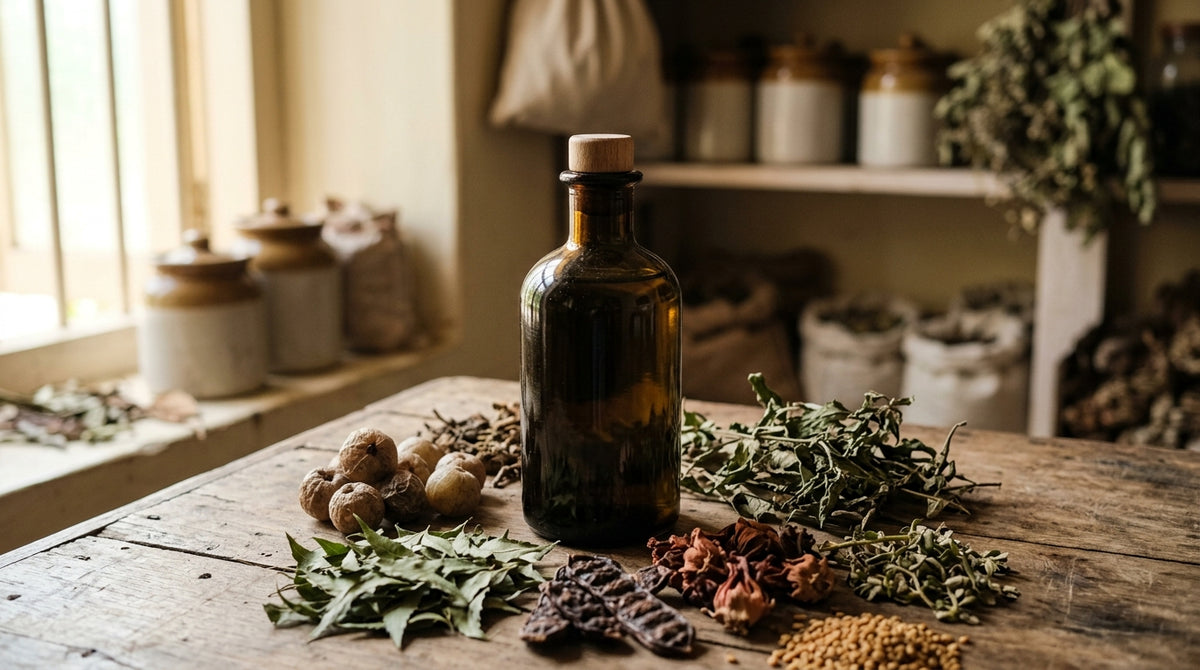
The most effective hair fall solutions combine understanding the underlying cause with consistent scalp care. For everyday shedding, warm Ayurvedic hair oil massage with herbs like bhringraj and amla, a balanced protein-rich diet, and gentle hair handling are the most widely recommended approaches. Sudden, patchy or rapidly worsening hair loss needs a doctor's assessment.
- Hair fall of up to 100 strands per day is considered normal; consistent shedding well above this for more than four weeks warrants attention.
- Scalp massage with a warm Ayurvedic hair oil containing bhringraj, amla and brahmi is one of the most consistently recommended traditional approaches for hair fall support.
- Diet, stress, hormonal changes and nutritional deficiencies are among the most common reversible causes of increased hair shedding.
- Herbal hair oil supports scalp health and may help reduce everyday hair fall when used two to three times per week as part of a consistent routine.
- See a dermatologist if you notice sudden patchy hair loss, scalp sores or shedding that begins after a new medication or illness.
How much hair fall is normal?
Losing between 50 and 100 strands per day is considered within the normal range for most adults. The scalp has around 100,000 hair follicles, each cycling independently through growth, transition and resting phases. Noticing a few strands on your comb or in the shower is therefore not a cause for concern. Consistent shedding above this range for more than four weeks, or visible thinning and bald patches, is worth investigating.
What are the common causes of hair fall?
Hair fall has many causes, and identifying the right one is the key to finding an effective solution. The most common are listed below.
| Cause | Hair Loss Pattern | Reversible? |
|---|---|---|
| Nutritional deficiency (iron, protein, Vitamin D) | Diffuse shedding all over scalp | Yes, with diet correction |
| Thyroid imbalance | Diffuse thinning | Yes, with treatment |
| Telogen effluvium (stress, illness, surgery) | Heavy shedding 2–4 months post-trigger | Usually yes |
| Hormonal changes (pregnancy, menopause) | Diffuse shedding | Often yes |
| Androgenetic alopecia (hereditary) | Pattern thinning at crown/temples | Manageable; needs medical care |
| Alopecia areata (autoimmune) | Patchy, coin-shaped bald areas | Variable; needs medical care |
| Medication side effects | Diffuse shedding after new drug | Often yes after stopping |
What are the best hair fall solutions at home?
For hair fall that is not linked to an underlying medical condition, several home approaches are traditionally used and supported by preliminary research.
Scalp massage with warm herbal oil
Regular scalp massage is one of the most consistently recommended practices across both Ayurvedic and modern hair care. Massaging the scalp with warm oil for 10–15 minutes is traditionally believed to stimulate blood circulation around the hair follicles, supporting nutrient delivery to the root. Herbs most associated with hair fall support include bhringraj (Eclipta prostrata), amla (Phyllanthus emblica), brahmi (Bacopa monnieri) and neem — see the ingredients table below.
Amla, fenugreek and onion juice
Amla is traditionally rich in Vitamin C and is believed to support follicle strength — it is also a classic ingredient in herbal hair shampoos. Fenugreek (methi) seeds soaked overnight and ground into a paste are traditionally applied to the scalp for 30 minutes to nourish the follicle. Onion juice, applied twice weekly, has small clinical trial support for hair regrowth — its high sulphur content is considered the active factor.
Diet and stress management
A diet low in protein or iron is a common correctable cause of diffuse hair shedding. Telogen effluvium (reactive shedding triggered by stress or illness) usually resolves once the cause is addressed. Yoga, pranayama and adequate sleep are traditionally recommended alongside herbal care. Ashwagandha is one adaptogenic herb used in Ayurveda to support stress resilience — see our guide on ashwagandha's traditional uses.
Key herbs traditionally used in Ayurvedic hair oil
The table below covers the most important herbs by their common, Sanskrit and botanical names.
| Common Name | Sanskrit / Hindi | Botanical Name | Traditional Role |
|---|---|---|---|
| Bhringraj | Kesharaj / Bhringraj | Eclipta prostrata | Supports scalp circulation; traditionally the primary herb for hair fall and premature greying |
| Amla | Amalaki / Aamla | Phyllanthus emblica | Rich in Vitamin C; traditionally strengthens hair follicles and supports natural hair colour |
| Brahmi | Brahmi / Jalanimba | Bacopa monnieri | Traditionally calms scalp inflammation and may support hair thickness |
| Neem | Nimba | Azadirachta indica | Antifungal and antimicrobial; traditionally used for dandruff and scalp infections |
| Hibiscus | Japapushpa | Hibiscus rosa-sinensis | Traditionally used to condition hair and reduce breakage and split ends |
| Fenugreek | Methi / Methika | Trigonella foenum-graecum | Protein-rich; traditionally used to nourish follicles and reduce scalp dryness |

How to use Ayurvedic hair oil for best results
Ayurvedic hair oil is primarily a scalp treatment — the goal is to reach the follicle, not coat the strand. Application method matters as much as the formulation itself.
| Step | What to do |
|---|---|
| 1. Warm the oil | Stand the bottle in warm water for 5 minutes; do not microwave |
| 2. Section the hair | Divide into 4–6 sections so oil reaches the scalp directly |
| 3. Apply and massage | Use fingertips in circular movements for 10–15 minutes along each parting |
| 4. Leave on | 30 minutes minimum; overnight for deeper conditioning |
| 5. Wash off | Gentle herbal shampoo; two washes may be needed to remove fully |
Recommended frequency: Two to three times per week for active hair fall; once a week for maintenance. Daily oiling is not recommended as buildup can clog follicles. Pair with a sulphate-free shampoo — see our dandruff and scalp care guide for cleanser tips.
What is the Ayurvedic approach to hair fall?
Ayurveda views hair as a by-product (upadhatu) of bone tissue (asthi dhatu). Hair health is seen as a reflection of deeper systemic balance — digestion, sleep, stress and the harmony of the three doshas. Excessive hair fall is most often attributed to aggravated Pitta dosha, associated with heat and inflammation.
The Ayurvedic approach combines external oil application (shiro abhyanga), internal herbal support and dietary correction. External oil alone is one part of the solution. Classical texts describe bhringraj as the foremost herb for the hair and recommend regular scalp massage as a primary preventive measure. Rasayana herbs such as amla and ashwagandha are traditionally used internally to support the deep tissues — see our overview of ashwagandha's traditional uses.
Can oiling stop hair fall?
Regular oil massage may support scalp health and reduce hair fall caused by scalp dryness, poor circulation or mild inflammation. It is not a standalone solution for hair loss caused by hormonal imbalance, autoimmune conditions or androgenetic alopecia. Think of oiling as consistent scalp nourishment — most effective as a preventive and supportive practice over weeks and months, not as a quick fix.
When should you see a doctor about hair fall?
Some causes of hair loss require medical diagnosis that no oil or home remedy can address. See a dermatologist if you notice:
- Sudden, coin-shaped or patchy bald areas (possible alopecia areata)
- Heavy shedding that began after starting a new medication
- Scalp sores, persistent redness, swelling or crusting
- Hair loss alongside weight changes, fatigue or temperature intolerance (possible thyroid issue)
- Diffuse thinning with no clear trigger lasting more than 4–6 weeks
Do not rely solely on any herbal oil or home remedy if you have one of these red flags — a diagnosis is the essential first step.
Buy: Anti-Baldness Herbal Hair Oil by Dhanyawad Ayurved
Dhanyawad Ayurved's Anti-Baldness Herbal Hair Oil is formulated with bhringraj, amla, brahmi and neem in a traditional sesame oil base, prepared following classical taila paka processing. It is available from ₹350 for the starter size (300 ml at ₹999; 500 ml at ₹1,499). Made in India with an Ayurvedic drug licence; no mineral oil or synthetic fragrance. For complementary scalp care, see our full guide on Ayurvedic hair oil ingredients and how-to.
Frequently Asked Questions
What are the big 3 for thinning hair?
In conventional dermatology the "big 3" for androgenetic thinning refers to minoxidil, finasteride and a DHT-blocking shampoo. In Ayurveda, the three cornerstone herbs for hair fall support are bhringraj, amla and brahmi. If you suspect androgenetic alopecia, consult a dermatologist — medical treatments have the strongest evidence for that pattern.
How much hair loss is normal per day?
Losing 50–100 strands per day is considered within the normal range for most adults. This reflects the natural cycling of follicles through growth and resting phases. Consistent shedding well above this level, or visible thinning and bald patches, lasting more than four weeks is worth discussing with a doctor.
Can oiling stop hair fall for good?
Regular Ayurvedic hair oil massage may support scalp health and help reduce everyday hair fall as part of a consistent long-term routine. Hair fall from hormonal, autoimmune or genetic causes requires medical assessment — no topical oil addresses these root causes. Twice-weekly oiling supports the scalp environment over the long term alongside diet and lifestyle care.
How do I stop my hair falling out at home?
Start with warm herbal oil scalp massage two to three times a week, a protein-adequate diet, sufficient iron, and reducing heat styling and tight hairstyles. Prioritise sleep and stress management. If shedding is heavy or linked to illness or a new medication, consult a doctor to rule out a correctable cause.
What shampoo is best for hair loss?
Look for a gentle, sulphate-free or herbal shampoo with ingredients like neem, amla, reetha (soapnut) or shikakai. These traditionally cleanse the scalp without stripping its natural oils. Avoid shampoos with strong sulphates (SLS/SLES) if your scalp is dry or sensitive. See our detailed guide to herbal hair shampoo ingredients for more on what to look for.
How long does it take for Ayurvedic hair oil to show results?
Traditional Ayurvedic guidance suggests consistent use over at least 4–8 weeks before assessing results. Hair follicles cycle over weeks, so changes in shedding or scalp condition take time to become visible. Regular, twice-weekly application combined with dietary support gives the best foundation for seeing improvement.
Which vitamin deficiency causes hair fall?
Iron deficiency and low ferritin are among the most common nutritional causes of diffuse shedding, particularly in women. Low Vitamin D, biotin and zinc are also linked to increased hair fall. A blood test can confirm whether a deficiency is present before you start supplementing — excess intake of some vitamins can itself cause problems.
Sources
Written by the Dhanyawad Ayurved team and reviewed by Vaidya Ravinder Arora (40+ years), Dhanyawad Ayurved Vatika, Dwarka, New Delhi. This article describes traditional uses for general information. It is not medical advice. Consult a qualified doctor or Ayurvedic practitioner before using any herb therapeutically.