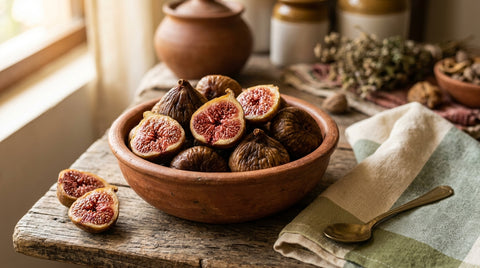
Anjeer Benefits: Why Eat Soaked Figs, Best Time and How Many a Day
What dried figs give you, why soaking helps, the best time to eat them, how many are enough, and who should be careful.
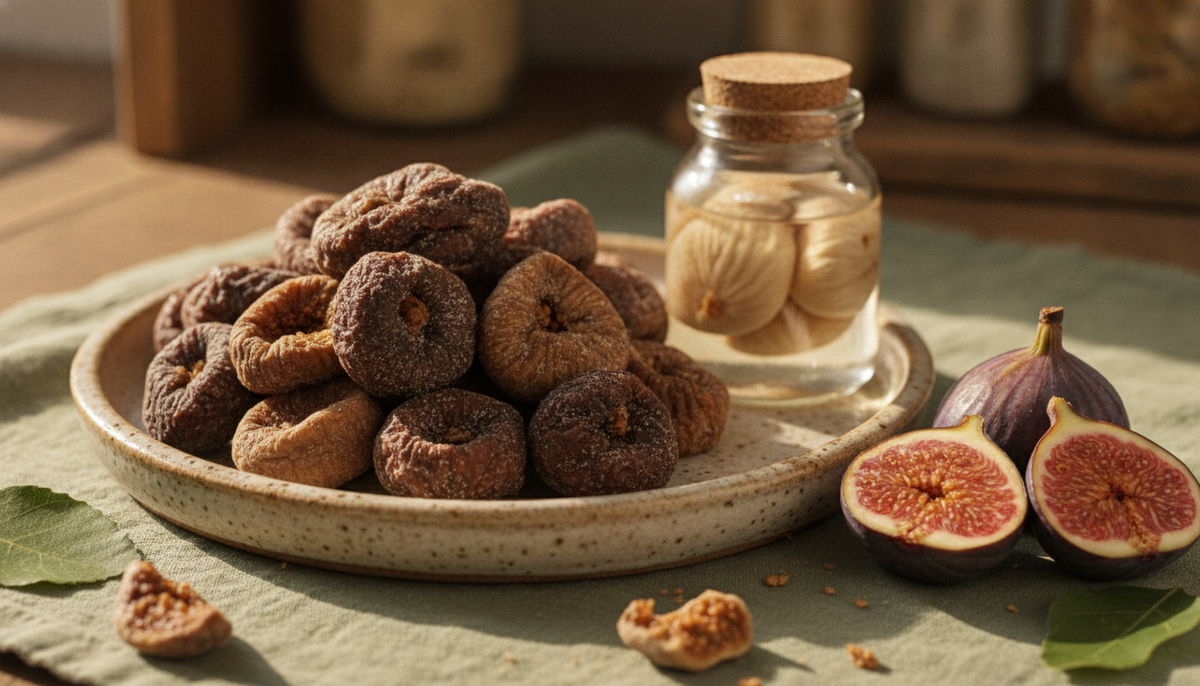
Anjeer (dried fig) is a fibre-rich dried fruit that also provides potassium, calcium and some iron. The classic way to eat it is 2–3 figs soaked overnight and eaten in the morning. Its fibre makes it a traditional aid for constipation. Because dried figs are high in natural sugar, keep portions small if you have diabetes.
- Anjeer (fig, Ficus carica) is a dried fruit rich in fibre, potassium, calcium and some iron.
- Soaking 2–3 dried figs overnight and eating them in the morning is the most common way to eat them.
- Its fibre makes anjeer a traditional help for constipation.
- Dried figs are high in natural sugar, so people with diabetes should keep portions small.
- Too many figs can cause loose stools or bloating.
What is anjeer?
Anjeer is the fruit of the fig tree, Ficus carica. In India it's mostly eaten dried, as a dry fruit available all year. Drying concentrates its nutrients and its sugar.
| Language | Name |
|---|---|
| English | Fig, dried fig |
| Hindi / Urdu | अंजीर (Anjeer, Anjir) |
| Botanical | Ficus carica |
Anjeer benefits
1. Supports regular digestion
Dried figs are rich in fibre, which softens stool and keeps bowel movements regular. Soaked figs are a long-standing home remedy for constipation.
2. A healthier sweet snack
Natural sugar plus fibre makes anjeer a filling, energy-giving snack, and a better choice than biscuits or mithai.
3. Minerals for bones
Figs contain calcium, potassium and magnesium, which are all part of a balanced diet for bone health.
4. Some iron
Anjeer adds a little iron to the diet, which is why it's often included in iron-rich meal plans. Treat anaemia with your doctor's advice.
Anjeer benefits for women
With fibre, calcium and some iron in one snack, 2–3 soaked figs a day are a practical addition to women's diets, especially for anyone who struggles with constipation or eats little dairy. In pregnancy, figs are a normal food, but keep portions moderate because of the sugar.
Why eat soaked anjeer?
Soaking softens the dried fruit, makes it easier to chew and digest, and is the traditional way it's eaten for constipation. You can drink the soaking water too.
- Soak 2–3 dried figs in half a cup of water at night.
- Eat them on an empty stomach in the morning.
- Or eat them as a snack, or blend them into warm milk.
What happens if you eat anjeer daily?
Eaten in moderation (2–3 a day), anjeer adds fibre and minerals and can help keep digestion regular. Eating many more can lead to loose stools, gas, and more sugar than you might expect.
How many anjeer per day?
| Who | Dried figs per day |
|---|---|
| Adults | 2–3 |
| Children over 5 | 1, soaked or finely chopped |
| People with diabetes | 1–2, with a doctor's advice |
Is anjeer hot or cold?
In traditional Indian food wisdom, dried figs are considered warming, which is why many people prefer them soaked, and in winter. Fresh figs are considered cooler.
Who should not eat anjeer?
- People with diabetes: small portions only, because of the high natural sugar.
- People on blood thinners (such as warfarin): ask your doctor, as figs contain vitamin K.
- Anyone allergic to figs or latex, who may react.
- Anyone with loose stools: avoid until they settle.
How to pick good dried figs
- Soft, slightly sticky and evenly light brown, not rock-hard.
- A fine white bloom is natural sugar, not mould. Avoid green or black spots.
- No sour or stale smell.
Dried vs fresh figs
| Dried anjeer | Fresh figs | |
|---|---|---|
| Availability | All year | Seasonal, a few months |
| Nutrients | More concentrated: more fibre and minerals per gram | Mostly water, lighter |
| Natural sugar | Concentrated | Lower |
| How to eat | Soaked, in milk, in sweets | As fresh fruit |
| Shelf life | Months, in an airtight jar | 2–3 days, refrigerated |

5 easy ways to eat anjeer
- Soaked: soak 2–3 figs overnight and eat them in the morning. This is the classic way.
- Anjeer milk: soak 2 figs in a little milk, then blend them with warm milk. Good at night.
- In breakfast: chop figs into daliya or oats, so no extra sugar is needed.
- No-sugar laddoos: blend figs, dates and nuts into small balls, a better answer to sweet cravings.
- In salads and chutneys: chopped figs in a salad, or blended with mint into a chutney.
Anjeer in pregnancy
Figs are an ordinary food and are eaten in moderation during pregnancy. Their fibre can help with pregnancy constipation, and they add some iron and calcium. Keep portions to 1–2 a day because of the sugar, especially if you have gestational diabetes, and discuss your diet with your doctor.
Anjeer for kids
Children over 5 can have 1 fig, soaked or finely chopped. Dried figs can be hard for small children to chew, so blend them or mix them into milk. Ask a doctor before giving anything for constipation, especially to children under 2.
Anjeer vs dates vs prunes
| Anjeer (figs) | Dates (khajoor) | Prunes (aloo bukhara) | |
|---|---|---|---|
| Best known for | Fibre + calcium | Quick energy | Constipation relief |
| Sweetness | Medium-high | Very high | Medium, slightly tart |
| Daily portion | 2–3 | 2–3 | 3–4 |
For constipation, figs and prunes both work well; prunes are the lighter choice if you want less sweetness.
Does anjeer help with weight?
Two or three figs a day fit easily into a weight-conscious diet, and their fibre helps you feel full. But dried figs are calorie- and sugar-dense, so large handfuls can add weight. For weight gain, some people add more figs to milk; for weight loss, keep to 2 and skip added sugar elsewhere.
Anjeer in Ayurveda and Unani tradition
Anjeer has long been part of Unani and Indian household diets as a nourishing dry fruit, often given to people recovering from illness and in winter. Traditional texts describe it as nourishing and mildly laxative, which matches its modern reputation for supporting digestion.
How to store anjeer
- Keep dried figs in an airtight jar in a cool, dry place.
- In hot, humid weather, refrigerate them to prevent insects and mould.
- Eat soaked figs the same day.
How to make anjeer milk
- Chop 2 dried figs and soak them in half a cup of warm milk for 20–30 minutes.
- Blend the soaked figs with that milk into a smooth paste.
- Stir it into a cup of hot milk, with a pinch of cardamom if you like.
- Skip added sugar, because the figs are sweet enough.
It's a comforting drink at bedtime, especially in winter. If milk doesn't suit you, eat soaked figs with water instead.
Is anjeer good for skin and hair?
There's no strong evidence that applying figs to skin or hair does much. As part of a balanced diet, though, anjeer's fibre, minerals and antioxidants contribute to overall health, which shows up in skin and hair over time. For topical skin care, proven home remedies like a multani mitti face pack are a better bet.
Common mistakes when eating anjeer
- Eating a handful: dried figs are sugar- and calorie-dense; 2–3 are enough.
- Eating many unsoaked: hard dried figs can feel heavy; soak them first.
- Adding sugar: anjeer milk and fig laddoos don't need extra sugar.
- Storing them in an open jar: humidity brings mould and insects.
- Relying on figs alone for constipation: water, vegetables and daily movement matter too.
Buy anjeer
Dhanyawad Ayurved sells Anjeer (Dried Fig) at ₹180 per 100g and ₹1,680 per kg, delivered across India. For constipation, pair it with isabgol or aloo bukhara (prunes).
Frequently Asked Questions
What is the best time to eat anjeer?
In the morning on an empty stomach, after soaking 2–3 figs overnight. They also make a good mid-day snack.
What happens if I eat anjeer daily?
In moderation, anjeer adds fibre and minerals and can keep digestion regular. Too many can cause loose stools and add a lot of sugar.
Who cannot eat anjeer?
People with fig allergies should avoid them. People with diabetes should keep portions small, and people on blood thinners should check with their doctor.
Is anjeer cool or hot?
Dried anjeer is traditionally considered warming, so it's usually soaked first and eaten more in winter.
What is anjeer called in English?
Fig, or dried fig. Its botanical name is Ficus carica.
Does anjeer cause weight gain?
Not at 2–3 a day. Dried figs are calorie- and sugar-dense, though, so eating large amounts can add weight.
Can I eat anjeer during pregnancy?
Yes, in moderation (1–2 a day). If you have gestational diabetes, ask your doctor about portions.
Should anjeer be eaten on an empty stomach?
Soaked figs on an empty stomach in the morning is the traditional way, especially for constipation, but you can eat them at any time as a snack.
When should I drink anjeer milk?
At bedtime, especially in winter. Blend 2 soaked figs into warm milk and skip added sugar.
Sources
Written by the Dhanyawad Ayurved team and reviewed by Vaidya Ravinder Arora (40+ years), Dhanyawad Ayurved Vatika, Dwarka, New Delhi. This article describes traditional uses for general information. It is not medical advice. Consult a qualified doctor or Ayurvedic practitioner before using any herb therapeutically.