
Anjeer in English – What Is Anjeer (Fig), Benefits, How to Eat and Side Effects
Anjeer in English is called fig (Ficus carica). Learn what anjeer is, its health benefits, how to eat it, the right daily amount, and who should be careful.
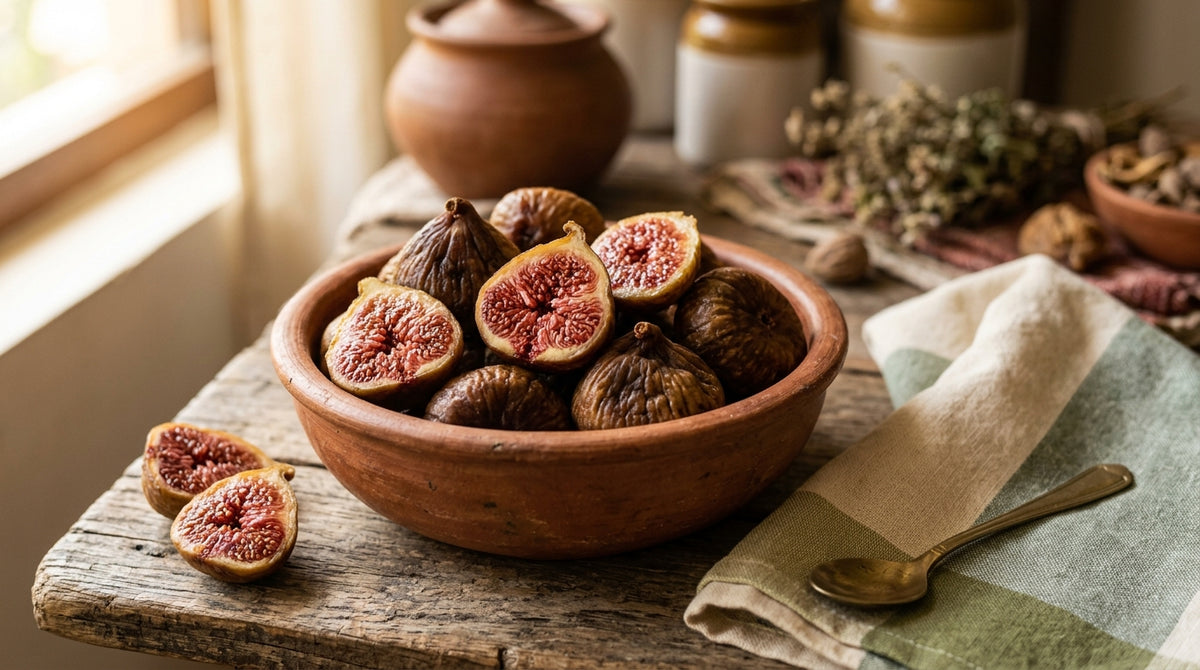
Anjeer in English is fig — the fruit of Ficus carica, a tree native to the Middle East and western Asia. Dried anjeer (dry fig) is a chewy, honey-sweet fruit packed with fibre, calcium, iron and potassium. In Ayurveda it is called Udumbara (a related species) and in Unani medicine it is prized as a nutritive tonic and digestive aid. Dhanyawad Ayurved stocks dried anjeer as a raw pansari herb, available in 100g packs.
- Anjeer (fig) in English is Ficus carica — a sweet, nutrient-dense dried fruit used across Ayurveda, Unani and Mediterranean traditions.
- Dried anjeer is high in fibre, calcium, potassium and iron, making it traditionally useful for digestion, bone health and energy.
- Soaking 2–3 anjeer overnight in water and eating them on an empty stomach is the most traditional method of use.
- Anjeer is high in sugar — people with diabetes should consult their doctor before eating regularly and not exceed 1–2 per day.
- See a doctor if you have digestive discomfort, a known fig or latex allergy, or any ongoing health condition before adding anjeer regularly to your diet.
What is Anjeer (Fig)?
The anjeer plant is a deciduous tree or large shrub belonging to the mulberry family (Moraceae). What we call the "fruit" is technically a syconium — a hollow, fleshy structure lined with tiny flowers on the inside. When fresh, anjeer is soft and green or purple; when dried, it becomes dark, wrinkled and intensely sweet.
Dried anjeer has been eaten for thousands of years. It is one of the earliest cultivated plants — archaeological evidence suggests fig cultivation predates that of wheat and barley. In the Quran, anjeer (التين, Al-Tin) is specifically mentioned as a blessed food, which is why figs hold religious significance in Islamic tradition and are eaten particularly during Ramadan.
Names in other languages
| Language | Name |
|---|---|
| Hindi / Pansari | अंजीर (Anjeer) |
| English | Fig, Common Fig, Dried Fig |
| Sanskrit / Ayurveda | अञ्जीर (Anjira), उदुम्बर (Udumbara — related species) |
| Arabic / Urdu | تین (Teen), Anjeer |
| Marathi | अंजीर (Anjeer) |
| Tamil | அத்திப்பழம் (Atthi pazham) |
| Bengali | ডুমুর (Dumur) |
| Kannada | ಅತ್ತಿ ಹಣ್ಣು (Atti hannu) |
| Botanical | Ficus carica L. (Moraceae) |
Are anjeer and dried figs the same thing?
Yes. Anjeer sold in Indian pansari shops and Ayurvedic stores is dried fig — the same fruit as the figs you see in international supermarkets. Fresh figs are called "taaza anjeer" and are seasonal; dried anjeer is available year-round and is what most traditional recipes and Ayurvedic preparations use.
How to identify genuine anjeer
- Appearance: oval to pear-shaped, wrinkled, 3–5 cm long; light to dark brown exterior; interior should be reddish-pink with tiny seeds.
- Texture: chewy, slightly sticky when fresh-dry; not rock-hard or crumbly.
- Taste: intensely sweet with a honey-like note; no off or fermented smell.
- Seeds: crunch from hundreds of tiny seeds inside is normal.
- Watch out for: white coating from excess sugar crystallisation (harmless), mould (grey-green fuzzy patches — discard), or a sour fermented smell (old stock).
Anjeer vs other dried fruits
| Anjeer (Dried Fig) | Khajoor (Date) | Munakka (Raisin) | |
|---|---|---|---|
| Shape | Oval, wrinkled | Long, cylindrical | Small, round |
| Fibre | Very high | Moderate | Moderate |
| Calcium | High | Low | Low |
| Sugar | High | Very high | High |
| Traditional use | Constipation, bones | Energy, iron | Haemoglobin, cooling |

Traditional uses of anjeer
In Ayurvedic and Unani practice, dried anjeer has traditionally been used as:
- Digestive tonic: soaked overnight and eaten on an empty stomach — a long-standing home remedy for constipation and sluggish bowel.
- Nutritive and restorative: given to people recovering from illness, weakness or anaemia as an easily digestible energy food.
- Respiratory support: dried fig with honey used in traditional preparations for dry cough and throat irritation.
- Bone health: anjeer is one of the few plant foods with a meaningful calcium content — traditional texts mention its use for strengthening bones.
These are traditional uses based on classical practice. Anjeer is a food; it is not a substitute for medical treatment.
Health benefits of anjeer (what the research supports)
Digestion and constipation
Dried anjeer is high in soluble and insoluble dietary fibre. Fibre adds bulk to stool and supports regular bowel movement. This is the best-documented traditional use — soaking 2–3 anjeer in water overnight softens them and may gently support digestive regularity. Consult your doctor if you have IBS, Crohn's disease or any bowel condition before using anjeer medicinally.
Bone health
Dried figs are one of the best plant sources of calcium. Per 100g, dried anjeer provides approximately 160–200 mg of calcium — more than most other dried fruits. They also contain phosphorus, magnesium and vitamin K, all of which traditionally support bone maintenance.
Heart health
Anjeer contains potassium, which may help manage blood pressure, and polyphenol antioxidants that may support heart health. Some studies suggest dietary fibre from figs may help with cholesterol levels. Important: anjeer does not treat heart disease. If you have a heart condition or high blood pressure, consult your doctor and do not stop prescribed medication.
Iron and energy
Dried anjeer contains iron and is traditionally given to support haemoglobin and energy levels, particularly for women. Pair it with vitamin-C foods (like lemon water) to improve iron absorption.
Skin health
Anjeer's antioxidants (polyphenols, flavonoids) may support skin from oxidative stress. Traditional Unani medicine used fig preparations externally for skin conditions. Eating anjeer as part of a balanced diet is a gentle, food-first approach to supporting skin health.
How to eat anjeer — the right way
- Soaked anjeer (most traditional): soak 2–3 dried anjeer in half a glass of water overnight. Eat the softened fruit in the morning and drink the soaking water. Best for digestion.
- Direct as a snack: eat 2–3 dried anjeer with a handful of nuts as an afternoon snack — provides fibre, natural sugar and sustained energy.
- With milk: a glass of warm milk with 2 soaked anjeer — a traditional recipe for strength and recovery.
- In cooking: add chopped anjeer to porridge, kheer (rice pudding), chutneys or chaat.
- Anjeer water: drink the overnight soaking water — traditionally considered cooling and digestive.
Can I eat 1 anjeer daily?
Yes — 1 to 3 dried anjeer per day is a reasonable daily amount for most healthy adults. Anjeer is calorie-dense and high in natural sugars; more than 3–4 per day adds significant sugar and calories. For people with diabetes, even 1–2 per day should be discussed with a doctor first.
Side effects and who should be careful
- Diabetes: dried anjeer is high in natural sugar (around 47g per 100g). People with diabetes should limit intake and consult their doctor.
- Latex allergy: figs contain latex-like compounds; people with latex or fig allergies should avoid anjeer.
- Digestive sensitivity: high fibre can cause bloating or loose stools in sensitive people — start with 1 anjeer and increase gradually.
- Interactions with blood-thinning medication: anjeer contains vitamin K; very high intake may affect anticoagulant drugs. Consult your doctor.
- Pregnancy: culinary amounts are considered safe; large medicinal doses — consult a doctor first.
If you experience itching, swelling, digestive pain or any unusual reaction after eating anjeer, stop and see a doctor.
Dhanyawad Ayurved stocks Anjeer (Dried Fig) as a clean, genuine pansari product — no additives, sourced and stored to pansari standards. Available in 100g (₹180) and 1 kg (₹1,680) packs. See also: अंजीर के फायदे (Hindi) · Harad (Small Chebulic Myrobalan) · Mulethi (Liquorice) Benefits
Frequently Asked Questions
How to eat anjeer for its benefits?
Soak 2–3 dried anjeer in water overnight. Eat them the next morning on an empty stomach and drink the soaking water. This is the most traditional and widely recommended method for digestive benefits. You can also eat anjeer directly as a snack or add it to milk, porridge or chaat.
When should I not eat anjeer?
Avoid anjeer if you have a fig or latex allergy, if you have uncontrolled diabetes (high sugar content), or if you are on anticoagulant medication (vitamin K interactions). If you have IBS, Crohn's disease or any digestive disorder, speak to your doctor first. Very large amounts are not recommended during pregnancy — culinary quantities are fine.
Are anjeer dried figs?
Yes. The anjeer sold in Indian pansari shops and Ayurvedic stores is dried fig — the fruit of Ficus carica — dried and preserved. Fresh figs are "taaza anjeer" and are seasonal. Dried anjeer is available year-round and is what most traditional recipes use.
Are figs in the grape family?
No. Figs (Ficus carica) belong to the Moraceae family (mulberry family), not the grape family (Vitaceae). Grapes are a completely different plant. The two are unrelated botanically.
Can I eat 1 anjeer daily?
Yes, 1–3 dried anjeer per day is fine for most healthy adults. Anjeer is calorie-dense and high in natural sugar, so eating more than 3–4 daily is not necessary. People with diabetes should discuss even 1–2 per day with their doctor first.
Why do Muslims eat figs?
Figs (At-Teen, التين) are mentioned in the Quran as a blessed fruit (Surah 95). They are also associated with nutritional goodness and are traditionally eaten to break the fast during Ramadan. This religious significance is part of why anjeer has been a respected food in Islamic medicine (Unani) for centuries.
Is anjeer hot or cold in nature (taseer)?
In Ayurvedic and Unani classification, anjeer is generally considered to have a moderately warm nature (taseer garam). It is nourishing and strengthening, and traditionally given in winter. Some Unani references classify it as neutral to moderately warm. People with pitta constitution or acidity issues should consume in moderation.
Sources
Written by the Dhanyawad Ayurved team and reviewed by Vaidya Ravinder Arora (40+ years), Dhanyawad Ayurved Vatika, Dwarka, New Delhi. This article describes traditional uses for general information. It is not medical advice. Consult a qualified doctor or Ayurvedic practitioner before using any herb therapeutically.

