

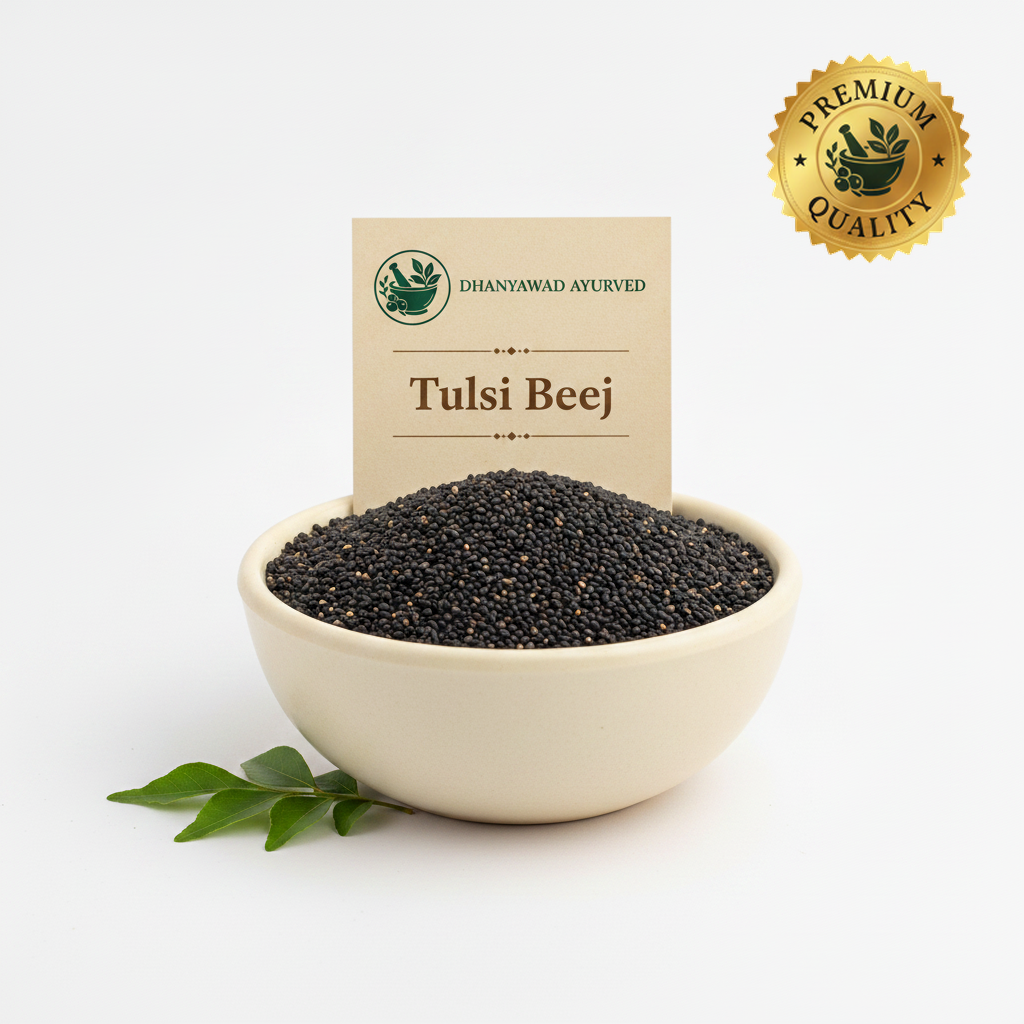
What are Tulsi Beej / Sabja Seeds?
Sabja seeds come from Ocimum basilicum, the common sweet basil plant of the Mediterranean and tropics. When soaked in water for 15–30 minutes, they expand to approximately 20–30 times their original volume, forming a soft translucent gel coating around each tiny black seed. This gel is made of soluble arabinogalactan fibre.
Sabja seeds are a staple in Indian summer drinks like falooda and rose sharbat, and in Southeast Asian desserts. In Ayurveda and Unani medicine they are used as a cooling, digestive and demulcent (soothing) remedy. They have a mild, almost neutral flavour once soaked, easily absorbing the taste of the drink they are added to.
Are Tulsi Beej and Sabja the same?
This is the most common question. In Indian pansari and kitchen language, "Tulsi Beej" sometimes refers to sabja seeds (Ocimum basilicum seeds), not the seeds of the sacred holy basil (Tulsi, Ocimum tenuiflorum). The two plants are related but different:
| Tulsi Beej (Sabja / Subja) | Tulsi Seeds (Holy Basil) | |
|---|---|---|
| Botanical name | Ocimum basilicum | Ocimum tenuiflorum |
| Common name | Sweet Basil, Sabja, Falooda seed | Holy Basil, Tulsi |
| Seed size | Tiny black (about 1 mm); swells dramatically when soaked | Reddish-brown; smaller swelling |
| Primary use | Cooling drinks, digestion, hydration | Medicinal, immunity, religious |
| What Dhanyawad sells | Tulsi Beej = Sabja (Ocimum basilicum) — used in drinks and as a digestive aid | |
Names in other languages
| Language / Context | Name |
|---|---|
| Hindi / Pansari | तुलसी बीज (Tulsi Beej), सब्जा (Sabja), तुकमलंगा |
| Sanskrit / Ayurveda | तुकमरिया (Tukmaria), बर्बरी |
| English | Basil Seeds, Sabja Seeds, Sweet Basil Seeds, Falooda Seeds |
| Tamil | சப்ஜா (Sabja), திருநீற்றுப்பச்சை விதை |
| Telugu | సబ్జా (Sabja) |
| Marathi | सब्जा (Sabja), तुळशीच्या बिया |
| Botanical | Ocimum basilicum L. (Lamiaceae), seeds |
Traditional uses
In Ayurveda and Unani medicine, sabja seeds are classified as sheeta virya (cooling in nature), madhura (sweet) and snigdha (unctuous), making them ideal for pacifying Pitta conditions and summer heat. Traditional uses include:
- Cooling the body: Soaked sabja seeds added to rose water, milk or fruit juice are a traditional summer drink to reduce body heat and prevent heat exhaustion.
- Digestive relief: The mucilage gel from soaked seeds coats and soothes the gut lining, providing relief from acidity, heartburn and mild constipation.
- Hydration support: The gel holds water and releases it slowly, making sabja drinks a traditional hydration-boosting remedy in summer or during fever.
- Weight management support: The swollen seeds create a feeling of fullness with very few calories — useful as a satiety aid before meals.
- Oral health: Chewing soaked seeds was traditionally considered to freshen breath and support gum health in Unani practice.
These are traditional wellness uses. Sabja seeds are a food ingredient, not a treatment for medical conditions.
How to use Tulsi Beej (Sabja Seeds)
- Basic soaking: Add 1 teaspoon (about 5 g) to a glass of cold or room-temperature water. Let soak for 15–30 minutes until they form a gel. Stir and drink, or add to your preferred drink.
- Rose sharbat / falooda: Soak 1 teaspoon in water for 20 minutes, then add to cold rose syrup mixed with milk or water, topped with ice. A classic Indian summer drink.
- Lemon-sabja water: Soak 1 teaspoon in water, add lemon juice, a pinch of black salt and honey. A traditional digestive and cooling remedy.
- Overnight soak: Seeds can be soaked overnight in the fridge for use in the morning. They remain safe and fresh for 8–12 hours when refrigerated.
- Daily amount: 1–2 teaspoons (5–10 g) per day is sufficient. Do not consume dry seeds — always soak first to prevent them from expanding in the throat.
Sabja seeds vs Chia seeds — key difference
| Sabja (Tulsi Beej) | Chia Seeds | |
|---|---|---|
| Botanical source | Ocimum basilicum | Salvia hispanica |
| Appearance | Tiny, black, oval | Oval, grey/black/white speckled |
| Soak time | 15–30 minutes | 30–60 minutes (or overnight) |
| Gel formation | Rapid, dramatic (20–30× volume) | Slower, less dramatic |
| Flavour | Virtually neutral once soaked | Mild, slightly nutty |
| Origin | South Asia / Mediterranean | Central America |
| Use in India | Falooda, sharbat, traditional drinks | Modern health foods |
Product details
| Product | Tulsi Beej | Basil Seeds | Sabja | तुलसी बीज |
| Botanical source | Ocimum basilicum L. (Lamiaceae) |
| Part used | Dried seeds |
| Pack size | 100g |
| Form | Raw seeds |
| Price | ₹120 per 100g |
| Storage | Airtight container, cool dry place; once soaked seeds must be refrigerated and used within 12 hours |
| Sold by | Dhanyawad Ayurved Vatika, Sector 13, Dwarka, New Delhi |
Safety
Always soak sabja seeds before consuming — swallowing dry seeds can cause them to expand in the throat, which is a choking hazard, especially for children. Children under 5 should not be given sabja seeds in drink form without careful supervision. Pregnant women may use sabja seeds in food amounts as a cooling drink but should consult a doctor before taking them in medicinal quantities. People with hormone-sensitive conditions (including PCOS) may wish to consult a doctor before regular use, as sweet basil seeds have mild phytoestrogen-like compounds. If you have a diagnosed gut condition (Crohn's disease, colitis, intestinal stricture), consult your doctor before adding sabja to your daily routine. If you experience any allergic reaction — hives, swelling or breathing difficulty — stop use and see a doctor immediately.
Frequently Asked Questions
Are Tulsi Beej and Sabja seeds the same?
In pansari usage, "Tulsi Beej" typically refers to Sabja seeds (Ocimum basilicum — sweet basil), not the seeds of sacred Tulsi (Ocimum tenuiflorum — holy basil). They are different but related plants. The product sold by Dhanyawad as "Tulsi Beej" is the sweet basil sabja seed used in falooda, sharbat and as a digestive remedy.
What happens if I drink sabja seeds every day?
Daily consumption of 1–2 teaspoons of soaked sabja seeds in water or drinks is generally safe for healthy adults. Regular use may support digestion, hydration and bowel regularity. There are no known serious side effects at normal daily amounts. If you have a hormone-sensitive condition or take prescription medication, consult a doctor about regular use.
Is sabja good for PCOS or hormonal conditions?
Sweet basil seeds contain trace phytoestrogenic compounds. There is no strong clinical evidence that sabja seeds significantly affect hormones at the amounts used in drinks. Some practitioners suggest cautious use in hormone-sensitive conditions (PCOS, endometriosis, hormone-dependent conditions). If you have PCOS or any hormonal health concern, discuss with your doctor before making sabja a regular part of your diet.
Can I drink sabja water at night?
Yes — sabja soaked in warm water or warm milk at night is a traditional remedy for mild constipation and to support sound sleep (the cooling effect is calming in Ayurvedic practice). There is no reason to avoid sabja at night. Avoid cold drinks just before bed if you are prone to throat issues.
How long should I soak Tulsi Beej before drinking?
Soak sabja seeds in cool or room-temperature water for 15–30 minutes before drinking. The seeds will swell to 20–30 times their dry volume. Avoid soaking in very hot water as it can break down the gel structure. If you soak overnight in the fridge, they will be fully swollen and ready to use in the morning.
Are sabja seeds good for weight loss?
Sabja seeds are popular as a weight management support because the swollen seeds create significant fullness with very few calories (a teaspoon has under 5 calories dry). Drinking a sabja-water drink before meals may help reduce overall food intake. This is a traditional and commonsense use, not a claim that they directly cause weight loss.
Information reviewed by Vaidya Ravinder Arora (40+ years), Dhanyawad Ayurved Vatika, Dwarka, New Delhi. Traditional uses only; not medical advice.

VEGAN

NATURAL INGREDIENTS

CRUELTY FREE

Ethically Sourced

No Artificial Flavors

Made with Love
You may also like


Disclaimer: The information provided is for educational purposes only and is not intended to replace medical advice. Always consult a qualified Ayurvedic practitioner before using any herbal product for therapeutic use, as individual responses may vary based on one’s health condition, dosha constitution, and imbalances.

- Choosing a selection results in a full page refresh.
- Opens in a new window.
