

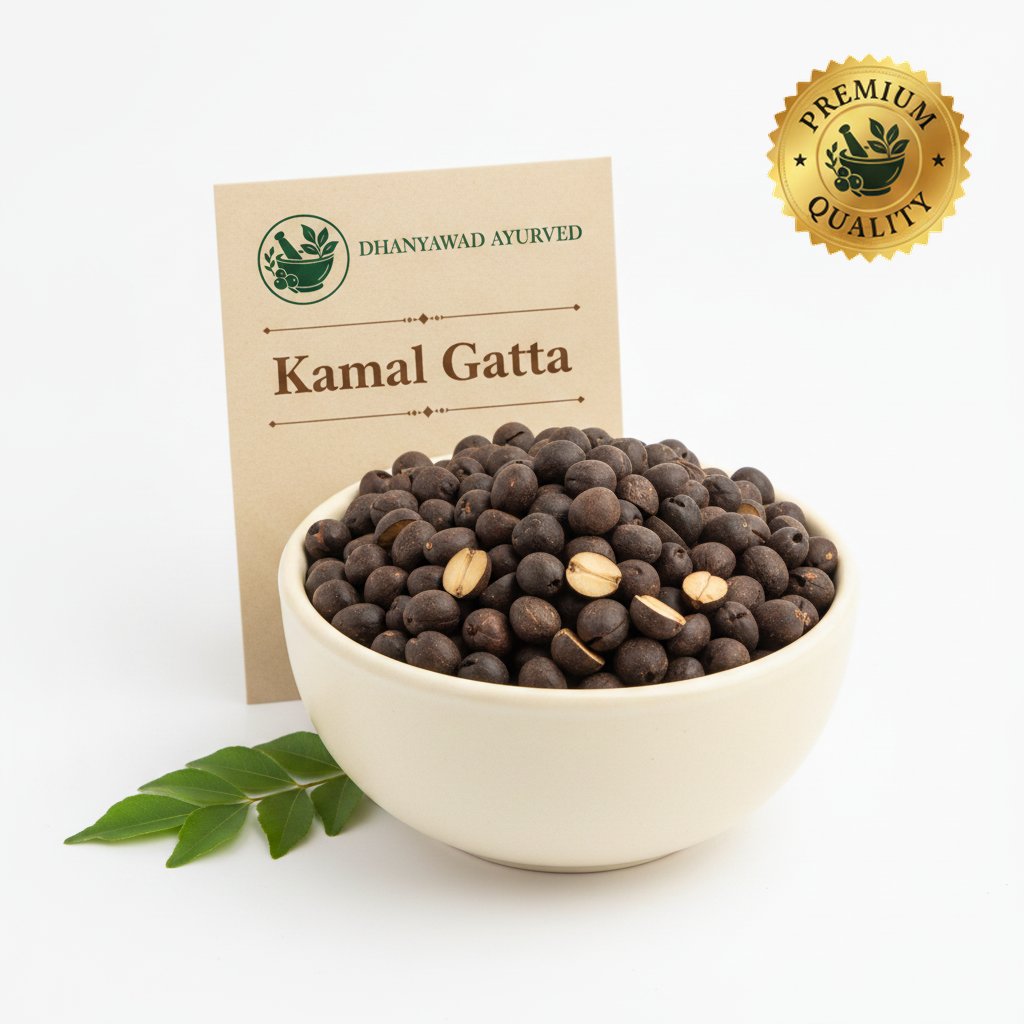
What Is Kamal Gatta (Lotus Seed)?
Kamal Gatta is the seed of Nelumbo nucifera Gaertn., the sacred lotus, a perennial aquatic plant belonging to the family Nelumbonaceae. The lotus is one of the most symbolically important plants in Indian, Buddhist and Egyptian cultures — its flower rises pristine from muddy water, making it a universal symbol of purity, spiritual awakening and beauty. The plant grows in shallow ponds, lakes and slow-moving water across the Indian subcontinent, Southeast Asia and China.
The lotus produces a distinctive flat-topped seed pod resembling a watering-can head. Inside each hole of this pod sits a single seed. When fully mature and dried, these seeds — called Kamal Gatta — are small, hard, oval-to-round structures with a smooth pale yellowish-beige outer coat and a white starchy interior. They have been used in Indian households for thousands of years: strung as rosary beads (malas) for Hindu and Buddhist prayer, cooked into festival sweets and desserts, and included in classical Ayurvedic formulations for the heart, mind and kidneys.
In Ayurveda, the lotus seed is classified as hridya (beneficial to the heart), balya (strength-giving) and grahi (binding/astringent). It is considered to pacify Pitta and Vata doshas. The seed is rich in starch, protein, flavonoids (kaempferol, quercetin), and alkaloids including neferine and nuciferine — the alkaloids traditionally associated with calming and heart-supportive properties.
Names in Other Languages
| Language / System | Name |
|---|---|
| Hindi | कमल गट्टा / कमल बीज (Kamal Gatta / Kamal Beej) |
| Sanskrit / Ayurveda | पद्म बीज / कमल बीज (Padma Beeja / Kamal Beeja) |
| English | Lotus Seeds / Sacred Lotus Seeds |
| Tamil | தாமரை விதை (Thamarai Vithai) |
| Bengali | পদ্মবীজ (Padmabij) |
| Botanical | Nelumbo nucifera Gaertn. (Nelumbonaceae) |
How to Identify Genuine Kamal Gatta
The Indian market carries both genuine lotus seeds and occasionally inferior substitutes. Here is what to look for when buying Kamal Gatta:
- Shape and size: Genuine Kamal Gatta seeds are oval to round, typically 1–2 cm in length. They are compact and firm — not shrivelled, cracked or misshapen. Seeds that are too small or irregular may be from an inferior harvest or a different species.
- Colour: The outer seed coat is pale yellowish-beige to light tan — smooth and uniform. A healthy seed should not be mouldy, grey or darkened. Avoid seeds with black spots or obvious discolouration, which indicate dampness or spoilage.
- Interior: When a seed is broken open, the inside should be white to cream-coloured and starchy. A deeply yellow or brown interior indicates old or oxidised seeds.
- Smell: Genuine raw Kamal Gatta has a mild, clean, starchy smell — faintly earthy. A musty, rancid or sour smell is a sign of moisture damage or age. There should be no strong chemical odour.
- The green embryo (plumule): The centre of a lotus seed may contain a tiny green bitter embryo (the plumule). This is normal and expected. The lotus plumule is itself a separate Ayurvedic product (Kamal Kesar/Nelumbo plumule) with its own uses. When removed, the seed tastes mildly starchy and slightly sweet.
- Hardness: Raw dried Kamal Gatta seeds are hard — they require soaking before eating. Seeds that feel soft or spongy without soaking have likely absorbed moisture during storage and should be avoided.
Traditional Uses
Kamal Gatta has a well-documented place in Ayurvedic and traditional Indian medicine. The following uses are based on traditional knowledge and historical practice. Kamal Gatta is not a medicine; it is a raw herb traditionally used as part of a balanced lifestyle and diet.
- Relaxation and sleep support: In Ayurveda, lotus seeds are traditionally used in formulations intended to calm the mind and support restful sleep. The alkaloids neferine and nuciferine, found in the seed, are traditionally associated with soothing effects on the nervous system. Lotus seed preparations may help support a sense of calm and mental ease.
- Heart health: Lotus seeds are classified as hridya in classical Ayurveda — meaning they are traditionally considered nourishing and supportive to the heart. They contain flavonoids including kaempferol and quercetin, and may support cardiovascular wellness as part of a balanced diet and lifestyle.
- Digestive support: Kamal Gatta is high in starch and dietary fibre and is traditionally described as grahi (astringent/binding). It has historically been used in formulations to support digestive regularity, particularly in cases of loose stools or diarrhoea. Soaked seeds may help soothe digestive discomfort.
- Kidney and urinary tract support: In classical texts, lotus seeds are listed as a tonic for the kidneys and urinary system. They are traditionally considered to strengthen and tone the urinary tract and may support kidney wellness when used regularly as part of a balanced Ayurvedic regimen.
- Antioxidant support for skin: Lotus seeds contain polyphenol antioxidants that may help neutralise free radicals in the body. Traditional Ayurvedic practice includes lotus-based preparations for supporting healthy, clear skin from within.
- Culinary and ritual use: Kamal Gatta is an important ingredient in Indian festive cooking — used in kheer (rice pudding), ladoo, halwa, and as soaked seeds eaten during religious fasts (vrat). The dried seeds are also traditionally strung into malas (rosary beads) and used for Hindu and Buddhist prayer and meditation, with the seed count of 108 being particularly significant.
How to Use Kamal Gatta
Kamal Gatta can be used in several ways depending on your purpose — culinary, traditional wellness, or religious practice:
- Soaked seeds (most common for eating): Soak 10–15 Kamal Gatta seeds in fresh water overnight (6–8 hours). The seeds will soften and swell. Drain and eat them as they are or add to milk, smoothies, or sweet dishes. The green bitter embryo inside can be removed before eating if preferred.
- Cooked in milk or kheer: Add soaked seeds to warm milk with a little sugar or jaggery and simmer until tender. This is a traditional preparation for relaxation and nourishment. Seeds can also be added to rice kheer, halwa, or ladoo recipes for festivals and fasts.
- Powder (Kamal Gatta churna): Dried seeds can be ground into a fine powder. Add half a teaspoon of the powder to warm milk once or twice daily. This form is easier to digest and absorbs quickly.
- Decoction: Boil 8–10 seeds in 1–2 cups of water or milk for 15–20 minutes, strain, and drink warm. A small amount of honey or cardamom may be added for flavour.
- Religious mala (rosary): Dried Kamal Gatta seeds with their natural hole are traditionally strung into prayer malas of 108 beads and used for japa (mantra repetition) in Hindu and Buddhist practice.
There is no single standardised dose in Ayurvedic tradition. Common food-level use is 10–20 seeds per day when soaked, or half to one teaspoon of powder daily. Start with smaller amounts and observe how your body responds. For personalised guidance, consult a qualified Ayurvedic practitioner.
Product Details
| Detail | Information |
|---|---|
| Product | Kamal Gatta | Lotus Seeds | कमल गट्टा |
| Botanical source | Nelumbo nucifera Gaertn. (Nelumbonaceae) |
| Part used | Dried seed (inner kernel with seed coat) |
| Pack size | 100g |
| Form | Raw whole dried seeds |
| Price | ₹60 per 100g |
| Storage | Store in a cool, dry place away from direct sunlight and moisture; keep in an airtight container after opening |
| Sold by | Dhanyawad Ayurved |
Safety
Kamal Gatta is generally considered safe when consumed in food amounts as part of a normal diet. The following precautions should be observed:
- Pregnancy and breastfeeding: Lotus seeds contain alkaloids that may have physiological effects. Avoid using Kamal Gatta as a therapeutic supplement during pregnancy without first consulting a qualified doctor or Ayurvedic practitioner. Food-level use in cooking (e.g., small amounts in kheer) is generally considered acceptable, but therapeutic doses should not be taken without medical guidance.
- Blood pressure medications: The alkaloids in lotus seeds (neferine, nuciferine) may interact with blood pressure or heart medications. If you are on any antihypertensive, cardiac or sedative medications, please consult a doctor before adding Kamal Gatta to your wellness routine.
- Sedative medications: Lotus seed alkaloids have traditionally been associated with calming effects. If you take prescription sedatives, anti-anxiety medications or sleep aids, consult your healthcare provider before using lotus seed preparations.
- Allergies: Lotus is a member of the Nelumbonaceae family. If you have known plant allergies or sensitivities, perform a small test with a soaked seed before consuming larger amounts.
- Children: Keep this product out of reach of children. Do not give concentrated lotus seed preparations to young children without guidance from a paediatrician or qualified practitioner.
- General advice: This product is a raw herb for traditional and culinary use — it is not a medicine and is not intended to diagnose, treat, cure or prevent any disease. If you have a pre-existing medical condition or are taking medications, consult a doctor before use.
Frequently Asked Questions
What is Kamal Gatta used for in Ayurveda?
In Ayurveda, Kamal Gatta is traditionally used as a heart-supportive (hridya), calming and astringent seed. It is traditionally used in formulations for the heart, mind and kidneys. It may help support relaxation, digestive regularity and overall vitality as part of an Ayurvedic lifestyle.
How do I eat Kamal Gatta?
The most common method is to soak 10–15 seeds in water overnight until soft, then eat them directly or cook them in warm milk with sugar or cardamom. Soaked seeds can also be added to kheer, halwa or ladoo. Alternatively, dry seeds can be ground into powder and stirred into warm milk.
Does Kamal Gatta taste bitter?
The outer seed itself has a mild, starchy, slightly sweet flavour when soaked. The small green embryo (plumule) inside the seed is distinctly bitter — this is normal. If you dislike the bitterness, simply split the soaked seed and remove the green embryo before eating. The remaining white seed is mild and pleasant.
Can I use Kamal Gatta during a religious fast (vrat)?
Yes. Kamal Gatta is widely used during Hindu fasting periods such as Navratri and Ekadashi. Soaked lotus seeds are eaten as a nourishing, sattvic food during vrat. They are also used in vrat-friendly kheer and other festival dishes. The seeds are considered auspicious in both Hindu and Buddhist traditions.
Is Kamal Gatta safe during pregnancy?
Food-level amounts in cooking are generally considered acceptable, but lotus seeds should not be taken as a concentrated supplement during pregnancy without medical advice. The alkaloids they contain may have physiological effects. Please consult a qualified doctor or Ayurvedic practitioner before using Kamal Gatta therapeutically during pregnancy or breastfeeding.
What is the difference between Kamal Gatta and Kamal Kesar (lotus plumule)?
Kamal Gatta refers to the whole dried lotus seed — the hard white starchy inner kernel within its outer coat. Kamal Kesar (or lotus plumule) refers specifically to the small bitter green embryo inside the seed. Both are separate Ayurvedic products with different traditional uses. Dhanyawad Ayurved currently stocks the whole raw Kamal Gatta seed.
How should I store Kamal Gatta?
Store Kamal Gatta in a cool, dry place away from direct sunlight and humidity. Once opened, transfer to an airtight glass or plastic container. Properly stored raw lotus seeds may last 12–18 months. Avoid exposure to moisture, which causes softening, mould growth and spoilage. Do not store near strongly scented spices as seeds may absorb odours.
Information reviewed by Vaidya Ravinder Arora (40+ years), Dhanyawad Ayurved Vatika, Dwarka, New Delhi. Traditional uses only; not medical advice.

VEGAN

NATURAL INGREDIENTS

CRUELTY FREE

Ethically Sourced

No Artificial Flavors

Made with Love
You may also like


Disclaimer: The information provided is for educational purposes only and is not intended to replace medical advice. Always consult a qualified Ayurvedic practitioner before using any herbal product for therapeutic use, as individual responses may vary based on one’s health condition, dosha constitution, and imbalances.

- Choosing a selection results in a full page refresh.
- Opens in a new window.
