

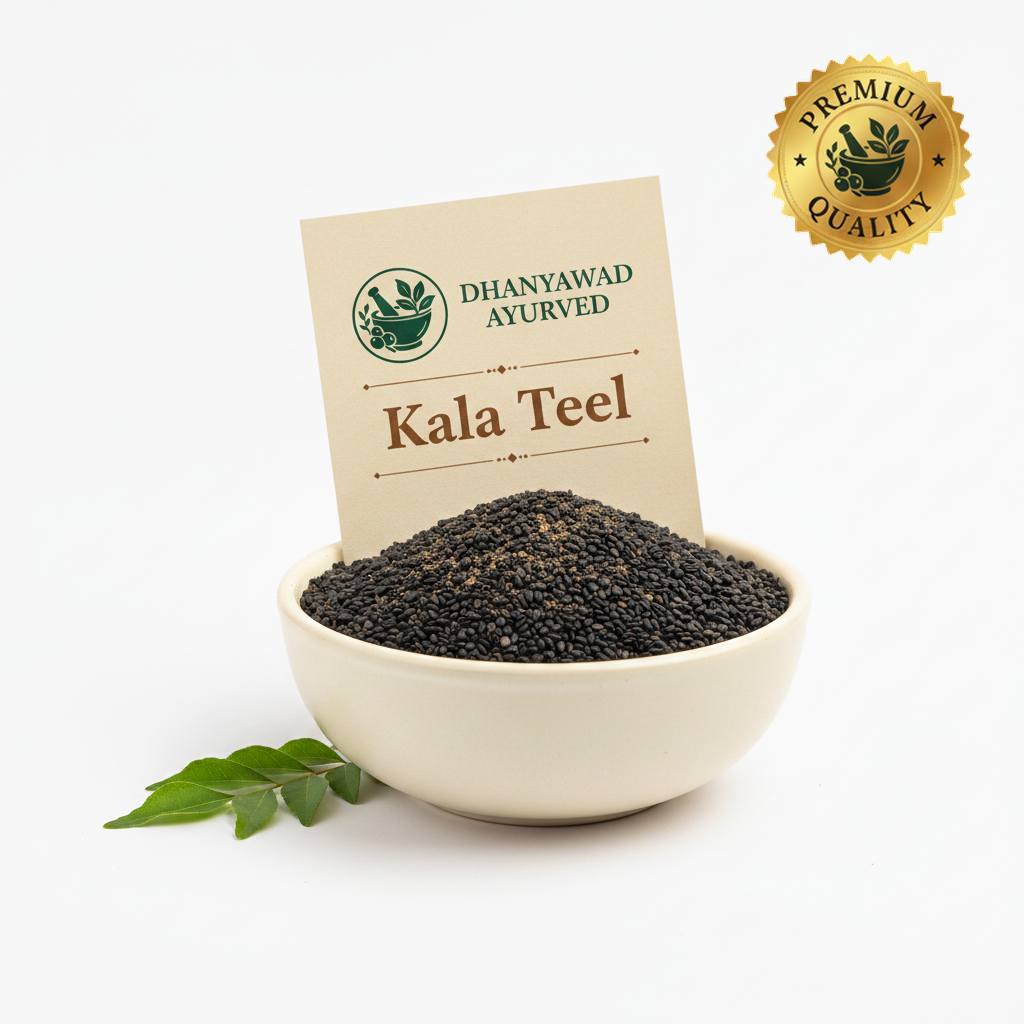
What is Kala Teel (Black Sesame)?
Kala Teel is the ripe, dried seed of Sesamum indicum, a tall annual plant of the family Pedaliaceae, cultivated across India, Africa and Asia for over 5,000 years. In Ayurveda, sesame (tila) is classified as snigdha (unctuous/oily) and guru (heavy), and is considered one of the most nutritive seeds known. The black variety is distinguished from white sesame by its dark seed coat, which contains higher concentrations of antioxidant lignans — sesamin and sesamolin — as well as anthocyanins that give it its deep colour. Each tiny seed (just 3–4 mm long) packs notable amounts of calcium, iron, magnesium, zinc, healthy unsaturated fats and B-vitamins into a small space.
Names in other languages
| Language | Name |
|---|---|
| Hindi / Pansari | काला तील (Kala Teel), काला तिल (Kala Til) |
| English | Black Sesame Seeds, Black Sesame |
| Sanskrit / Ayurveda | कृष्ण तिल (Krishna Tila), तिल (Tila) |
| Marathi | काळे तीळ (Kale Til) |
| Tamil | கருப்பு எள்ளு (Karuppu Ellu) |
| Telugu | నల్ల నువ్వులు (Nalla Nuvvulu) |
| Kannada | ಕಪ್ಪು ಎಳ್ಳು (Kappu Ellu) |
| Bengali | কালো তিল (Kalo Til) |
| Botanical | Sesamum indicum L. (Pedaliaceae), ripe dried seeds |
How to identify genuine Kala Teel
- Colour: uniformly black or very deep brown — not grey, not mixed with lighter seeds. The black coat should be intact and glossy, not dusty.
- Size and shape: small, flat, teardrop-shaped seeds about 3–4 mm long. A uniform size is a good sign; excessive broken or shrivelled seeds indicate poor-quality stock.
- Smell: fresh black sesame has a mild, nutty aroma. Rancid or musty smell means the oil has oxidised — discard such seeds.
- Taste: when chewed, raw kala teel should taste mildly nutty and slightly bitter due to the seed coat. Toasted seeds develop a deeper, richer flavour.
- Float test: good seeds are dense; most should sink or settle quickly in water. A very large proportion floating may indicate lighter, immature or hollow seeds.
- Watch for: artificial colouring (black residue that wipes off on a damp cloth), stones or sand, or heavily mixed white sesame seeds which are sometimes dyed.
Traditional uses
In Ayurvedic and traditional household practice, Kala Teel has traditionally been used as:
- Bone and joint support: traditionally used in Ayurveda as a asthi poshaka (bone-nourishing) ingredient, incorporated into sesame laddoos (til ke laddoo) especially in winter months and after delivery.
- Hair and scalp care: sesame oil pressed from kala teel has traditionally been used as a scalp massage oil in Ayurvedic shiro abhyanga (head oiling) practice; seeds were also consumed to support hair health from within.
- Digestive support: a small quantity of sesame seeds with warm water or ghee was traditionally used to support bowel regularity; sesame is considered naturally lubricating in Ayurvedic texts.
- Makar Sankranti and seasonal rituals: til-gur (sesame and jaggery) mixtures are consumed at Makar Sankranti across India — a cultural tradition with nutritional roots in the warming, energising nature of sesame in winter.
- Women's wellness traditions: kala teel has traditionally been included in post-partum nutrition protocols and in preparations traditionally used to support the menstrual cycle.
- In classical Ayurvedic formulas: sesame appears in formulations including Chyawanprash, Mahanarayan tail, and multiple sneha (oil-based) preparations in the classical texts.
These are traditional uses based on Ayurvedic classical and household practice. Kala Teel is a food ingredient; it is not a substitute for medical treatment.
How to use Kala Teel
- Til laddoo: roast seeds lightly, mix with jaggery or honey and roll into balls — a traditional winter energy food.
- Chikki and garnish: sprinkle whole or lightly toasted seeds on rotis, parathas, rice, salads or sweets for flavour and nutrition.
- Sesame paste (tahini-style): grind soaked or lightly roasted seeds with a little water to make a paste; traditionally used in certain Ayurvedic preparations.
- With warm milk: one teaspoon of ground kala teel mixed into warm milk with a little honey — a common traditional winter drink for bone and sleep support.
- Scalp oil: sesame oil (cold-pressed from kala teel) can be used for traditional head oiling; warm slightly before application.
- Daily culinary amount: one to two teaspoons (5–10 g) of seeds per day as part of meals is a well-tolerated culinary quantity for most adults.
Product details
| Product | Kala Teel Spl | Black Sesame | काला तील |
| Botanical source | Sesamum indicum L. (Pedaliaceae) |
| Part used | Ripe dried seeds |
| Pack size | 100g |
| Form | Raw whole seeds |
| Price | ₹65 per 100g |
| Ingredients | 100% Kala Teel (black sesame seeds), no additives |
| Storage | Airtight container, cool and dry place, away from sunlight and moisture; use within 6 months of opening |
| Sold by | Dhanyawad Ayurved Vatika, Sector 13, Dwarka, New Delhi |
| Delivery | Ships within 24 hours, delivered across India in 3–5 days |
Safety
Kala Teel is safe in normal culinary amounts for most adults and children. People with a known allergy to sesame should avoid it entirely — sesame allergy is an increasingly recognised food allergy; symptoms can include skin rash, hives, nausea or in rare cases anaphylaxis, and you should seek emergency care immediately if these occur. Sesame is high in calories and fat; use in moderate culinary quantities rather than in large medicinal doses. If you take medication for blood pressure or blood sugar, consult your doctor before consuming sesame in large daily amounts, as it may have mild additive effects. If you have a history of kidney stones (sesame contains oxalates), discuss with your doctor. During pregnancy, normal cooking quantities are traditionally considered safe; very large medicinal doses are not recommended without medical guidance. Consult a qualified Ayurvedic practitioner or doctor before use if you have any ongoing health condition. Keep out of reach of small children.
Frequently Asked Questions
Is it good to eat black sesame every day?
Eating a small daily serving of black sesame seeds — one to two teaspoons in food or warm milk — is a traditional Ayurvedic practice followed by many Indians throughout the year, especially in winter. As part of a balanced diet, this culinary quantity is generally well tolerated by most healthy adults. Very large daily amounts are not recommended without guidance from a practitioner.
Does black sesame increase hair growth?
Black sesame seeds are traditionally believed to support hair health and are a classic ingredient in Ayurvedic hair-care protocols, both taken internally and applied as sesame oil externally. The seeds are rich in zinc, iron and B-vitamins that support keratin production. These are traditional associations; if you are experiencing significant hair loss, consult a doctor to identify the underlying cause.
Is black sesame good for sleep?
In traditional practice, a teaspoon of ground kala teel in warm milk at night is commonly used as a calming, nourishing bedtime drink. Sesame seeds contain magnesium and tryptophan, both of which are associated with relaxation. This is a food-based traditional use, not a medical claim; if you have sleep difficulties, consult your doctor.
Who should not take black sesame seeds?
People with a confirmed sesame allergy should avoid all sesame products entirely. Those with a history of oxalate kidney stones should limit intake and consult their doctor. People on blood pressure or blood sugar medication should check with their doctor before consuming large amounts. Pregnant women should stick to normal culinary quantities.
What is the best time to take black sesame seeds?
Traditional Ayurvedic practice suggests consuming til in the morning with warm water or in the evening in warm milk. For digestive support, seeds can be taken before meals; for sleep or bone support, the warm-milk preparation at night is most commonly recommended. There is no single best time — consistency within a balanced diet matters more.
What are the top three healthiest seeds?
Several seeds are considered highly nutritious — black sesame, flaxseeds and pumpkin seeds frequently appear on such lists for their density of calcium, omega-3 fats and zinc respectively. Black sesame in particular is noted for its high calcium content relative to its weight. All are supportive additions to a varied diet, not standalone treatments.
Information reviewed by Vaidya Ravinder Arora (40+ years), Dhanyawad Ayurved Vatika, Dwarka, New Delhi. Traditional uses only; not medical advice.

VEGAN

NATURAL INGREDIENTS

CRUELTY FREE

Ethically Sourced

No Artificial Flavors

Made with Love
You may also like


Disclaimer: The information provided is for educational purposes only and is not intended to replace medical advice. Always consult a qualified Ayurvedic practitioner before using any herbal product for therapeutic use, as individual responses may vary based on one’s health condition, dosha constitution, and imbalances.

- Choosing a selection results in a full page refresh.
- Opens in a new window.
