

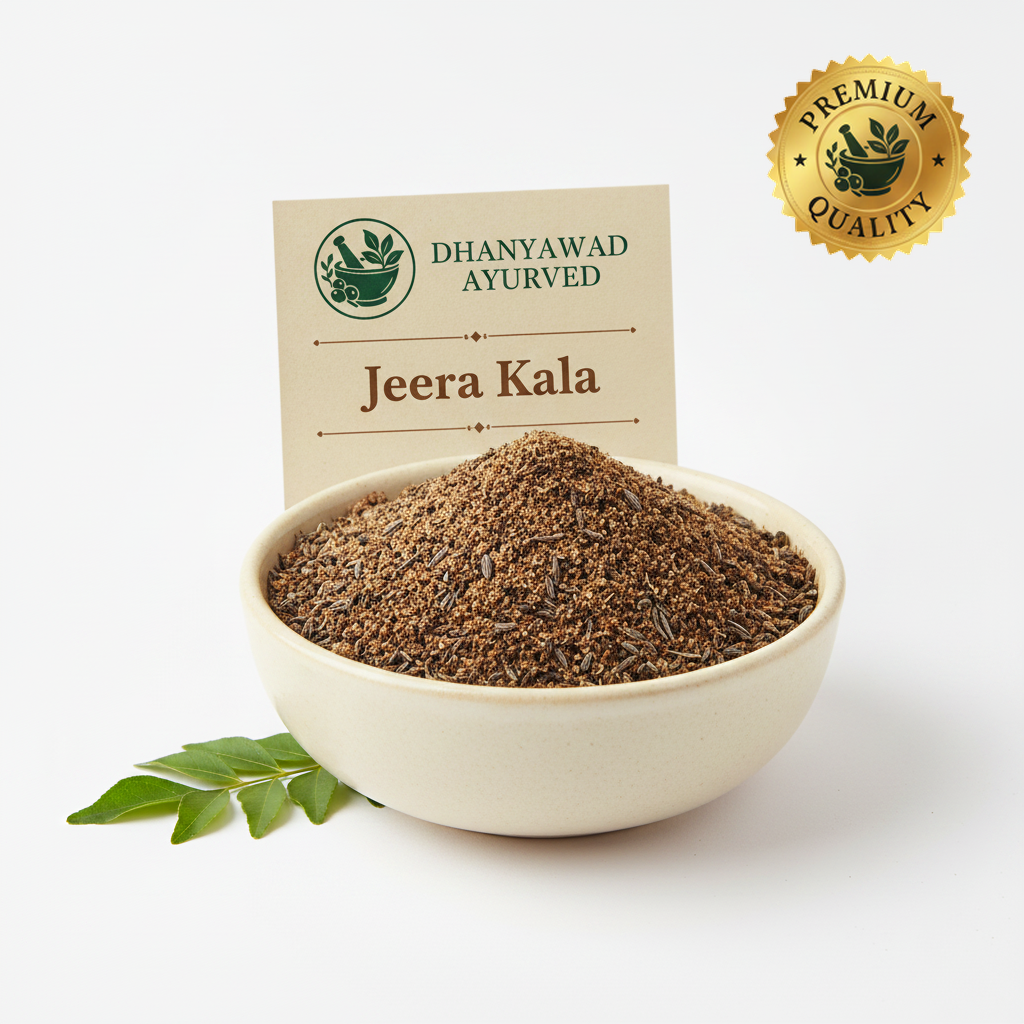
What is Jeera Kala (Black Caraway)?
Kala Jeera — literally "black cumin" in Hindi — is a name shared by several distinct plants in Indian tradition, which causes confusion even in the market:
- Bunium persicum (Shah Jeera / Black Caraway): the mountain herb; small, dark, curved seeds with a complex aromatic profile. This is what Dhanyawad Ayurved stocks as Jeera Kala. It grows in Kashmir, Himachal Pradesh and high-altitude regions of Central Asia.
- Kali Jiri / Kalijiri (Centratherum anthelminticum): a bitterer seed used medicinally; quite different in flavour and use. Stocked separately at Dhanyawad Ayurved.
- Kalonji (Nigella sativa): black nigella seeds — also sometimes called kala jeera colloquially, but botanically unrelated. Also stocked separately.
In Ayurveda, Bunium persicum is called Krishnajiraka (कृष्णजीरक) — "black cumin" — and is classified as a deepana-pachana (digestive kindling) herb. It is considered ushna (warming) in nature and is used for digestive and carminative purposes in classical formulations.
Names in other languages
| Language | Name |
|---|---|
| Hindi / Pansari | Kala Jeera (काला जीरा), Shahi Jeera (शाही जीरा), Shah Jeera |
| English | Black Caraway, Hill Cumin, Royal Cumin, Mountain Cumin |
| Sanskrit / Ayurveda | Krishnajiraka (कृष्णजीरक), Kalajiraka |
| Urdu / Unani | Zira Siyah (زیرہ سیاہ) |
| Kashmiri | Zum / Kala Zum |
| Punjabi | Kala Zira (ਕਾਲਾ ਜੀਰਾ) |
| Bengali | Kalo Jire (কালো জিরে) |
| Botanical | Bunium persicum (Boiss.) Fedtsch. (Apiaceae), ripe dried seeds |
How to identify genuine Jeera Kala
- Shape: small, slender, crescent-shaped seeds about 3–5 mm long — narrower and more curved than white cumin, which is straighter and plumper.
- Colour: dark brown to near-black, with fine longitudinal ridges along the seed. Not jet-black like kalonji (nigella).
- Aroma: crush a few seeds between the fingers — authentic kala jeera has a strong, complex, slightly camphor-like and earthy aroma, quite different from white cumin (which is sharper and more citrusy).
- Taste: mildly bitter and intensely aromatic; the flavour should linger. Flat or odourless seeds are old stock.
- Not to be confused with: Kalonji (Nigella sativa) — flat, triangular seeds; or Kalijiri (Centratherum anthelminticum) — rounder, more bitter without the complex aroma.
- Buy from a trusted pansari store. Dhanyawad Ayurved sources and stocks Jeera Kala directly.
Traditional uses
In Ayurvedic and traditional household practice, Kala Jeera (Krishnajiraka) has traditionally been used as:
- Digestive support: kala jeera is classified as a deepana (digestive stimulant) and pachana (digestive) herb in Ayurvedic texts. Traditionally used to support normal digestive function and reduce post-meal bloating and gas.
- Culinary spice in traditional cooking: an essential ingredient in Kashmiri cuisine (Rogan Josh, Yakhni Pulao), Biryani and Mughlai preparations. The seeds are typically tempered in hot fat before adding other ingredients to release their essential oils.
- Respiratory warmth: in Ayurvedic and Unani tradition, warming spices like kala jeera are included in formulations for congestion and cold — the volatile oils are thought to support normal respiratory function.
- General nourishment: Krishnajiraka appears in Ayurvedic rasayana formulations alongside other warming seeds. Traditionally used as a tonic spice to support general nourishment when consumed regularly as part of food.
- Hair care (external): kala jeera oil and seed paste have been used traditionally in hair care preparations for scalp massage, based on the herb's warming and stimulating properties.
These are traditional uses based on Ayurvedic classical and household practice. Jeera Kala is a culinary spice and raw herb — it is not a substitute for medical treatment.
How to use Kala Jeera
- In cooking: use whole seeds in tadka (tempering) — heat ghee or oil, add kala jeera and let them splutter before adding other ingredients. Use 1/4–1/2 tsp per dish.
- Kala Jeera tea: steep 1/2 tsp of lightly crushed seeds in 1 cup of hot water for 5 minutes, strain and drink — a traditional post-meal digestive drink. Add a little honey if desired.
- In biryani and pulao: a pinch of whole kala jeera added to the rice water or fried with onions gives the distinctive Kashmiri / Mughlai flavour.
- Ground in spice mixes: kala jeera is a component in certain garam masala blends and Kashmiri spice mixes.
- Digestive powder: mix a small quantity of ground kala jeera (1/4 tsp) with rock salt and dried ginger — a traditional home preparation for bloating after meals.
- Daily culinary amount: 1/4–1 tsp of seeds per day as part of cooking is a typical culinary quantity for most adults.
Product details
| Product | Jeera Kala | Black Cumin | Black Caraway | जीरा काला |
| Botanical source | Bunium persicum (Boiss.) Fedtsch. (Apiaceae) |
| Part used | Ripe dried seeds (whole) |
| Pack size | 100g |
| Form | Raw whole seeds |
| Price | ₹160 per 100g |
| Ingredients | 100% Kala Jeera (Bunium persicum), no additives |
| Storage | Airtight container, cool and dry place, away from sunlight and moisture; use within 12 months of opening |
| Sold by | Dhanyawad Ayurved Vatika, Sector 13, Dwarka, New Delhi |
| Delivery | Ships within 24 hours, delivered across India in 3–5 days |
Safety
Jeera Kala (Black Caraway) is safe in normal culinary amounts for most adults and children. People with a known allergy to plants in the Apiaceae (carrot/parsley) family — which includes cumin, coriander and fennel — may also react to kala jeera; if you experience skin rash, hives or breathing difficulty, discontinue immediately and seek medical care. Kala jeera is warming in nature; those who experience heat-related digestive symptoms should use modest culinary quantities. If you are pregnant or breastfeeding, use in normal cooking amounts is generally considered safe in traditional practice; large medicinal doses are not recommended without medical guidance. If you take blood-thinning medications, consult your doctor before using kala jeera in supplemental quantities, as spice-family herbs may have mild effects on platelet aggregation. Consult a qualified Ayurvedic practitioner or doctor before use if you have any ongoing health condition. Keep out of reach of small children.
Frequently Asked Questions
What is kala jeera used for?
Kala Jeera (Bunium persicum, Black Caraway) is primarily a culinary spice used in Kashmiri, Biryani and Mughlai cooking for its deep, earthy, complex aroma. In Ayurvedic tradition it is also used as a digestive and warming herb — added to digestive teas and spice preparations to support normal digestion and reduce post-meal bloating. It is a food-grade spice, not a medicine.
What is the difference between kala jeera and safed jeera?
Safed jeera (white cumin, Cuminum cyminum) and kala jeera (black caraway, Bunium persicum) are related but distinct plants. Safed jeera is lighter-coloured, straighter and has a sharper, more citrusy aroma — it is the common cumin used in most everyday Indian cooking. Kala jeera is smaller, darker, more curved and has a deeper, more complex, camphor-like aroma. It is more expensive and typically used in richer preparations like biryani, Kashmiri dishes and garam masala.
Is eating kala jeera every day safe?
In culinary quantities (1/4–1 tsp in food), kala jeera is safe for daily use by most healthy adults. This is how it has traditionally been consumed in Indian cooking across generations. Very large daily amounts in medicinal doses are not recommended without guidance from an Ayurvedic practitioner, particularly for those with heat-related conditions or sensitivities to warming spices.
Is kala jeera good for hair?
Kala jeera has traditionally been used in hair care preparations in Indian household practice — seed oil or paste applied externally for scalp massage, particularly for its warming and stimulating properties. As a food spice, it is also consumed daily in traditional cooking. These are traditional uses; if you are experiencing significant hair loss, consult a doctor to identify any underlying nutritional or health cause.
What are the side effects of kala jeera?
In normal culinary amounts, kala jeera is well tolerated by most people. Possible concerns: allergy in those sensitive to the Apiaceae plant family; warming nature may aggravate heat-related digestive symptoms if consumed in excess; very large amounts are not recommended during pregnancy. Stop use and see a doctor if you develop rash, itching or any allergic symptoms after consuming kala jeera.
Is kala jeera the same as kalonji or kalijiri?
No — these are three different plants that are sometimes confused in the market. Kala jeera (Bunium persicum) is Black Caraway — an aromatic culinary spice with a complex flavour. Kalonji (Nigella sativa) is Black Nigella Seeds — flat, triangular, with a completely different flavour and use. Kalijiri (Centratherum anthelminticum) is a bitter wild herb used medicinally. Each is stocked separately at Dhanyawad Ayurved.
What are the benefits of kala jeera water?
Kala jeera water (kala jeera tea or infusion) is made by steeping lightly crushed seeds in hot water for 5 minutes. It is traditionally drunk after meals as a digestive aid. The warming essential oils and traditional deepana-pachana (digestive kindling) properties of the seeds are considered to support normal digestion and reduce post-meal bloating and gas. It is a traditional home preparation — not a medicine. If you have any digestive condition, consult a doctor.
Information reviewed by Vaidya Ravinder Arora (40+ years), Dhanyawad Ayurved Vatika, Dwarka, New Delhi. Traditional uses only; not medical advice.

VEGAN

NATURAL INGREDIENTS

CRUELTY FREE

Ethically Sourced

No Artificial Flavors

Made with Love
You may also like


Disclaimer: The information provided is for educational purposes only and is not intended to replace medical advice. Always consult a qualified Ayurvedic practitioner before using any herbal product for therapeutic use, as individual responses may vary based on one’s health condition, dosha constitution, and imbalances.

- Choosing a selection results in a full page refresh.
- Opens in a new window.
