

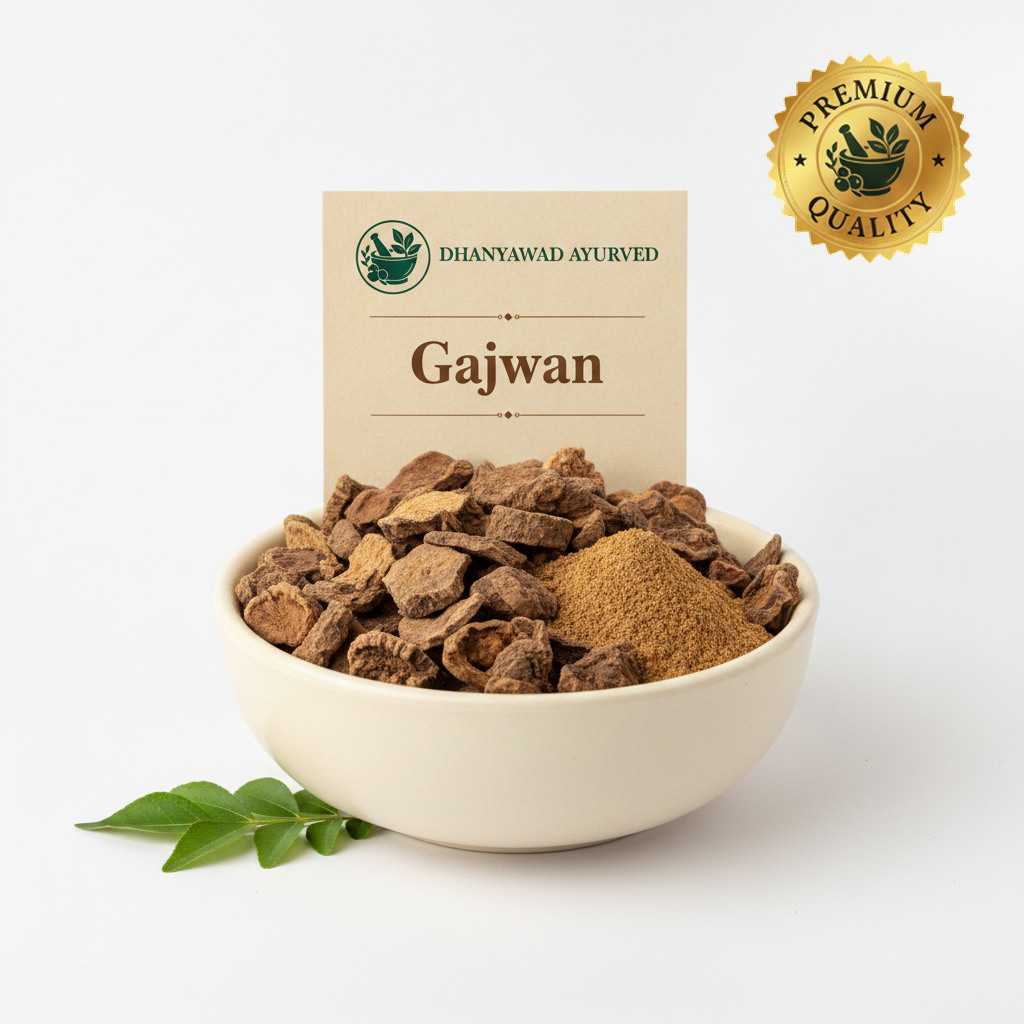
What Is Gajwan?
Gajwan (Onosma bracteatum) is a bristly, perennial herb that grows to about 30–60 cm, with narrow grey-green hairy leaves and tubular yellow flowers characteristic of the borage family. The name Gaozaban (or Gauzaban) is Persian-origin Unani terminology literally meaning "cow's tongue" — a reference to the long, rough-textured leaves. In Ayurveda, it is known as Gojihva (cow-tongue herb), reflecting the same morphological observation. The whole plant — particularly the flower tops — is dried and used in classical Unani formulations, most notably in Arq Gaozaban (a distillate traditionally used for heart and nervous conditions) and Gavjawan Ark. It is a Sheeta (cooling), Hridya (cardiac-tonic) and Medhya (nervine-tonic) herb in the Ayurvedic system.
Names in Other Languages
| Language / System | Name |
|---|---|
| Hindi / Pansari | Gajwan / Gavjawan / गजवान |
| Unani / Persian | Gaozaban / Gauzaban / Lisan-ul-Haml |
| Sanskrit / Ayurveda | Gojihva / Gojihwa / Shveta Gojihva |
| English | Gajwan Herb / Indian Borage (botanical family only) |
| Punjabi | Gaozaban |
| Urdu | Gaozaban / گاوزبان |
| Botanical | Onosma bracteatum Wall. (Boraginaceae), dried aerial parts |
How to Identify Genuine Gajwan
Gajwan can be confused with other borage-family herbs or with Echium and Anchusa species. Here is what to check:
- Appearance: Dried Gajwan consists of stems, narrow greyish leaves and, in quality material, dried tubular yellowish-cream flowers. The plant parts are covered with stiff, bristly hairs — a distinctive feature of Boraginaceae that is easy to feel.
- Texture: The leaves are rough and bristly to the touch (hispid), not smooth. Smooth-leaf substitutes are a sign of wrong species.
- Aroma: Mild, slightly grassy-earthy aroma. No strong chemical, musty or fermented smell.
- Colour of stems: Greyish to pale greenish when dried; reddish stems may indicate a different species in the borage family.
- Flowers (when present): Tubular, pale yellow to cream — the characteristic Onosma flower. Blue or purple flowers indicate a different genus (Anchusa, Borago officinalis).
Traditional Uses
In Ayurvedic and Unani practice, Gajwan (Gojihva / Gaozaban) has traditional uses across several areas:
- Cardiac tonic (Hridya): Gajwan is classified as Hridya — traditionally used to support heart function, calm palpitations and strengthen the cardiac muscle. It is a key ingredient in classical Unani preparations for heart and circulatory support.
- Nervine tonic (Medhya): In both Ayurveda and Unani systems, Gajwan is used as a nervine tonic — traditionally believed to support cognitive function, memory and mental calm. It is used in formulations for anxiety, mental fatigue and nervous debility.
- Cooling and fever support (Sheetala, Jwarahara): Gajwan is considered strongly cooling (Sheeta Virya) and is traditionally used to manage fever, reduce internal heat and calm conditions of Pitta excess.
- Respiratory support (Shwasahara): Classical Unani and Ayurvedic use includes Gajwan for cough, asthma and respiratory congestion — its cooling and demulcent properties are traditionally used to soothe inflamed airways.
- Blood purification (Raktaprasadaka): Gajwan is used in Unani and Ayurvedic blood-purifying formulations for skin conditions, acne and boils linked to Pitta excess and blood heat.
- Diuretic (Mootrala): Traditionally used to support kidney and urinary function, and to gently increase urine output.
These are traditional uses. Gajwan is a traditional herbal material; it is not a medicine and does not treat or cure any disease. Consult a doctor for any diagnosed health condition.
How to Use Gajwan
- Decoction (kwath): boil 5–10g of dried Gajwan in 400ml water until reduced to 100ml; strain and drink warm. A classical method used in Ayurvedic and Unani practice.
- Herbal infusion (tea): steep 2–3g of dried Gajwan in 200ml hot (not boiling) water for 10 minutes; strain and drink. A milder preparation suitable for daily use.
- Arq Gaozaban: the traditional Unani distillate prepared from Gajwan — available as a readymade preparation from Unani pharmacies. 20–40ml is the classical dose.
- Powder: 1–3g of Gajwan powder with honey or warm water, once or twice daily, is a traditional oral dose. Do not exceed 5g per day without practitioner guidance.
- In classical formulations: Gajwan is an ingredient in several classical Unani and Ayurvedic compound preparations — use as directed by an Ayurvedic or Unani physician.
Product Details
| Product | Gajwan | Gavjawan | Gaozaban | गजवान |
| Botanical source | Onosma bracteatum Wall. (Boraginaceae) |
| Part used | Dried aerial parts (stems, leaves, flowers) |
| Pack size | 100g |
| Form | Raw (dried herb) |
| Price | ₹240 per 100g |
| Storage | Airtight container, cool and dry place away from moisture and direct sunlight; shelf life 12–18 months |
| Sold by | Dhanyawad Ayurved Vatika, Sector 13, Dwarka, New Delhi |
| Delivery | Ships within 24 hours, delivered across India in 3–5 days |
Safety
Gajwan is considered safe in traditional therapeutic amounts. However:
- Pregnancy and breastfeeding: insufficient safety data; avoid use during pregnancy without medical advice.
- Heart medicines: given its traditional classification as a cardiac herb, people taking digoxin, beta-blockers or other heart medicines should consult their cardiologist before using Gajwan regularly.
- Diuretic medicines: Gajwan has mild diuretic properties; combined use with prescription diuretics may increase fluid or electrolyte loss. Consult your doctor.
- Hypotension: Gajwan's cooling, Pitta-pacifying properties include mild vasodilatory action in classical texts. Those with low blood pressure should use with caution.
- Dosage: Stay within the traditional dose range (2–5g per day of raw herb or equivalent decoction). Very high doses are not recommended without practitioner guidance.
See a doctor if you have any heart condition, kidney disease, or are taking prescription medicines before using Gajwan as a supplement. Keep out of reach of small children.
Frequently Asked Questions
What is Gajwan used for?
Gajwan (Onosma bracteatum) is traditionally used as a cardiac and nervine tonic — to support heart function, calm palpitations, support mental clarity and reduce anxiety. It is also used in classical formulations for fever, cough, respiratory congestion and blood purification. In Unani medicine, its distillate (Arq Gaozaban) is a well-known preparation for heart and nervous conditions.
What is the difference between Gajwan and Gaozaban?
They are the same herb. Gajwan (गजवान) and Gavjawan are the Hindi/pansari names; Gaozaban (گاوزبان) is the Unani/Persian name. Both refer to Onosma bracteatum. The Sanskrit name is Gojihva. All three names translate to "cow's tongue" — a reference to the long, rough, bristly leaves of the plant.
What is Gojihva plant?
Gojihva is the Sanskrit Ayurvedic name for Onosma bracteatum — the same herb sold under the Hindi name Gajwan and the Unani name Gaozaban. It is a bristly perennial herb from the Himalayan foothills, used in both Ayurvedic and Unani classical formulations. In Ayurveda, Gojihva is classified as Sheeta (cooling), Hridya (cardiac tonic) and Medhya (nervine tonic).
What are the benefits of Gul-e-Gaozaban?
Gul-e-Gaozaban refers specifically to the flowers of the Gaozaban (Gajwan) plant. The flowers are considered the most potent part and are used in Unani formulations for cardiac and nervine conditions. In some contexts, Gul-e-Gaozaban also refers to a related borage-family plant (Borago officinalis) — the flower is used in similar ways. Classical Unani texts consider the flowers specifically cardiotonic and mood-stabilising.
Is Gajwan good for the heart?
In Ayurvedic and Unani classical medicine, Gajwan is classified as a Hridya (cardiac tonic) herb and is one of the traditional herbs used in formulations for palpitations, heart weakness and anxious states affecting the heart. It is not a replacement for medical cardiology treatment. If you have a diagnosed heart condition, consult your cardiologist before using Gajwan or any herbal preparation.
What are the side effects of Gajwan?
Gajwan is generally well tolerated in traditional therapeutic amounts. No significant adverse effects have been reported in classical literature at normal doses. High doses may cause mild nausea or excessive cooling effects in Vata or Kapha-dominant individuals. Its mild diuretic action means adequate hydration is advisable. Individuals with low blood pressure or those on cardiac or diuretic medicines should use with caution and seek medical advice.
What are the benefits of khus leaves?
Khus (vetiver, Chrysopogon zizanioides) is a different plant from Gajwan — its roots (not leaves) are traditionally used for cooling, hydration and as a digestive tonic in the summer. Khus root is an ingredient in the well-known cooling drink sherbet. If you are looking for khus / vetiver root, it is a separate herb; Gajwan (Onosma bracteatum) is used specifically as a cardiac and nervine tonic in Ayurvedic and Unani practice.
What are the benefits of the Sanjeevani herb?
Sanjeevani is a legendary herb mentioned in classical Ayurvedic texts and the Ramayana, traditionally described as restoring life and vitality. It is distinct from Gajwan. In contemporary Ayurvedic literature, Selaginella bryopteris (Sanjeevani booti) is one plant often associated with the legend; it is traditionally used for respiratory conditions, fever and as a revitalising herb. Gajwan is used specifically for its cardiac and nervine tonic properties.
Which herb is the king of Ayurveda?
Ashwagandha (Withania somnifera) is often called the "king of Ayurvedic herbs" — it is the most widely used Ayurvedic adaptogen for vitality, stress and immunity. Guduchi (Tinospora cordifolia) is sometimes given this title for its broad immunomodulatory use. Gajwan (Onosma bracteatum) is a specialist herb for cardiac and nervine conditions rather than a general tonic.
Is Sanjeevani booti still exist?
The identity of the Sanjeevani mentioned in classical texts remains debated among Ayurvedic botanists. Selaginella bryopteris, found in the Himalayas, is one candidate recognised by some classical commentators. Other researchers identify it with different species. The plant is not extinct — botanists and traditional practitioners in Uttarakhand and Nepal continue to work with herbs identified as Sanjeevani. Gajwan (Onosma bracteatum) is not related to Sanjeevani.
Information reviewed by Vaidya Ravinder Arora (40+ years), Dhanyawad Ayurved Vatika, Dwarka, New Delhi. Traditional uses only; not medical advice.

VEGAN

NATURAL INGREDIENTS

CRUELTY FREE

Ethically Sourced

No Artificial Flavors

Made with Love
You may also like


Disclaimer: The information provided is for educational purposes only and is not intended to replace medical advice. Always consult a qualified Ayurvedic practitioner before using any herbal product for therapeutic use, as individual responses may vary based on one’s health condition, dosha constitution, and imbalances.

- Choosing a selection results in a full page refresh.
- Opens in a new window.
