

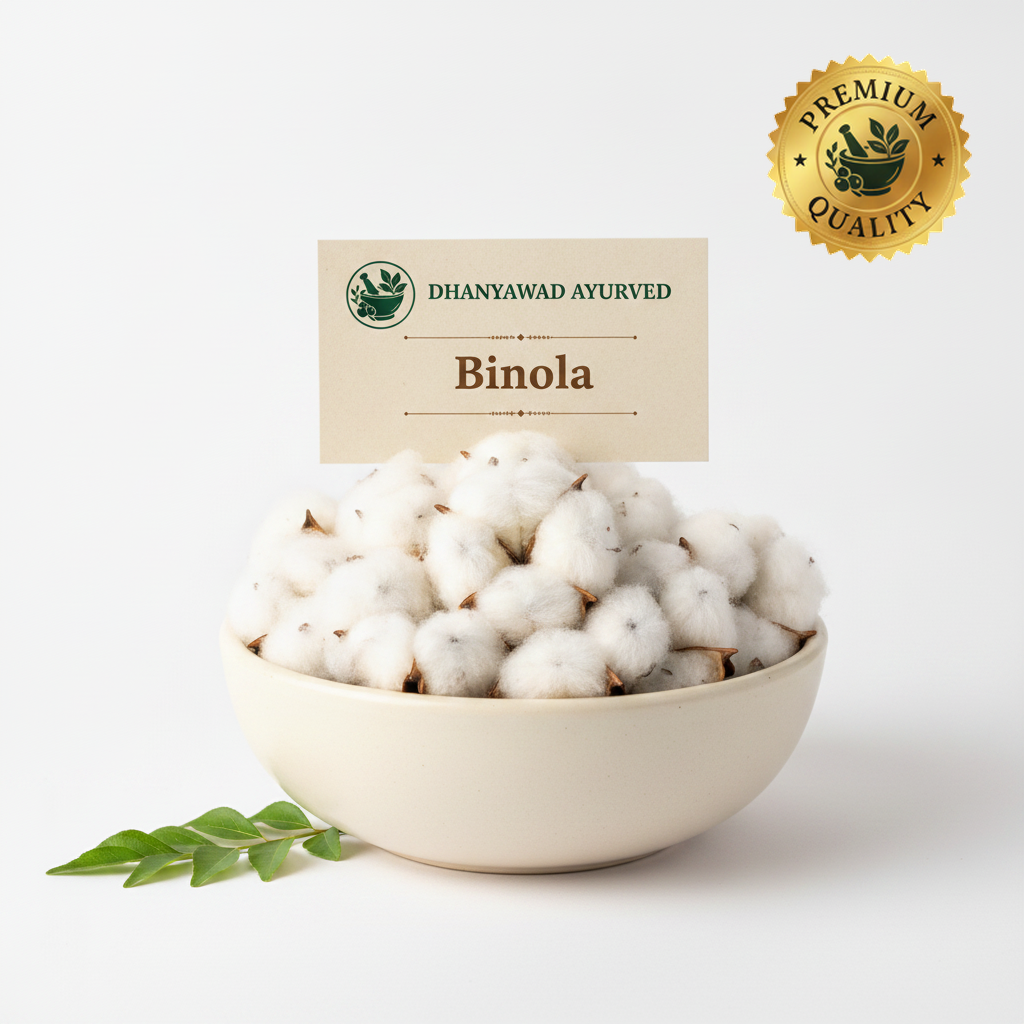
What Is Binola (Cottonseed)?
Cotton (Gossypium species) is one of the world's oldest cultivated plants. After cotton fibre is separated, the seeds remain — these are Binola (बिनौला). Each seed is rich in oil (approximately 15–25% oil by weight), protein, and phytochemical compounds including gossypol, flavonoids and linoleic acid. In Indian traditional and household practice, cottonseed has long been used in skin-care preparations, topical applications and traditional formulations. The oil pressed from cottonseed is also widely used in Indian cooking and food processing.
Names in Other Languages
| Language / System | Name |
|---|---|
| Hindi / Pansari | Binola / बिनौला |
| English | Cottonseed / Cotton Seed |
| Sanskrit / Ayurveda | Karpasa Beej (कार्पास बीज) |
| Gujarati | Binavalo |
| Marathi | Karpasache Bij |
| Tamil | Parutti Vithai |
| Telugu | Patti Vittanalu |
| Botanical | Gossypium herbaceum L. (Malvaceae), seed |
How to Identify Genuine Binola
- Appearance: Small oval seeds, about 8–10 mm long, with a hard outer shell and a whitish inner kernel. Raw Binola often has some residual short cotton fibres (linters) attached to the shell.
- Colour: Shell is brownish-grey to dark brown; kernel inside is white to cream coloured.
- Oil feel: Pressing a seed releases a faint oil smell and a slightly oily feel — this indicates good oil content.
- Smell: Mild, slightly nutty and earthy.
- Source: Buy from a trusted Ayurvedic or pansari source to ensure the product is genuine cottonseed and free from contamination.
Traditional Uses
In Indian traditional practice, cottonseed (Karpasa Beej / Binola) has been used for:
- Skin emollient: Cottonseed oil is a traditional emollient used in skin-care preparations to soften dry, rough or chapped skin. Its linoleic acid content supports the skin barrier.
- Wound healing support: Cottonseed oil has traditional topical use in wound care and for softening skin affected by minor irritation.
- Women's health support: In classical Ayurvedic texts, Karpasa (cotton plant) is classified as a women's tonic herb. The seeds have traditional use in Ayurvedic formulations for reproductive health support. Consult your doctor before use for any reproductive health concern — do not stop prescribed medication.
- Digestive support: Cottonseed is used in some traditional preparations for digestive support, though this is a less primary application.
These are traditional uses. Binola is an herbal ingredient, not a medicine. It does not treat, diagnose or cure any disease. Consult a doctor for any health condition.
How to Use Binola
- Oil extraction: Cottonseed oil (pressed from Binola) is used in cooking and topical skin care. For skin use, apply a few drops of cold-pressed cottonseed oil to dry areas and gently massage in.
- Topical paste: Binola kernel ground with a small amount of milk or water can be used as a traditional soothing topical paste for dry or irritated skin.
- In traditional formulations: In compound Ayurvedic preparations, Binola is used as directed by an Ayurvedic practitioner.
- Internal use: Cottonseed kernel is edible in small amounts (in oil or cooked form). Raw cottonseed contains gossypol, which is toxic in large amounts — do not consume raw whole cottonseed in large quantities.
Product Details
| Product | Binola | Cottonseed | बिनौला |
| Botanical source | Gossypium herbaceum L. (Malvaceae) |
| Part used | Seed (whole with shell) |
| Pack size | 100g |
| Form | Raw |
| Price | ₹120 per 100g |
| Storage | Airtight container, cool and dry place; shelf life 9–12 months |
| Sold by | Dhanyawad Ayurved Vatika, Sector 13, Dwarka, New Delhi |
| Delivery | Ships within 24 hours, delivered across India in 3–5 days |
Safety
- Gossypol content: Raw cottonseed contains gossypol — a natural compound that can be toxic in large amounts. Cottonseed oil (refined or expeller-pressed) has very low gossypol content and is safe for cooking. Do not consume large amounts of raw Binola kernel.
- Pregnancy: Karpasa (cotton plant) has traditional use as a uterine stimulant in Ayurvedic obstetric formulations. Pregnant women should avoid internal use of cottonseed without medical guidance.
- Topical use: Cottonseed oil is safe for most people topically. Patch test before applying to sensitive skin.
- Male fertility: High doses of gossypol from cottonseed have been studied for contraceptive effects. Avoid high internal doses, especially for men trying to conceive.
- Consult your doctor before internal use if you have any medical condition or take prescribed medication.
See a doctor for any persistent skin condition, wound that is not healing, or reproductive health concern. This product is an herbal raw ingredient — not a medicine.
Frequently Asked Questions
Is cottonseed healthy?
Cottonseed oil — pressed from Binola — is a common cooking oil in India containing linoleic acid and vitamin E. In its raw form, cottonseed is used as an emollient and traditional herbal ingredient. Refined cottonseed oil is generally safe in cooking. Raw cottonseed in large internal amounts is not recommended due to gossypol content.
What are the medicinal uses of cotton (Karpasa) in Ayurveda?
In Ayurveda, Karpasa (cotton plant) is classified as a demulcent, emollient and women's health tonic herb. The seeds (Karpasa Beej / Binola) are traditionally used in formulations for women's reproductive wellness, skin emollience and wound support. Always use under Ayurvedic practitioner guidance for medicinal purposes.
Is cottonseed oil better than groundnut or sunflower oil?
Each oil has different fatty acid profiles. Cottonseed oil is high in linoleic acid (omega-6) and polyunsaturated fats; groundnut (peanut) oil is higher in monounsaturated oleic acid; sunflower oil is also high in linoleic acid. No single oil is universally "best" — variety is preferred. Cottonseed oil has a high smoke point making it suitable for frying.
Can Binola be used for hair?
Cottonseed oil is occasionally used as a hair oil in traditional preparations, valued for its emollient and moisturising properties. It may help soften dry, coarse hair when applied and massaged into the scalp before washing. It is not a treatment for hair loss.
How much Binola is safe to consume?
Binola is primarily used for its oil and topically. Internal use of raw Binola kernel in large amounts is not recommended due to gossypol content. Cold-pressed or refined cottonseed oil used in cooking in normal food amounts is safe. For any medicinal internal preparation using Binola, consult an Ayurvedic practitioner.
What is the difference between cottonseed oil and palm oil?
Cottonseed oil is high in linoleic acid (omega-6 polyunsaturated fat) and has a light flavour with a high smoke point, making it suited for frying. Palm oil is high in saturated fats (palmitic acid), semi-solid at room temperature, and widely used in processed foods. Cottonseed oil is the lighter, more liquid option; palm oil is more stable for high-heat industrial use but is higher in saturated fat.
Information reviewed by Vaidya Ravinder Arora (40+ years), Dhanyawad Ayurved Vatika, Dwarka, New Delhi. Traditional uses only; not medical advice.

VEGAN

NATURAL INGREDIENTS

CRUELTY FREE

Ethically Sourced

No Artificial Flavors

Made with Love
You may also like


Disclaimer: The information provided is for educational purposes only and is not intended to replace medical advice. Always consult a qualified Ayurvedic practitioner before using any herbal product for therapeutic use, as individual responses may vary based on one’s health condition, dosha constitution, and imbalances.

- Choosing a selection results in a full page refresh.
- Opens in a new window.
