
Yoga for Piles: 6 Gentle Poses and Exercises You Can Do at Home
Gentle yoga poses and everyday exercises that support regular bowel movements and ease pressure on piles, plus the movements to avoid.
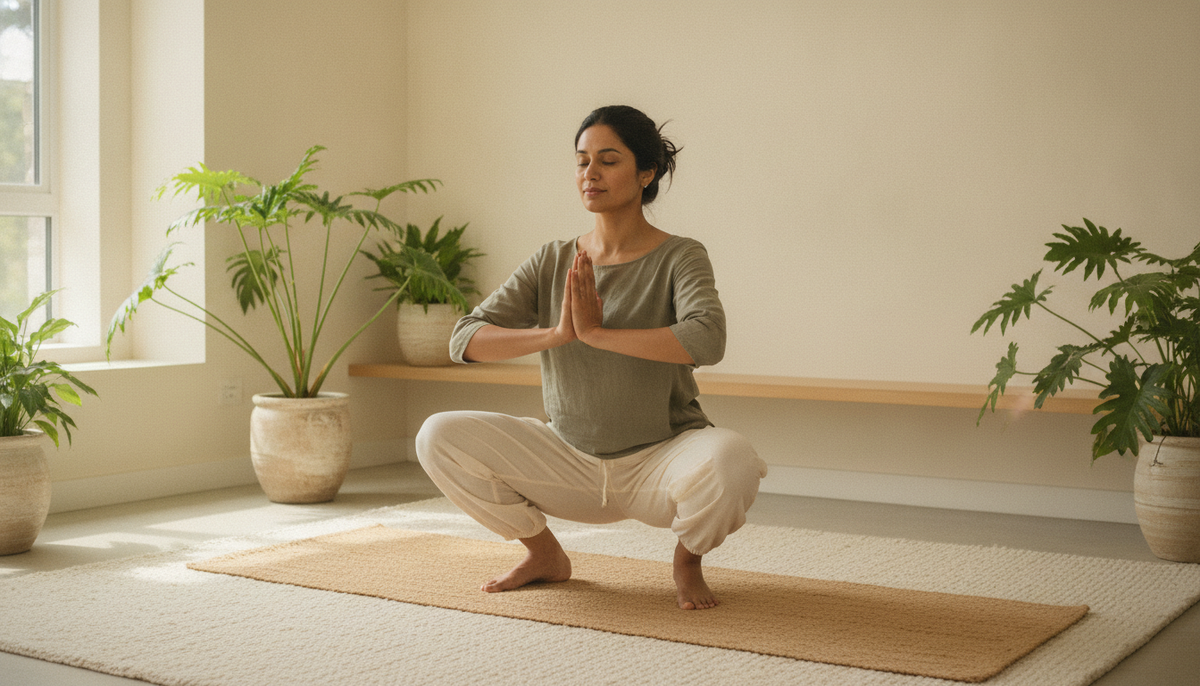
Yoga for piles works by keeping digestion moving and reducing the straining that causes piles. Gentle poses such as Malasana (squat), Pawanmuktasana (wind-relieving pose) and Viparita Karani (legs up the wall), plus pelvic floor exercises and a daily walk, are safe for most people. Avoid heavy lifting and straining during a flare-up.
- Regular movement helps bowel movements stay regular, which reduces straining, the main trigger for piles.
- Gentle poses such as Malasana, Pawanmuktasana and Viparita Karani are traditionally used to support digestion and relieve pressure.
- Pelvic floor exercises and a daily 30-minute walk are simple, low-risk additions.
- Avoid heavy lifting and exercises that make you hold your breath and strain during a flare-up.
- Yoga supports diet and fibre changes; it does not replace a doctor's check for bleeding or severe pain.
How yoga and exercise help with piles
Piles are swollen veins around the anus, usually triggered by constipation and straining (see what piles are). Regular movement helps the gut move stool along, and long periods of sitting put pressure on the area. Yoga adds gentle abdominal movement, relaxation of the pelvic floor, and calmer breathing, which all make bowel movements easier.
6 gentle poses and exercises for piles
1. Malasana (garland or squat pose)
Stand with feet slightly wider than hips, turn the toes out, and lower into a deep squat. Keep the heels down (place a folded towel under them if needed) and bring the palms together at the chest. Hold for 30–60 seconds while breathing slowly. Squatting relaxes the pelvic floor, which is why a footstool under your feet on a western toilet also helps.
2. Pawanmuktasana (wind-relieving pose)
Lie on your back, hug one knee to the chest for 5 slow breaths, then the other, then both. This gentle pressure on the abdomen is traditionally used to relieve gas and support bowel movement.
3. Viparita Karani (legs up the wall)
Sit sideways next to a wall, lie back and swing your legs up the wall. Rest for 3–5 minutes. Raising the legs eases pressure in the lower body and is deeply relaxing.
4. Baddha Konasana (butterfly pose)
Sit with the soles of the feet together and knees falling outward. Gently move the knees up and down for a minute, then rest. It opens the hips and relaxes the pelvic area.
5. Balasana (child's pose)
Kneel, sit back on the heels, and fold forward with arms stretched out or by your sides. Breathe into the belly for 1–2 minutes.
6. Pelvic floor exercises
Gently squeeze the muscles you would use to stop passing wind, hold for 5 seconds, then fully relax for 5 seconds. Repeat 10 times, two or three times a day. The traditional Ashwini mudra is a similar practice. Focus on fully relaxing between squeezes.

A simple 15-minute daily routine
| Step | Time |
|---|---|
| Pawanmuktasana (each leg, then both) | 3 min |
| Baddha Konasana | 2 min |
| Malasana | 2 min |
| Balasana | 2 min |
| Pelvic floor exercises | 2 min |
| Viparita Karani with slow belly breathing | 4 min |
Add a 30-minute walk on most days. Walking after meals is especially helpful for digestion.
What to avoid during a flare-up
- Heavy weightlifting, especially squats and deadlifts with a held breath
- Intense core exercises that make you bear down
- Long cycling or horse riding, which press directly on the area
- Any pose that causes pain: stop and rest
Combine with diet and home care
Yoga works best with more fibre and water (see our piles diet chart) and warm sitz baths for comfort. For Ayurvedic support, Dhanyawad Ayurved's Arsh Kuthar Capsule combines six herbs traditionally used for digestion and easier bowel movements.
Frequently Asked Questions
Which yoga is best for piles?
Gentle poses that support digestion and relax the pelvic floor, such as Malasana, Pawanmuktasana, Viparita Karani, Baddha Konasana and Balasana, are commonly recommended.
Can exercise make piles worse?
Heavy lifting and exercises where you strain or hold your breath can increase pressure. Gentle yoga and walking are generally safe.
How often should I do yoga for piles?
A short daily routine of about 15 minutes, plus a 30-minute walk on most days, is a good start.
Can yoga alone treat piles?
Yoga supports regular bowel movements alongside diet and fibre, but it doesn't replace a doctor's examination if you have bleeding, severe pain, or symptoms that don't improve.
Sources
Written by the Dhanyawad Ayurved team and reviewed by Vaidya Ravinder Arora (40+ years), Dhanyawad Ayurved Vatika, Dwarka, New Delhi. This article describes traditional uses for general information. It is not medical advice. Consult a qualified doctor or Ayurvedic practitioner before using any herb therapeutically.

