
Tej Patta Benefits: Indian Bay Leaf Uses, Dose and Side Effects
Indian bay leaf (Tej Patta) traditionally supports digestion, respiratory health and blood sugar balance. Here's what the evidence says and how to use it safely.
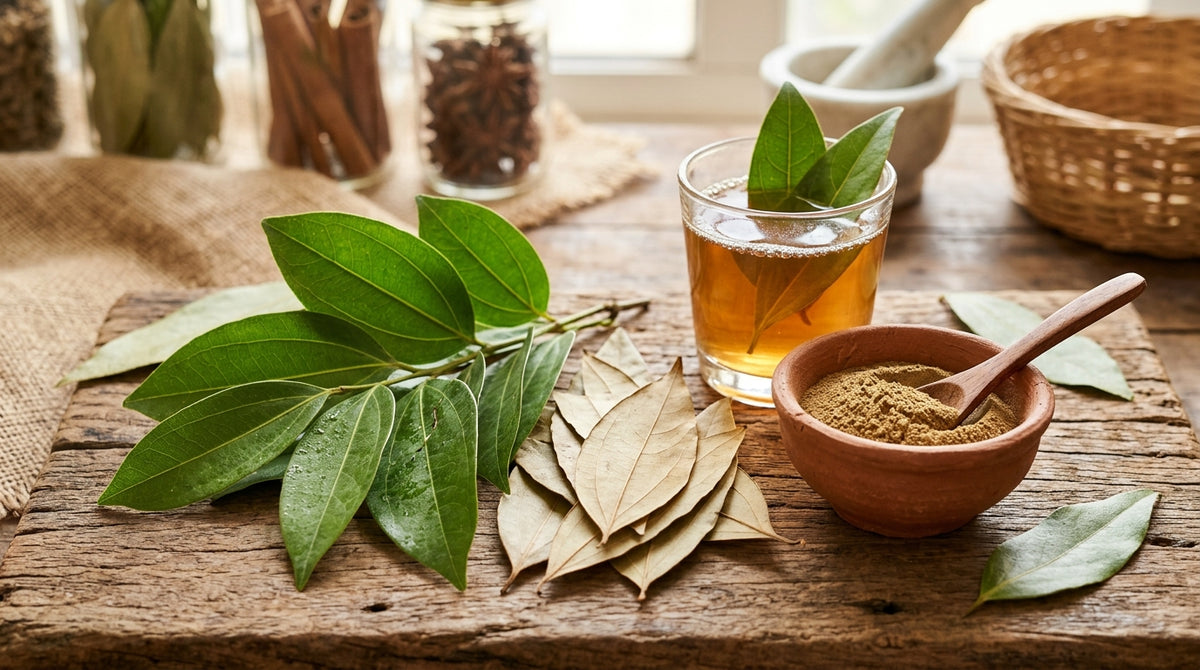
Tej Patta — Indian bay leaf (Cinnamomum tamala) — is an aromatic Ayurvedic spice traditionally used to support digestion, ease bloating, manage blood sugar balance and relieve respiratory discomfort. Its active compounds, including eugenol and linalool, give it antioxidant and anti-inflammatory properties that have been studied in herbal medicine research.
- Tej Patta (Cinnamomum tamala) is an Ayurvedic spice traditionally used to support digestion, reduce bloating and ease respiratory discomfort.
- Bay leaf water (tej patta ka pani) is a popular traditional drink — one cup a day is the typical traditional amount.
- Indian bay leaf contains compounds such as eugenol, linalool and cineole that may support anti-inflammatory and antioxidant activity.
- People with diabetes or scheduled for surgery should consult a doctor before using bay leaf supplements, as it may affect blood sugar.
- Tej Patta is generally safe when used as a cooking spice; medicinal doses should be used with guidance.
What is Tej Patta (Indian Bay Leaf)?
Tej Patta is the dried leaf of Cinnamomum tamala, an evergreen tree native to the Himalayan foothills, Nepal and parts of north-east India. The name literally means "sharp leaf" in Hindi — a fitting description for its intense, warm, spicy-sweet aroma. In Indian kitchens, tej patta is one of the essential whole spices added to the tempering of biryanis, dals, curries and rice dishes.
It is important to understand that Indian bay leaf is not the same as the Mediterranean bay leaf (Laurus nobilis) commonly used in European cooking. The two plants belong to entirely different botanical families and have distinct aromas: tej patta has a cinnamon-clove fragrance, while Mediterranean bay leaf is milder with a eucalyptus-like note. In Ayurveda, tej patta — also called Tejapatra or Tamalapattra — is classed as warm and pungent in nature, traditionally used to balance Vata and Kapha doshas and stimulate digestive fire (agni).
Tej Patta Names in Different Languages
| Language / Reference | Name |
|---|---|
| Hindi / Pansari | तेज पत्ता (Tej Patta) |
| English | Indian Bay Leaf, Indian Cassia Leaf |
| Sanskrit / Ayurveda | तेजपत्र (Tejapatra), तमालपत्र (Tamalapattra) |
| Urdu | تیج پتہ (Tej Patta) |
| Tamil | பிரியாணி இலை (Biriyani Ilai) |
| Marathi | तमालपत्र (Tamalpatra) |
| Bengali | তেজ পাতা (Tej Pata) |
| Kannada | ಮರಾಠಿ ಮೊಗ್ಗು (Marathi Moggu) / ತಮಾಲಪತ್ರ (Tamalapattra) |
| Botanical | Cinnamomum tamala (Buch.-Ham.) T.Nees & Eberm. |
How to Identify Genuine Tej Patta
Tej Patta is sometimes confused with Mediterranean bay leaf (Laurus nobilis) or sold as a substitute for it. Here is how to tell the difference when buying:
- Three veins on the leaf: genuine Indian bay leaf (tej patta) has three prominent veins running along the length of the leaf. Mediterranean bay leaf has only one central vein with side veins branching off it. This is the most reliable identifying feature.
- Aroma: crush a dried tej patta leaf between your fingers — it should release a warm, cinnamon-clove fragrance. Mediterranean bay leaf smells more herbal and eucalyptus-like. If a "bay leaf" smells of cinnamon, it is almost certainly tej patta.
- Appearance: tej patta leaves are typically elliptical, notably larger and wider than Mediterranean bay leaves, pale green to grey-green when dried, with a leathery texture. The leaf surface is smoother than Mediterranean bay leaf.
- Source: buy from a trusted pansari, Ayurvedic supplier or direct-from-origin brand. Whole dried leaves are preferable to powder when assessing quality, as adulteration is easier in powder form.
Health Benefits of Tej Patta
Supports Digestive Health
Tej Patta has been used in Ayurveda as a digestive spice for centuries. It is traditionally believed to stimulate digestive enzymes, reduce gas and bloating, ease indigestion and support regular bowel movement. The essential oils in tej patta — particularly eugenol and cineole — are thought to have carminative (gas-relieving) and digestive-stimulating properties. Adding tej patta to cooking is one of the simplest ways to support digestion, and tej patta tea is a traditional home remedy for an upset stomach or feeling of heaviness after meals.
May Support Blood Sugar Balance
Indian bay leaf is increasingly studied for its potential role in blood sugar management. Some research suggests that compounds in Cinnamomum tamala may support insulin sensitivity and help moderate post-meal blood sugar levels. This is consistent with its traditional Ayurvedic use as a herb for metabolic balance. Important: people taking diabetes medication should consult their doctor before using bay leaf supplements. Tej patta used as a cooking spice is generally considered safe, but concentrated supplements or large medicinal doses may interact with diabetes medication and should never replace prescribed treatment.
Anti-inflammatory and Antioxidant Activity
Tej Patta contains a range of bioactive compounds — eugenol, linalool and various flavonoids — that may contribute to antioxidant and anti-inflammatory activity. Antioxidants help protect cells from oxidative stress, which is linked to ageing and chronic health conditions. The anti-inflammatory properties of eugenol in particular have been well studied. While most research is at the laboratory or early clinical stage, traditional use of tej patta as an everyday cooking spice gives you a low-dose, food-first way to include these compounds in your diet.
Supports Respiratory Health
Tej Patta has a long history in traditional Indian home medicine for supporting respiratory health. Its warm, aromatic nature is traditionally used to ease congestion, loosen mucus and soothe a troubled respiratory tract. Steam inhalation using tej patta leaves is a traditional remedy for nasal congestion, blocked sinuses and cold-related discomfort. The essential oil compounds in tej patta have a long association with respiratory support in traditional herbal medicine. Tej patta tea with honey is a classic home drink for cough and sore throat during the winter season.
Natural Stress Support
The aromatic compounds in tej patta — particularly linalool — are traditionally associated with calming and grounding effects. In Ayurveda, tej patta's warming, Vata-balancing properties are considered supportive for nervous system health and stress-related digestive disturbances (such as stress-induced bloating or poor appetite). Drinking a cup of tej patta tea in the evening is a simple traditional practice for winding down. While tej patta is not a substitute for professional mental health support, it may be a gentle addition to a stress-management routine.
Benefits for Skin and Hair
Tej Patta has traditional external uses in Ayurvedic skin and hair care. Its antimicrobial and anti-inflammatory properties have led to its use in herbal hair rinses to support scalp health and reduce dandruff-related irritation. Tej patta water is sometimes used as a hair rinse after washing, as the aromatic compounds are believed to nourish the scalp. For skin, diluted tej patta infusion is traditionally applied to soothe minor irritation. Note: tej patta does not change skin colour and should not be used with that expectation. Always patch-test before applying anything to skin, and dilute well — concentrated essential oil can irritate sensitive skin.

How to Use Indian Bay Leaf
| Form | Amount | Method |
|---|---|---|
| Tej patta tea / bay leaf water | 2–3 dried leaves per cup | Boil 2–3 tej patta leaves in 1–2 cups of water for 10–15 minutes. Strain, cool slightly and drink warm. Add honey or ginger as desired. One cup a day is the typical traditional amount. |
| Steam inhalation | 4–5 dried leaves | Add leaves to a bowl of just-boiled water. Drape a towel over your head and inhale the steam gently for 5–10 minutes. Use for congestion or blocked sinuses — do not let steam burn skin or eyes. |
| In cooking (whole spice) | 1–2 leaves per dish | Add whole dried leaves to hot oil at the start of tempering for dals, curries, biryani and rice. Remove before serving — the whole leaf is not eaten directly. |
| Bay leaf powder (tej patta powder) | ½–1 teaspoon per day | Stir into warm water, herbal tea, soups or smoothies. Powder is more concentrated than whole leaves — start small. Can also be stirred into face packs or hair masks for topical use. |
Bay Leaf Water (Tej Patta Water) — Is It Safe Daily?
Tej patta ka pani (bay leaf water) is a widely consumed traditional drink in Indian households. One cup per day made from 2–3 dried leaves is the amount traditionally used and is generally considered safe for healthy adults. Here is what to keep in mind:
- Culinary use is safe: tej patta as a spice in everyday cooking is considered safe for most people.
- One cup of tej patta tea daily: this is the typical traditional amount. Drinking several cups daily or using very concentrated preparations over extended periods is not recommended without guidance.
- Diabetes or blood sugar medication: if you are on medication for blood sugar, consult your doctor — bay leaf may add to the blood-sugar-lowering effect of your medication.
- Pregnancy: culinary amounts in food are considered safe. Medicinal doses (tej patta supplements or large amounts of tea) during pregnancy should be discussed with your doctor or midwife first.
- Upcoming surgery: some sources suggest bay leaf may affect blood sugar during and after surgery. Inform your surgeon and stop medicinal use at least two weeks before a scheduled procedure.
Dhanyawad Ayurved stocks Tej Patta (Indian Bay Leaf) sourced directly — clean, whole dried leaves or powder, no additives. Available in 100g packs (raw or powder) at ₹65. You may also find our guides on Dalchini (Cinnamon) benefits and Mulethi (Licorice) benefits useful, as these are closely related Ayurvedic spice-herbs with overlapping traditional uses.
Precautions and Side Effects
- Whole leaves are not eaten: tej patta is used as a flavouring and removed before eating. Swallowing a whole leaf is a choking and digestive hazard — always remove leaves from food before serving.
- Diabetes medication: bay leaf may lower blood sugar. If you take diabetes medication, monitor your levels carefully and consult your doctor before using tej patta as a regular supplement or tea.
- Blood pressure medication: tej patta may have a mild effect on blood pressure. Consult your doctor if you are on antihypertensive medication.
- Blood-thinning medication: some compounds in tej patta may have mild anticoagulant properties. If you are on blood-thinning medication (warfarin, aspirin, etc.), consult your doctor before using bay leaf as a supplement.
- Pre-surgery: stop medicinal use at least two weeks before any scheduled surgery, as bay leaf may affect blood sugar and interact with anaesthetic agents.
- Pregnancy and breastfeeding: culinary use in food is considered safe. Concentrated supplements or large-dose tea should be avoided without medical advice.
- Allergic reactions: though uncommon, some people may experience skin irritation, rash or itching when tej patta essential oil or concentrated preparations are applied topically. Always dilute and patch-test first.
- Children: culinary amounts in family cooking are fine. Medicinal doses as supplements or concentrated teas are not appropriate for young children.
When to See a Doctor
Stop using tej patta supplements or concentrated preparations and seek medical advice if you notice any of the following:
- Unexpectedly low blood sugar (dizziness, sweating, confusion, shakiness) if you are on diabetes medication
- Skin rash, hives, itching or swelling after consuming tej patta tea or applying it topically
- Any sign of allergic reaction — swelling of the face, lips or throat requires immediate emergency attention
- Unusual digestive discomfort, nausea or vomiting that does not resolve
- Unusual fatigue, breathlessness or chest discomfort — do not attribute these to herbal use without a medical evaluation
Always consult your doctor before using tej patta as a regular supplement if you have diabetes, high blood pressure, a blood clotting disorder, or are scheduled for surgery. Tej patta is a food-first spice — used in cooking, it is safe for most people and a part of everyday Indian cuisine.
Frequently Asked Questions
Is tej patta water good for health?
Yes, tej patta water (bay leaf water) is a traditional herbal drink that may support digestion, reduce bloating and help moderate blood sugar levels. One cup a day made from 2–3 dried leaves is the typical amount used traditionally. It is generally safe for healthy adults when consumed in this amount and is not a substitute for medical treatment.
Can bay leaves help with back pain?
Tej patta contains eugenol and other compounds with anti-inflammatory properties that are traditionally associated with pain relief. In Ayurveda, tej patta preparations are sometimes used externally — as warm leaf poultices or infused oils — for muscular discomfort. There is limited direct clinical research on tej patta for back pain specifically. If you have persistent back pain, consult a doctor for a proper diagnosis and treatment plan.
What are the health benefits of Indian bay leaves?
Indian bay leaf (tej patta) is traditionally used to support digestion, ease bloating and gas, help balance blood sugar, relieve respiratory congestion, and provide antioxidant and anti-inflammatory activity. It also has traditional uses for stress support and scalp health. Its benefits come from active compounds such as eugenol, linalool and cineole found in the leaf.
What are the health benefits of bay leaf powder?
Bay leaf powder (tej patta powder) offers the same traditional benefits as whole leaves — digestive support, blood sugar balance, respiratory ease and antioxidant activity — in a more convenient, concentrated form. Because powder is more potent than whole leaves, start with a small amount (½ teaspoon) stirred into water or tea. It is also used topically in face masks and hair preparations.
Can I drink bay leaf water every day?
One cup of tej patta tea (2–3 leaves boiled in water) per day is the amount traditionally used and is considered safe for most healthy adults. Drinking it daily in moderate amounts is a common traditional practice. However, if you are pregnant, breastfeeding, on diabetes or blood pressure medication, or scheduled for surgery, consult your doctor before making it a daily habit.
Who should not drink bay leaf tea?
People who should avoid or limit tej patta tea include: those on diabetes medication (bay leaf may lower blood sugar further), those on blood-thinning medication, those scheduled for surgery within two weeks, and pregnant women using it in medicinal amounts. Babies and young children should not be given herbal teas without paediatric guidance. Anyone with a known allergy to plants in the Lauraceae family should also avoid it.
Sources
Written by the Dhanyawad Ayurved team and reviewed by Vaidya Ravinder Arora (40+ years), Dhanyawad Ayurved Vatika, Dwarka, New Delhi. This article describes traditional uses for general information. It is not medical advice. Consult a qualified doctor or Ayurvedic practitioner before using any herb therapeutically.

