Dalchini Benefits: Uses, How to Take, Dose and Side Effects
Dalchini (cinnamon) is a warming spice bark with traditional uses for digestion, blood sugar support and immunity. Learn how to take it, the right dose, and who should be careful.
Dalchini — known in English as cinnamon — is the dried inner bark of Cinnamomum verum or C. cassia. It is traditionally used in Ayurveda to support digestion, manage blood sugar levels, relieve cold and cough, and boost immunity. Its active compound, cinnamaldehyde, gives it antioxidant and anti-inflammatory properties that have been studied extensively.
- Dalchini (cinnamon) is the inner bark of Cinnamomum verum or C. cassia — a warming spice used in Ayurveda as "tvak" for digestion, cold, blood sugar support and immunity.
- Its key active compound cinnamaldehyde gives cinnamon its antioxidant and anti-inflammatory properties that are well documented in research.
- The commonly recommended daily amount is 1–3 g (roughly ½–1 teaspoon of powder); higher doses over long periods may stress the liver, especially with Cassia cinnamon.
- People managing diabetes or high blood pressure should consult their doctor before taking dalchini regularly — it may affect medication levels and should never replace prescribed treatment.
- See a doctor if you develop mouth sores, skin rash, allergic symptoms, or if you are on blood-thinning medication and wish to use cinnamon regularly.
What is dalchini (cinnamon)?
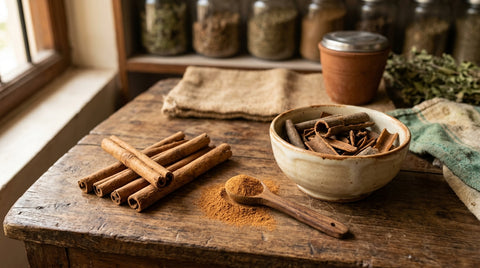
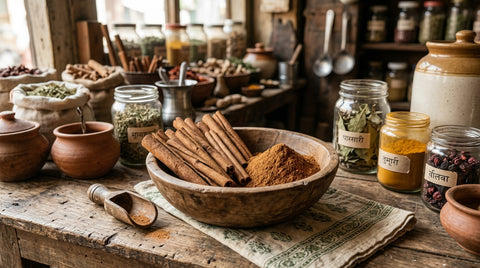
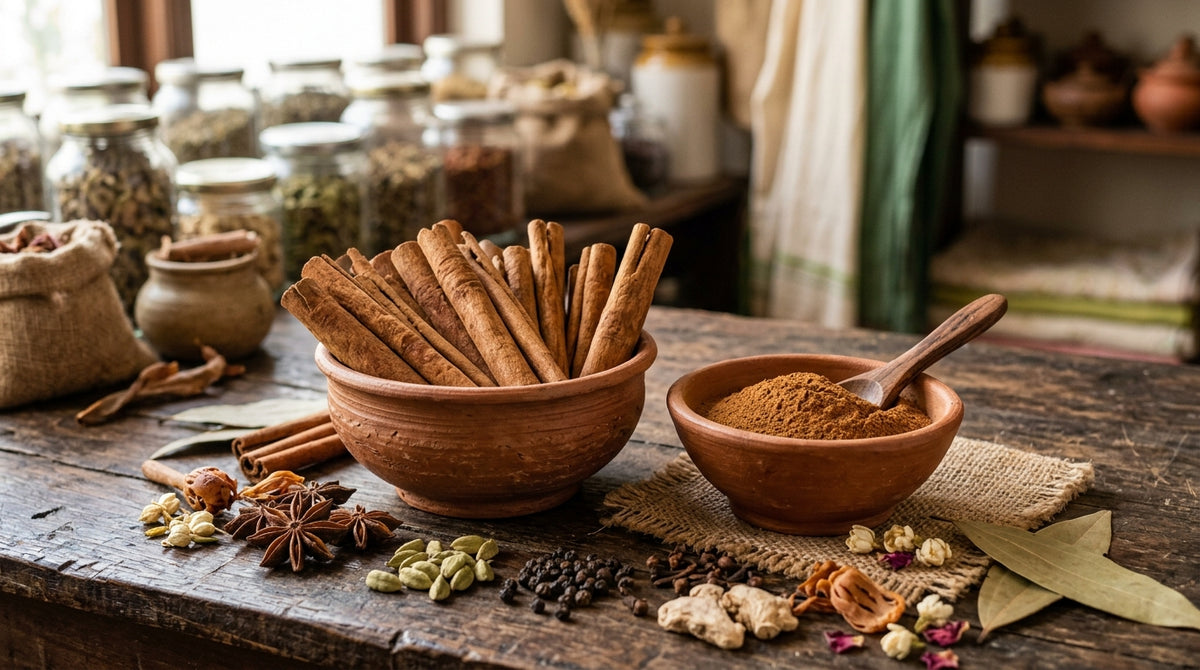
Dalchini is a spice made from the inner bark of an evergreen tree in the Cinnamomum genus. When the bark is peeled and dried, it curls naturally into thin rolls — the cinnamon sticks (quills) you see in kitchens and pansari shops. Ground dalchini powder is made from the same bark.
In Ayurveda, dalchini is known as tvak (त्वक्) — literally "bark." It is classed as warming (ushna virya) with a pungent-sweet taste and is used to balance Vata and Kapha doshas. It has been part of Indian cooking and traditional medicine for thousands of years, and is mentioned in ancient Sanskrit texts as well as in Chinese and Western herbal traditions.
Dalchini names in different languages
| Language / Reference | Name |
|---|---|
| Hindi / Pansari | दालचीनी (Dalchini) |
| English | Cinnamon, True Cinnamon |
| Sanskrit / Ayurveda | त्वक् (Tvak), वरांगा (Varanga), दारुसिता (Darusita) |
| Urdu | دارچینی (Darchini) |
| Tamil | இலவங்கப்பட்டை (Ilavangappattai) |
| Marathi | दालचिनी (Dalchini) |
| Bengali | দারচিনি (Darchini) |
| Kannada | ದಾಲ್ಚಿನ್ನಿ (Dalchini) |
| Botanical | Cinnamomum verum J.Presl (Ceylon) / C. cassia (Blume) (Cassia) |
What are the benefits of dalchini (cinnamon)?
Digestive support
Dalchini is one of Ayurveda's primary digestive spices. It is traditionally used for bloating, gas, indigestion and sluggish digestion. Its warming nature is believed to kindle digestive fire (agni), helping the stomach break down food more effectively. Adding a small amount of dalchini to food or drinking dalchini water after meals is a common home practice.
Blood sugar management
Dalchini is perhaps most talked about for its potential role in blood sugar support. Several studies suggest that cinnamon may improve insulin sensitivity and help moderate blood sugar levels after meals. The active compounds, including cinnamaldehyde and cinnamic acid, may support glucose metabolism. Important: dalchini is not a treatment for diabetes. If you have diabetes, always consult your doctor before using cinnamon regularly, and never stop prescribed medication without medical advice.
Antioxidant and anti-inflammatory properties
Cinnamon is loaded with polyphenol antioxidants — studies have ranked it among the highest of all spices for antioxidant activity. These compounds may help protect cells from oxidative damage and support the body's response to inflammation. Regular culinary use of dalchini is a simple, food-first way to include more antioxidants in your diet.
Cold, cough and respiratory support
Dalchini has long been used in Ayurvedic home remedies for colds, coughs and sore throats. Its warming, Kapha-reducing properties are traditionally believed to help clear congestion, loosen mucus and soothe throat irritation. Dalchini mixed with honey and ginger is one of the oldest kitchen remedies for cough in Indian households.
Heart health support
Some research suggests cinnamon may help support healthy cholesterol levels by modestly reducing LDL ("bad") cholesterol and triglycerides while maintaining HDL ("good") cholesterol. Dalchini does not treat heart disease. If you have a heart condition or are on cholesterol or blood pressure medication, speak to your doctor before using cinnamon as a supplement.
Weight management
Dalchini is popularly used in weight-loss home remedies — particularly dalchini water and dalchini-honey drinks. It may support weight management by moderating blood sugar spikes (which can drive hunger), supporting digestion and reducing water retention. However, dalchini alone does not cause weight loss. It is best used alongside a balanced diet and regular activity.
Skin and hair (external use)
Dalchini's antimicrobial properties have led to its traditional use in face packs and hair care. A small pinch of dalchini powder mixed in a honey or yoghurt mask is a popular home remedy for dull skin and mild acne. Note: pure cinnamon applied directly to skin can cause irritation — always dilute well and do a patch test first.
Dalchini and honey benefits
The combination of dalchini and honey is one of the most traditional remedies in Indian home medicine. Honey is antimicrobial, soothing and rich in antioxidants; dalchini is warming, anti-inflammatory and digestive. Together, they are traditionally used for:
- Cough and sore throat: ½ teaspoon honey with a small pinch of dalchini powder, taken slowly at night.
- Digestion: a spoonful of honey stirred into dalchini water in the morning may help reduce bloating.
- Immunity: mixing a pinch of dalchini into warm water with honey and a squeeze of lemon is a popular morning tonic during winters.
- Weight support: dalchini-honey water is widely consumed as a morning drink for metabolism support — though the scientific evidence for weight loss specifically is limited.
People with diabetes should be careful with honey (it is a sugar source) and consult their doctor before using this combination medicinally.
Dalchini and adrak (ginger) water benefits
Dalchini and adrak (ginger) are both warming, Kapha-reducing spices that complement each other well. Dalchini and ginger tea is a classic home remedy for cold, congestion and indigestion. The combination is believed to support circulation, ease nausea and soothe the respiratory tract. To make it, simmer a small cinnamon stick and a few slices of fresh ginger in water for 10 minutes, strain, and drink warm — with or without honey.

Dalchini and methi (fenugreek) water benefits
Dalchini and methi (fenugreek seeds) are frequently combined in home remedies for blood sugar management and weight support. Both are believed to support insulin sensitivity and digestive health. The combination is typically taken as a morning drink — soak 1 teaspoon of methi seeds overnight, boil in water with a small piece of dalchini, strain and drink on an empty stomach. If you are diabetic or on medication, consult your doctor first, as both herbs may affect blood sugar levels.
How to take dalchini — water, tea and milk
| Method | How to Make | Traditional Use | Best Time |
|---|---|---|---|
| Dalchini water | Boil 1 small cinnamon stick (or ½ tsp powder) in 1–2 cups water for 10 min. Strain, cool slightly, drink. | Digestion, blood sugar, weight support | Morning on empty stomach or after meals |
| Dalchini tea | Add a cinnamon stick to tea while brewing, or steep dalchini powder in hot water like herbal tea. Add ginger or honey as desired. | Cold, cough, immunity, digestion | Morning or evening |
| Dalchini milk (haldi-dalchini doodh) | Add ½ tsp dalchini powder (and optionally ½ tsp haldi) to warm milk. Sweeten with honey or jaggery. | Recovery, sleep, bone support, winter tonic | At bedtime |
| Dalchini powder in food | Use in cooking — curries, rice, kheer, porridge, morning smoothies. | General digestion, flavour, daily intake | Anytime with meals |
Dalchini dose — how much is safe daily?
The generally cited safe daily range for dalchini is 1–3 grams (approximately ½ to 1 level teaspoon of powder). This is considered sufficient for most traditional and culinary uses. There are two important points about dosage:
- Ceylon vs Cassia: Cassia cinnamon (the more common, cheaper variety in India) contains higher levels of coumarin, a compound that can stress the liver at high doses. Ceylon cinnamon (C. verum) is lower in coumarin and generally considered safer for regular use. If you are consuming large amounts daily over weeks, prefer Ceylon variety.
- Chronic high doses: taking more than 3–4 grams daily for extended periods is not recommended without medical supervision — it may cause liver strain, mouth irritation or interact with medications.
For children, halve the adult amount. For elderly individuals, start with a small amount and increase gradually.
Side effects and precautions
- Mouth sores and tongue irritation: some people develop mouth ulcers or tongue soreness from regular cinnamon use — reduce dose or stop and see a doctor.
- Liver health: high doses of Cassia cinnamon (due to coumarin) may affect liver enzymes over time, especially in people with existing liver conditions.
- Blood thinners: cinnamon has mild blood-thinning properties. If you are taking anticoagulant medication (warfarin, aspirin, etc.), consult your doctor before using dalchini as a supplement.
- Diabetes medication: dalchini may lower blood sugar — if you are on diabetes medication, monitor closely and consult your doctor to avoid hypoglycaemia.
- Blood pressure medication: similarly, dalchini may affect blood pressure — consult your doctor and do not stop prescribed medication.
- Pregnancy: culinary amounts in food are considered safe. Medicinal doses (concentrated supplements) during pregnancy should be discussed with a doctor first.
- Allergic reactions: though uncommon, cinnamon allergy can cause skin rash, itching or swelling. Discontinue use if any of these occur.
When to see a doctor
Stop using dalchini and seek medical advice if you experience any of the following:
- Mouth sores, tongue pain or burning that does not clear up
- Skin rash, itching, hives or swelling after consuming or applying cinnamon
- Any sign of allergic reaction — swelling of face, lips or throat requires emergency attention
- Unusual fatigue or yellowing of skin/eyes (potential liver stress)
- Unexpectedly low blood sugar episodes if you are diabetic
Always consult your doctor before using dalchini as a regular supplement if you have diabetes, liver disease, high blood pressure, or are taking any prescription medication including blood thinners.
Dhanyawad Ayurved stocks Dalchini (Cinnamon) as a clean, genuine pansari herb — no additives, available as whole sticks or powder in 100g packs at ₹120. We also stock Gokhru (Small Caltrops) and have a detailed guide on acidity home remedies. For the Hindi guide to dalchini, see दालचीनी के फायदे.
Frequently Asked Questions
What happens if we eat dalchini daily?
Eating 1–3 g (½–1 tsp) of dalchini daily is considered safe and may support digestion, blood sugar moderation and immunity. Regular high doses — especially of Cassia cinnamon — may stress the liver due to coumarin content. Stick to the recommended amount and prefer Ceylon cinnamon if using daily over a long period.
When to take cinnamon — morning or night?
Both timings have traditional support. Dalchini water or tea in the morning on an empty stomach is used for digestion and blood sugar support. Dalchini milk at bedtime is a traditional warming tonic for recovery, sleep and immunity. Choose the method that fits your goal and routine.
Is cinnamon good for everyday use?
Yes, in culinary amounts (a small pinch to ½ teaspoon in food or drink daily), dalchini is a nourishing spice suitable for everyday use for most healthy adults. It should not be taken in large supplement doses every day without medical supervision, particularly if you have a liver condition or are on medication.
What are the top benefits of cinnamon?
Dalchini is traditionally valued for supporting digestion, blood sugar management, cold and cough relief, antioxidant protection, heart health and warmth in winter. Its active compound cinnamaldehyde is responsible for most of its recognised properties. It is a spice first and a supplement second.
How much dalchini should I take daily?
The generally safe amount is 1–3 g per day — roughly ½ to 1 teaspoon of powder, or one small cinnamon stick in water or tea. Do not exceed 3–4 g daily without medical advice. If using Cassia cinnamon (the common Indian variety), be especially mindful of quantity due to its coumarin content.
Does dalchini have any side effects?
Yes, especially at high doses. Common side effects include mouth sores, tongue irritation and digestive upset. High doses of Cassia cinnamon may affect liver enzymes over time. People on blood thinners, diabetes medication or blood pressure medication should consult a doctor, as cinnamon may interact with these drugs.
Can dalchini and honey help with weight loss?
Dalchini and honey water is a popular morning drink believed to support metabolism and reduce bloating. While dalchini may help moderate blood sugar spikes that contribute to hunger, scientific evidence for meaningful weight loss from this combination alone is limited. It works best as part of a balanced diet and active lifestyle.
What is the difference between Ceylon and Cassia dalchini?
Ceylon cinnamon (Cinnamomum verum) is the "true" cinnamon — milder in flavour, lighter in colour, with thin layered quills and very low coumarin. Cassia cinnamon (C. cassia) is harder, darker, stronger-tasting and higher in coumarin. Most dalchini sold in Indian markets is Cassia. Both are safe in culinary amounts; Ceylon is preferred for daily high-dose supplementation.
Sources
Written by the Dhanyawad Ayurved team and reviewed by Vaidya Ravinder Arora (40+ years), Dhanyawad Ayurved Vatika, Dwarka, New Delhi. This article describes traditional uses for general information. It is not medical advice. Consult a qualified doctor or Ayurvedic practitioner before using any herb therapeutically.