
Liver Tonic Syrup: Bhumi Amla, Kutki & Punarnava – Ayurvedic Liver Support Explained
How Dhanyawad Liver Tonic Syrup works, the five Ayurvedic herbs inside it, how to take it correctly, and who should consult a doctor first.
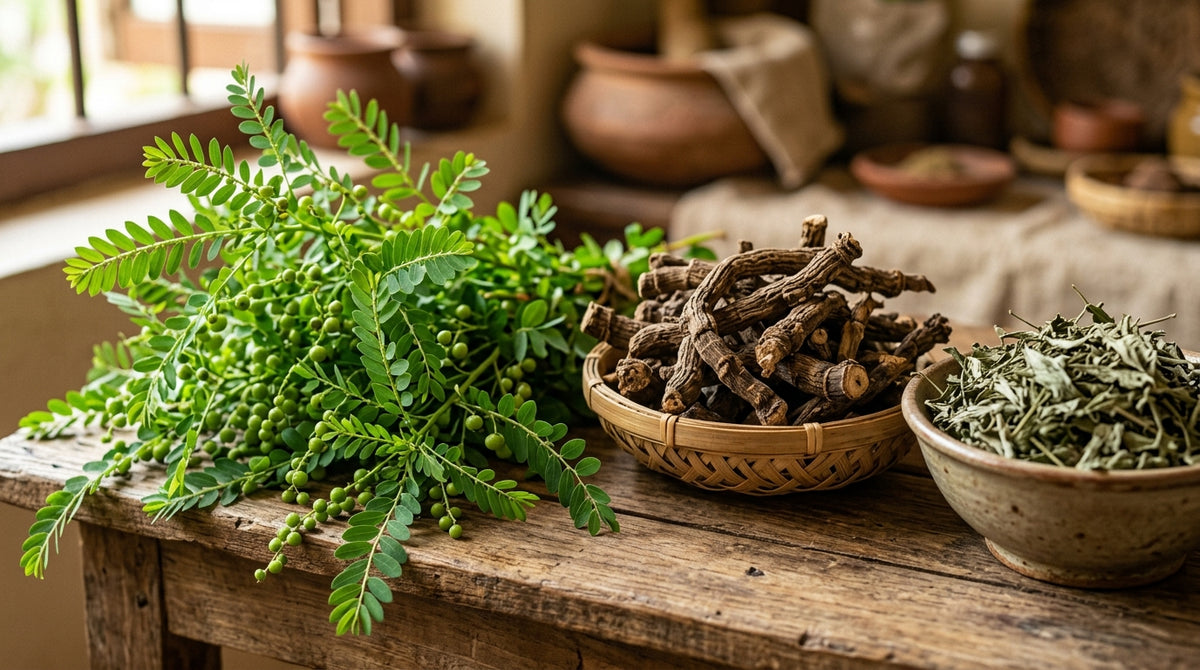
Dhanyawad Liver Tonic Syrup is an Ayurvedic formulation combining five traditional herbs—Bhumi Amla, Kalmegh, Kutki, Bhringraj and Punarnava—traditionally used to support the liver's natural functions of filtration, bile production and digestion. One 200 ml bottle (₹190) contains approximately 20 standard doses. It is a wellness supplement, not a treatment for any liver disease.
- Dhanyawad Liver Tonic Syrup combines Bhumi Amla, Kalmegh, Kutki, Bhringraj and Punarnava—five herbs traditionally used to support the liver's natural cleansing and digestive functions.
- Bhumi Amla (Phyllanthus niruri) is the cornerstone herb, traditionally the most-used plant in Ayurveda and Unani medicine for liver and bile-flow support.
- Kutki (Picrorhiza kurroa) is a potent Himalayan bitter herb with a long classical Ayurvedic history of supporting liver function and bile secretion.
- The standard adult dose is 2 teaspoons (10 ml) twice daily after meals; do not exceed the stated dose or use for more than 8 continuous weeks without a break.
- People with liver disease, diabetes, high blood pressure or anyone on regular medication must consult a doctor before use—this syrup is a supplement, not a treatment.
What is the work of a liver tonic syrup?
The liver performs over 500 functions—filtering blood, producing bile for fat digestion, metabolising nutrients, breaking down hormones and processing medications. In Ayurveda, the liver is called yakrit (यकृत) and is governed by Ranjaka Pitta, the sub-dosha responsible for colouring blood and supporting digestion. When Ranjaka Pitta is imbalanced, classical texts associate symptoms such as poor appetite, sluggish digestion, mild jaundice, and fatigue.
An Ayurvedic liver tonic is not a "detox" in the popular sense. It does not flush the liver or remove toxins directly. Instead, the herbs it contains are traditionally used to:
- Stimulate bile flow (cholagogue / choleretic action), helping fat digestion
- Support hepatocyte (liver cell) health through antioxidant and bitter compounds
- Improve appetite and reduce ama (metabolic waste) accumulation in the digestive tract
- Mildly support the kidneys' diuretic function as a complementary pathway
The herbal combination in this syrup works synergistically—no single herb covers all these pathways, which is why classical Ayurvedic liver formulations always use multiple herbs together.
What are the five herbs in Dhanyawad Liver Tonic Syrup?
| Herb | Hindi | Botanical name | Primary traditional role |
|---|---|---|---|
| Bhumi Amla | भूमि आंवला | Phyllanthus niruri | Lead herb; traditionally supports liver, bile production and digestion |
| Kalmegh | कालमेघ / चिरायता | Andrographis paniculata | Intensely bitter; traditionally supports liver, immunity and reduces inflammation |
| Kutki | कुटकी | Picrorhiza kurroa | Himalayan hepatic bitter; one of the most specific liver herbs in classical Ayurveda |
| Bhringraj | भृंगराज | Eclipta prostrata | Traditionally supports liver, spleen and rakta dhatu (blood tissue) |
| Punarnava | पुनर्नवा | Boerhavia diffusa | Mild diuretic; traditionally supports liver, kidney and reduces water retention |
What does each herb traditionally support?
Bhumi Amla (Phyllanthus niruri) literally means "amla of the ground" because the small fruits resemble miniature amla berries. The whole plant—leaves, stems and roots—is used in both Ayurveda and Unani (as Hazrulyahud). Its bitter compounds and phytochemical constituents have been studied in preclinical research for hepatoprotective properties. It is the most important single herb in traditional Indian liver formulations and forms the base of this syrup.
Kalmegh (Andrographis paniculata) is known as "King of Bitters" in traditional Indian medicine. Its primary compound, andrographolide, gives it a sharp bitter taste and is responsible for its traditional use in liver complaints, fever, digestive sluggishness and immune support. The bitterness itself stimulates bile secretion reflexively.
Kutki (Picrorhiza kurroa) is a small Himalayan plant found at high altitudes (approximately 2,700–4,800 m). Classical Ayurvedic texts like the Charaka Samhita cite kutki as one of the most effective herbs for yakrit vikar (liver disorders). Its active compound kutkin (picroliv) is a bitter iridoid glycoside. It is rare and authentic kutki should come from the Himalayan foothills—not plains-grown substitutes. Read more about this herb in our post on Himalayan herbs of the Jatamansi family.
Bhringraj (Eclipta prostrata) grows in moist, sunny areas and is recognised by its white flowers and black seed heads. In Ayurveda it is primarily a keshya (hair) and yakrit-pliha (liver-spleen) herb. Its phytochemical constituents, including coumestans and flavonoids, have been studied in preclinical research in connection with liver cell protection. It is a common ingredient in both liver tonics and hair oils.
Punarnava (Boerhavia diffusa) translates as "one that renews the body." It is a creeping herb with small pink flowers, common across India. Its primary Ayurvedic role is as a diuretic (mutrala) and liver-kidney support herb. By mildly supporting kidney filtration alongside liver function, punarnava addresses both major detox organs together. You can read the full profile in our companion post on Punarnava.
How to use Dhanyawad Liver Tonic Syrup
The Liver Tonic Syrup by Dhanyawad Ayurved Vatika (₹190 / 200 ml) is available in a 200 ml amber glass bottle. Shake well before use.
| Who | Dose | When | Duration |
|---|---|---|---|
| Adults (18+) | 2 teaspoons (10 ml) | Twice daily after meals | 4–8 week course |
| Adolescents (13–17) | 1 teaspoon (5 ml) | Twice daily after meals | 4 weeks; reassess |
| Children under 12 | Not recommended without an Ayurvedic physician's advice | ||
Take with a glass of lukewarm water. Avoid taking on a completely empty stomach—kalmegh and kutki are intensely bitter and may cause mild nausea if taken without food. After completing an 8-week course, take a 2–4 week break before repeating.
Common mistakes to avoid: Many people stop after 1–2 weeks seeing little effect. Ayurvedic hepatic herbs are slow-acting; the classical protocol requires a minimum of 4 weeks. Conversely, taking double the dose does not accelerate results and risks digestive irritation from the bitter alkaloids.

What is the best drink for liver repair?
Several everyday drinks complement a liver-support regimen. None of these replaces medical treatment for diagnosed liver disease:
- Warm water with lemon: Mildly stimulates bile flow and supports morning digestive secretions.
- Amla juice (Indian gooseberry): Amla is rich in Vitamin C and antioxidants that support phase-I and phase-II liver detoxification. Read: Amla powder ke fayde.
- Giloy kadha: A decoction of giloy (Tinospora cordifolia) stems is traditionally used as an immune tonic that also supports liver function. Read: Giloy benefits.
- Haldi doodh (turmeric milk): Curcumin in turmeric supports liver enzyme activity according to animal studies, though human evidence is still exploratory.
- Dandelion root tea: Used in European herbal medicine as a choleretic (stimulates bile); relevant for those who prefer a non-Indian herb alternative.
Is exercise good for liver health?
Yes—regular moderate exercise is one of the most evidence-based interventions for liver health. Physical activity helps reduce hepatic fat accumulation (the primary driver of non-alcoholic fatty liver disease), improves insulin sensitivity and supports bile acid metabolism. Regular moderate aerobic exercise—widely recommended by health authorities for metabolic health—supports this cycle.
Ayurvedic tradition aligns with this: movement (vyayama) is described in classical texts as essential for reducing medas (fat tissue) and supporting agni (digestive fire), both of which directly affect liver function. A herbal tonic and daily exercise work together; neither substitutes for the other.
How do I repair my liver naturally?
There is no safe way to "repair the liver quickly" with herbs alone. If your liver enzymes are elevated, you have fatty liver, hepatitis or any diagnosed condition—see a hepatologist first. Herbal supplements support; they do not treat active liver disease. For day-to-day liver health, a practical multi-pronged approach helps cumulatively:
- Diet: Reduce fried foods, processed sugar and alcohol—these are the three primary dietary burdens on the liver. Increase bitter vegetables (karela, methi leaves, radish) which stimulate bile flow.
- Hydration: Adequate water keeps bile fluid and supports kidney filtration. 2–3 litres/day is a common recommendation.
- Sleep: The liver performs much of its detoxification work between 10 pm and 2 am in traditional Chinese and Ayurvedic chronobiology. Adequate, regular sleep supports this cycle.
- Herbal support: A 4–8 week course of a traditional liver-support syrup like the one described here can complement the above lifestyle steps.
- Medical review: If you have known liver conditions (fatty liver grade 2 or 3, hepatitis B or C, cirrhosis, raised liver enzymes), see a hepatologist. Herbal supplements support—they do not treat active liver disease.
Is Liv 52 also a liver tonic?
Yes. Liv 52 (Himalaya Drug Company) is one of the most well-known Ayurvedic liver formulations in India, containing Caper Bush (Himsra) and Chicory (Kasani) as its primary herbs alongside a proprietary blend. It has been on the market for decades and is among the most studied Ayurvedic liver formulations in India. It is a valid product in its category.
Dhanyawad's Liver Tonic Syrup uses a different herbal profile—centred on Bhumi Amla, Kutki and Kalmegh rather than Himsra and Kasani. Both products are traditional-use supplements; neither claims to treat diagnosed liver disease. The right choice depends on individual constitution, availability and preference. If you are using any liver product alongside prescribed medication for a liver condition, always tell your doctor.
Who should not use liver tonic syrup?
The following groups should consult a doctor before starting any herbal liver syrup:
- Pregnant and breastfeeding women: Kalmegh is traditionally contraindicated in pregnancy. Safety in lactation is not established for the full formulation.
- People with diagnosed liver disease (hepatitis, cirrhosis, fatty liver grade 2+): Herbal supplements can interact with liver-acting prescription medicines. Always inform your hepatologist.
- People with diabetes: Kalmegh and Bhumi Amla have blood-glucose-modulating properties in animal studies. They could lower blood sugar further if combined with diabetes medication. Do not stop your diabetes medication.
- People with gallstones: Choleretic herbs (those that stimulate bile flow) can trigger pain in people with existing gallstones. Consult a doctor before use.
- Children under 12: The bitter alkaloid content is not appropriate without professional advice.
Red flags—see a doctor immediately if you develop jaundice (yellowing of skin or eyes), dark urine, pale stools, severe upper-right abdominal pain, unusual fatigue, or any allergic reaction (rash, itching, facial swelling) after taking this or any herbal syrup. These symptoms require urgent medical evaluation, not a herbal remedy.
Frequently Asked Questions
What is the best liver tonic syrup in India?
There is no single "best"—different formulations suit different constitutions. The most studied brands include Himalaya Liv 52, Baidyanath Liverom and Zandu Livokart. Dhanyawad's formulation is distinguished by its use of kutki—a potent Himalayan herb not found in all commercial liver tonics. Choose a product from a reputable Ayurvedic manufacturer, follow the stated dose, and always use it as a supplement alongside lifestyle changes, not as a sole intervention.
Can I take liver tonic syrup daily?
The recommended protocol is twice daily after meals for a 4–8 week course, then a 2–4 week break before repeating. Avoid open-ended, continuous use. The bitter herbs in this syrup—particularly kalmegh and kutki—can irritate the digestive mucosa with prolonged high-dose use. Complete the course, take a break, and reassess with a healthcare professional if you need ongoing support.
Can liver tonic syrup cure fatty liver?
No Ayurvedic herbal syrup can cure fatty liver. Fatty liver (NAFLD/NASH) has well-established causes—excess calorie intake, insulin resistance, metabolic syndrome, and in some cases genetics or alcohol. Reversing it requires sustained dietary changes, exercise, and for grades 2–3, medical management. A traditional liver-support syrup may complement this process but cannot replace it. If your ultrasound or blood tests show elevated liver enzymes or fatty changes, work with a gastroenterologist or hepatologist.
Does liver tonic syrup help with jaundice?
Mild, diet-related or post-viral fatigue with sub-clinical bilirubin elevation is sometimes addressed with Ayurvedic liver support in traditional practice. However, jaundice visible to the naked eye (yellow skin, yellow eyes, dark urine) is a medical emergency that requires immediate evaluation for its cause—hepatitis, bile duct obstruction, haemolysis or other serious conditions. Do not attempt to self-treat visible jaundice with a herbal syrup. See a doctor the same day.
Can I take liver tonic syrup with alcohol?
Taking any herbal supplement to "offset" alcohol consumption is not a sound approach. Alcohol is a hepatotoxin and the primary cause of alcoholic liver disease. No syrup protects the liver from regular or heavy alcohol intake. If you drink occasionally and want general liver support, wait at least 12 hours after drinking before taking the syrup, and keep alcohol intake within established safe limits (or eliminate it during the course).
How long before I feel a difference?
Most traditional practitioners expect improvement in appetite, digestion and energy levels after 2–4 weeks. Noticeable changes in skin quality or reduction in bloating may take 4–6 weeks. Bile-flow and digestive benefits are often the earliest signs—easier fat digestion, reduced post-meal heaviness. Individual responses vary; slower results are not a reason to double the dose.
Where can I buy Dhanyawad Liver Tonic Syrup?
The syrup is available directly from Dhanyawad Ayurved Vatika, Dwarka (₹190 / 200 ml). It is also stocked at the physical store. Buying directly ensures you receive a product with intact batch and expiry information.
Sources
Written by the Dhanyawad Ayurved team and reviewed by Vaidya Ravinder Arora (40+ years), Dhanyawad Ayurved Vatika, Dwarka, New Delhi. This article describes traditional uses for general information. It is not medical advice. Consult a qualified doctor or Ayurvedic practitioner before using any herb therapeutically.

