Cough Home Remedies: Honey, Mulethi, Tulsi Kadha and When to See a Doctor
Ten home remedies for cough — honey-lemon, ginger kadha, mulethi, tulsi steam and more — with guidance on when to see a doctor.
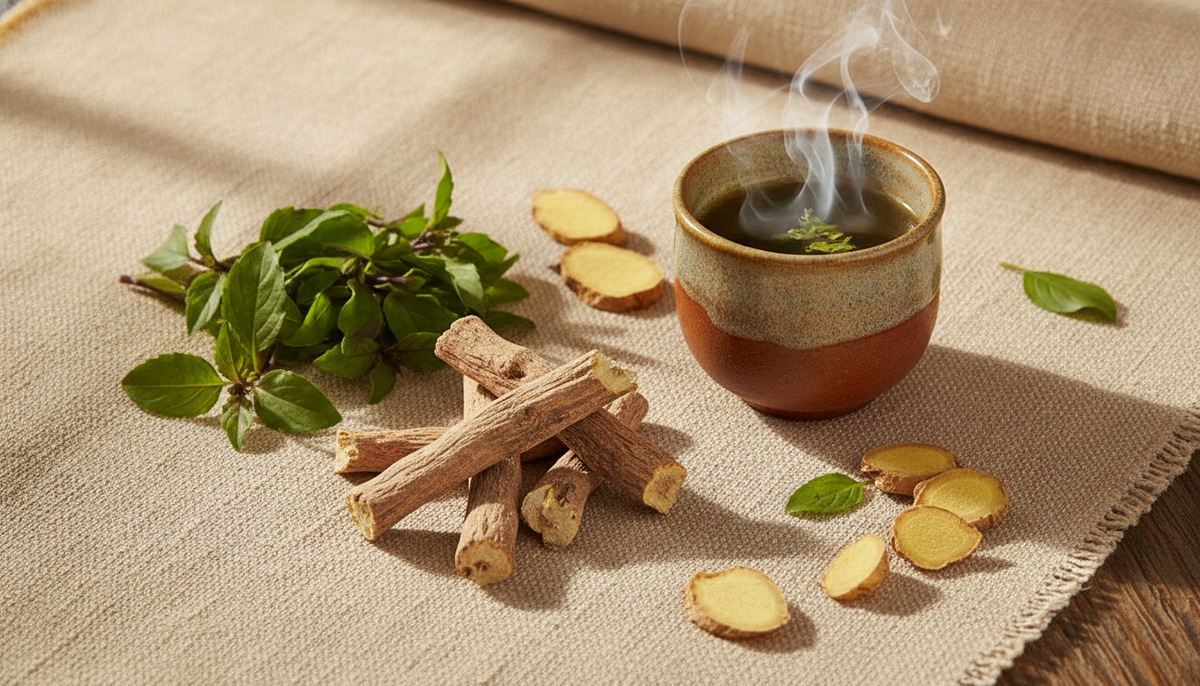
Most coughs respond well to simple home care: warm fluids, honey, ginger, steam and herbal remedies such as mulethi (licorice root) and tulsi (holy basil). These soothe the throat, thin mucus and support the body's natural recovery. They are not a substitute for medical care when symptoms are severe, prolonged or accompanied by red-flag signs.
- Honey mixed with warm water or ginger juice is one of the most evidence-supported home remedies for soothing a cough.
- Tulsi kadha (holy basil decoction) and mulethi (licorice root) are traditional Ayurvedic herbs used to ease throat irritation and respiratory discomfort.
- Steam inhalation loosens mucus and provides short-term relief for wet or chest coughs.
- Most simple coughs resolve within 2–3 weeks; see a doctor if yours lasts more than 3 weeks, produces blood, or comes with high fever or breathlessness.
- Keep the throat moist by sipping warm fluids throughout the day — herbal teas, warm water and soups all help.
Types of cough — know what you are treating
Identifying your cough type helps you pick the right remedy, because different kinds respond differently.
| Cough type | What it feels like | Common cause | Best approach |
|---|---|---|---|
| Dry cough | Scratchy, tickling, no mucus | Viral cold, dry air, dust | Honey, mulethi, steam |
| Wet (productive) cough | Loose, brings up phlegm | Cold, chest infection, allergy | Steam, ginger kadha, adusa |
| Night cough | Worse when lying flat | Post-nasal drip, acid reflux | Elevated head, turmeric milk, steam |
| Cough in children | Any of the above | Viral upper respiratory tract infection | Honey (age > 1 yr), warm fluids, steam |
10 cough home remedies that actually help
1. Honey in warm water or tea
Honey is one of the most widely recommended home remedies for a cough. It coats the throat and eases irritation. Stir one to two teaspoons into a cup of warm water, warm lemon water, or herbal tea and sip slowly. The NHS notes that hot honey-lemon water can have a similar effect to cough syrup, though evidence for home remedies is limited. Do not give honey to babies under 12 months because of the risk of infant botulism.
2. Tulsi kadha (holy basil decoction)
Tulsi (Ocimum sanctum) is Ayurveda's foremost herb for the respiratory system. Boil 10–12 fresh or dried tulsi leaves in two cups of water for five minutes. Strain, add a teaspoon of honey and a pinch of black pepper, and sip warm. Tulsi contains eugenol and volatile oils with traditionally-recognised properties for upper respiratory support. Drink one cup two to three times a day during a cough.
3. Ginger tea or kadha
Fresh ginger contains gingerols and shogaols — the key active compounds identified in research. Grate a one-inch piece of fresh ginger into two cups of simmering water, strain after five minutes, and add honey to taste. In Ayurveda, ginger is traditionally used as a warming herb that supports the respiratory system; it remains one of the most common ingredients in classical cough formulas. Dry ginger powder (saunth) works equally well — add a pinch to warm milk or kadha.
4. Mulethi (licorice root)
Mulethi (Glycyrrhiza glabra) is among the most classical Ayurvedic herbs for the throat and lungs. Its root contains glycyrrhizin, which has traditionally been used to soothe throat membranes and help thin mucus. Chew a small piece of dried mulethi root slowly, or simmer one teaspoon of mulethi root powder in two cups of water for eight minutes, strain and sip. Mulethi is a key ingredient in many classical cough formulations. People with high blood pressure or kidney disease should use mulethi cautiously and consult a doctor before regular use.
5. Steam inhalation
Inhaling warm, moist air loosens stuck mucus and eases a blocked chest. Boil water in a deep bowl, hold your face at a safe distance (30–40 cm), drape a towel over your head and inhale for five to ten minutes. Adding a few drops of eucalyptus oil or a pinch of ajwain (carom seeds) to the water enhances the effect. Steam inhalation is especially helpful for wet coughs and nasal congestion. Always supervise children carefully to avoid burns from hot steam.
6. Turmeric milk (haldi doodh / golden milk)
Turmeric contains curcumin, a compound studied for anti-inflammatory activity in multiple PMC-indexed trials. Stir one teaspoon of turmeric powder into a glass of warm milk, add a pinch of black pepper (which increases curcumin absorption) and a teaspoon of honey. This combination soothes throat irritation and may support easier sleep when a cough keeps you awake at night. It is a bedtime remedy used across India for generations.
7. Salt water gargle
Dissolve half a teaspoon of salt in a glass of warm water and gargle for 30 seconds, then spit — do not swallow. Salt water draws fluid out of swollen throat tissue, reduces irritation, and rinses out mucus and surface pathogens from the back of the throat. Gargle three to four times a day. This is one of the simplest, lowest-cost and most universally recommended remedies for a sore throat cough.
8. Adusa / Vasaka (Malabar nut)
Adusa (Justicia adhatoda, also called Vasaka) is a premier Ayurvedic respiratory herb traditionally used to thin and expel mucus in productive coughs. The fresh leaf juice — one teaspoon mixed with honey — is a classical preparation. Adusa's alkaloids are noted in classical Ayurvedic texts for bronchodilatory support. It is a key ingredient in many Ayurvedic cough formulas including those used for both dry and wet coughs. Avoid large doses during pregnancy.
9. Warm fluids and hydration
Staying well-hydrated is one of the most effective — and most overlooked — measures for any cough. Warm fluids thin mucus, soothe the throat and support recovery. Warm soups and broths, warm water with lemon, and herbal teas all qualify. Aim for at least eight to ten cups of warm or room-temperature fluid per day when you have a cough. Avoid cold drinks and ice cream, as these can worsen throat irritation.
10. Elevated sleeping position for night cough
A cough that is worse at night is often triggered by post-nasal drip (mucus draining down the back of the throat when lying flat) or mild acid reflux. Elevating the head of your bed by a few inches, or sleeping with an extra pillow, can significantly reduce this. A steam inhalation followed by warm turmeric milk with honey at bedtime is a practical nighttime routine that many people find effective for reducing overnight coughing.
What is the fastest way to relieve a cough?
For quick relief: gargle with warm salt water first, then slowly sip warm honey-ginger tea. The salt water reduces throat swelling; the honey coats and calms the irritated mucosa. Chewing a small piece of mulethi root provides longer-lasting soothing because the glycyrrhizin is released gradually. Combined, these steps can ease discomfort within 20–30 minutes, though they do not cure the underlying cause.

How to stop coughing at night
- Sleep with your head elevated (extra pillow or slightly raised headboard).
- Take a steam inhalation 15–20 minutes before going to bed.
- Drink warm turmeric milk with a teaspoon of honey at bedtime.
- Avoid eating within two hours of sleep — this reduces any acid-reflux component.
- Keep the bedroom air moist; a small humidifier helps during dry winters.
- Sip warm water immediately if you wake up coughing at night.
Cough home remedies for children
Children above one year can safely take honey (one teaspoon in warm water or herbal tea). Steam inhalation must always be supervised to prevent burns. Warm soups, broths and diluted tulsi tea with a little honey are traditional and gentle. Turmeric milk works well for children who will drink it. Do not use adult cough medicines for children unless prescribed, and never give honey to infants under 12 months.
Ayurvedic cough syrup: Dhanyawad Cough Syrup
If home remedies alone are not providing enough relief, Dhanyawad Ayurved's Cough Syrup combines Vasaka (Adusa), Mulethi, Tulsi, Ginger and other classical Ayurvedic herbs in a ready-to-use liquid formula. Adults: 2 teaspoons three times daily; children: 1 teaspoon three times daily (or as directed by your doctor). Priced at ₹115 for 100 ml, it delivers multiple classical cough herbs in a single measured dose. It is a herbal respiratory support product — not a substitute for medical treatment when symptoms are serious. For general immunity support, explore Giloy ke fayde; for nutritional support, see Moringa powder benefits.
When to see a doctor — red flags
Home remedies are suitable for most mild coughs caused by a common cold or seasonal throat irritation. See a doctor promptly if you notice any of the following:
- Cough that lasts more than three weeks (could indicate asthma, GERD, whooping cough or a more serious underlying condition).
- Coughing up blood or rust-coloured phlegm.
- High fever (above 38.5 °C / 101.3 °F) that does not come down.
- Chest pain, breathlessness, wheezing or tightness.
- Significant unintentional weight loss alongside a persistent cough.
- A child under three months with any cough — see a doctor the same day.
Do not stop prescribed inhalers, antibiotics or any other medication in favour of home remedies without your doctor's advice.
Frequently Asked Questions
What is the fastest way to cure coughing?
There is no instant cure, but gargling with warm salt water followed by warm honey-ginger tea gives rapid soothing. Chewing mulethi (licorice root) slowly also helps. For a dry, tickly cough, a teaspoon of honey on its own is one of the most clinically supported options available at home.
How do I stop a cough at night?
Elevate your head to reduce post-nasal drip, take a steam inhalation before bedtime, and drink warm turmeric milk with honey. Avoid eating within two hours of sleep to reduce any acid-reflux cough. A small humidifier in a dry room helps during winter months.
How to remove a cough in 1 hour?
Gargle with salt water, follow it with a steam inhalation (10 minutes), then sip warm honey-ginger tea. This combination reduces throat swelling, loosens mucus and soothes the irritated lining. Expect noticeable relief in comfort, though the cough itself will not be permanently cured in one hour.
What are 5 home remedies for cough?
The five most effective home remedies are: (1) honey in warm water or tea, (2) tulsi kadha, (3) ginger tea with honey, (4) warm salt water gargle, and (5) steam inhalation. Each works by a different mechanism — coating, anti-inflammatory, mucus loosening or reducing swelling.
Which is the best homemade remedy for cough?
Honey has the strongest clinical support. For a comprehensive Ayurvedic approach, a kadha of tulsi, ginger and mulethi with honey is the most multi-purpose recipe — it addresses dry cough, wet cough and throat irritation in a single preparation.
What are home remedies for common illnesses?
For cough: honey, tulsi kadha, steam inhalation. For acidity: jeera water, amla, cold milk. For constipation: isabgol in warm water. For seasonal cold: ginger-tulsi-honey tea. These are supportive measures that complement rest and good hydration. See a doctor for severe, prolonged or worsening symptoms.
Sources
Written by the Dhanyawad Ayurved team and reviewed by Vaidya Ravinder Arora (40+ years), Dhanyawad Ayurved Vatika, Dwarka, New Delhi. This article describes traditional uses for general information. It is not medical advice. Consult a qualified doctor or Ayurvedic practitioner before using any herb therapeutically.