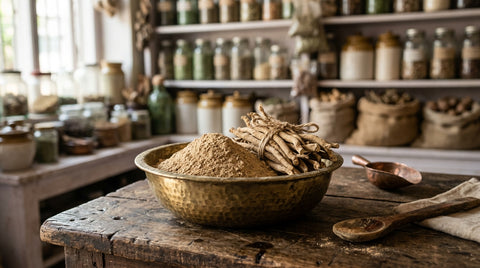
Ashwagandha Benefits: Stress, Sleep, Strength and Who Should Avoid It
Ashwagandha (Withania somnifera) benefits for stress, sleep, energy and men's health — traditional uses, dosage, side effects and who should avoid it.
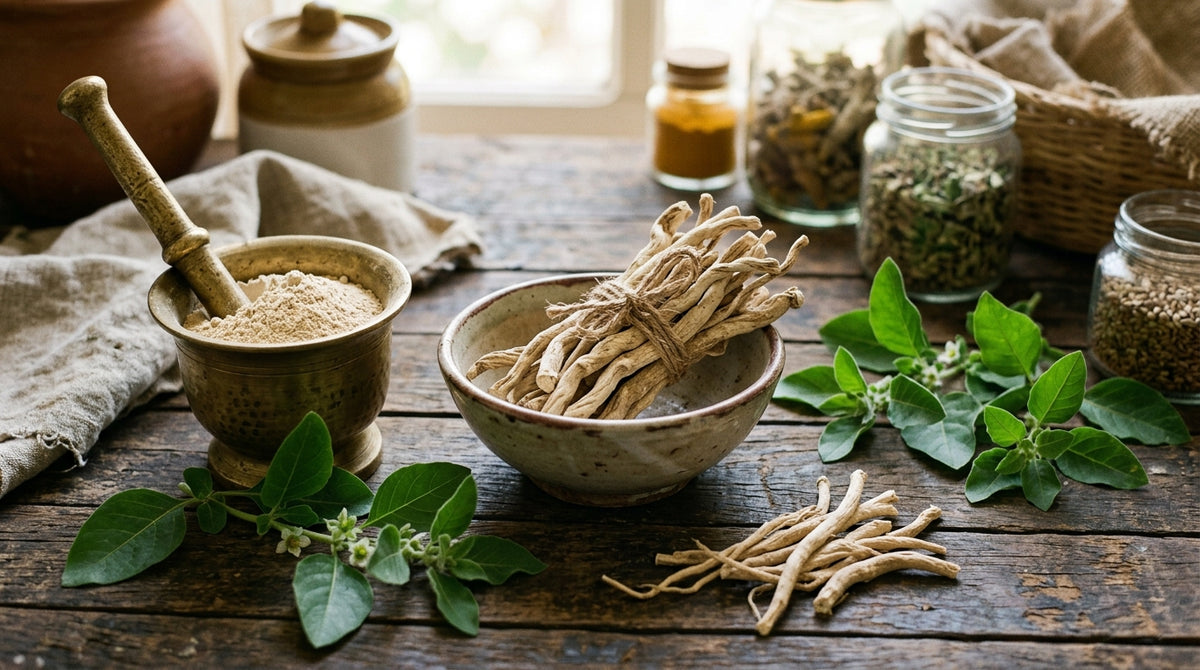
Ashwagandha (Withania somnifera) is one of Ayurveda's most well-known adaptogenic herbs, traditionally used to support the body's response to stress, promote restful sleep, improve energy and stamina, and support overall vitality. It is available as root powder, capsules, tablets and liquid extract.
- Ashwagandha is traditionally used as an adaptogen to support the body's response to stress, anxiety and fatigue.
- In Ayurveda it is classified as a Rasayana (rejuvenative) and Balya (strength-giving) herb used for general vitality.
- Standard adult dose is 300–600 mg standardised extract or 3–5 g root powder daily — follow product instructions.
- Ashwagandha can interact with diabetes, blood-pressure and thyroid medicines — always tell your doctor before starting.
- Pregnant women, people with autoimmune conditions or those awaiting surgery should avoid ashwagandha without medical advice.
What Is Ashwagandha?
Ashwagandha is a small, woody shrub native to India, North Africa and the Mediterranean. It grows in dry, rocky soils and has been in continuous use in Ayurvedic medicine for over 3,000 years. The root is the primary medicinal part, though the leaves and berries are also used in traditional formulations. The name ashwagandha comes from Sanskrit: ashwa (horse) and gandha (smell), referring to the strong, horse-like odour of fresh root — and also to the traditional belief that it confers the strength and vitality of a horse.
In Ayurvedic pharmacology (dravyaguna), ashwagandha holds two important classifications. As a Rasayana, it is used for long-term rejuvenation, longevity and prevention rather than acute treatment. As a Balya (strength-giving) herb, it is traditionally prescribed for physical debility, fatigue and weakness. It is also classified as Medhyakara (supporting cognitive function) and Vajikara (supporting men's vitality). These classifications reflect the broad, tonic nature of this herb in traditional Ayurvedic practice.
| Language | Name |
|---|---|
| Hindi | अश्वगंधा / Ashwagandha / Asgandh |
| English | Indian Ginseng / Winter Cherry |
| Sanskrit | Ashwagandha / Varahi / Hayagandha |
| Botanical | Withania somnifera (Dunal) – Solanaceae |
| Marathi | Asagandha |
| Tamil | Amukkira |
| Urdu | Asgandh Nagori |
How to Identify Genuine Ashwagandha Root
With many adulterants in the herbal supplement market, knowing how to identify genuine ashwagandha root helps you buy with confidence. Look for these characteristics:
- Colour: Genuine ashwagandha root has a pale brown to white exterior. The cross-section interior should be predominantly white or off-white. Darkened or blackened root may indicate poor quality or incorrect storage.
- Odour: Fresh or freshly ground ashwagandha has a strong, distinctively horse-like earthy smell — this is, in fact, the origin of the name "ashwa" (horse). The odour is pungent and slightly unpleasant; absence of this smell can indicate poor quality or adulteration.
- Taste: Genuine root has a bitter, astringent taste with a slight sweetness underneath. It should not taste purely bland or purely bitter without the characteristic astringency.
- Texture: Good quality root powder is dense and slightly oily to the touch. Excessively light or powdery texture may indicate fillers have been added.
- What to avoid: Reject brownish, hollow or shrivelled root pieces, which may be old stock or incorrectly dried. Also avoid products that do not specify whether they contain root or leaf — root is the traditionally used and better-characterised part.
- Standardisation marker: For capsules and extracts, look for products standardised to at least 2.5–5% withanolides — these are the primary active compounds in ashwagandha root.
Key Benefits of Ashwagandha
Ashwagandha has a broad range of traditional uses in Ayurveda. Modern research continues to explore these uses. The following benefits are framed in their traditional context and do not represent medical claims.
Stress and Anxiety Support
Ashwagandha is classified as an adaptogen — a herb traditionally used to help the body adapt to physical and mental stress. Its active compounds, collectively called withanolides, are believed to be responsible for much of this activity. In Ayurveda, ashwagandha is traditionally used to calm an overactive nervous system, reduce feelings of restlessness and support mental balance during periods of stress and overwork. It is typically used as a tonic over several weeks rather than as an acute remedy.
Energy and Stamina
As a Balya (strength-giving) herb, ashwagandha is traditionally used to combat physical fatigue and debility. Ayurvedic physicians have historically prescribed it for those recovering from illness, experiencing low energy, or engaged in physically demanding work. It is used as part of traditional formulations to support sustained physical endurance and reduce feelings of tiredness and lack of motivation over time.
Sleep Quality
The botanical name somnifera means "sleep-inducing" in Latin, reflecting ashwagandha's long-standing traditional use as a sleep support herb. In Ayurveda, it is traditionally taken in warm milk at night to promote restful sleep and calm a restless mind. It is used for individuals whose poor sleep is associated with stress, anxiety or Vata imbalance, and is considered one of the gentler herbal supports for sleep in the Ayurvedic materia medica.
Strength and Muscle Support
Ashwagandha is traditionally used in Ayurveda to support musculoskeletal health, particularly for joint discomfort, muscle weakness and Vata-related conditions involving the bones and connective tissue. Classical formulations often combined ashwagandha with ghee or sesame oil to enhance its effect on the musculoskeletal system. It is used as a tonic for individuals recovering from physical exertion and for general maintenance of joint flexibility and muscle tone in traditional practice.
Immunity Support
As a Rasayana herb, ashwagandha is traditionally used in Ayurveda as a seasonal immunity tonic, particularly during winter months and periods of high physical or mental demand. Withanolides, the characteristic compounds of ashwagandha root, have been of interest in immunity research. In traditional practice, ashwagandha is used as part of a broader wellness routine rather than as an acute treatment for infections or illness.
Cognitive Clarity
Ashwagandha's classification as Medhyakara in Ayurveda refers to its traditional use for supporting memory, concentration and mental clarity. It is traditionally used for individuals experiencing mental fatigue, difficulty concentrating or cognitive fog associated with stress and overwork. Classical texts describe its use in combination with other Medhya herbs such as Brahmi and Shankhpushpi to support overall cognitive wellness over time.
Men's Health
Ashwagandha is classified as Vajikara in Ayurveda — a category of herbs traditionally used to support men's vitality and overall health. In classical Ayurvedic practice, it is included in formulations intended to support general strength, energy and wellbeing in men, particularly those experiencing fatigue or debility. It is used as part of a holistic approach to men's wellness rather than as a standalone remedy for any specific condition.
How to Use Ashwagandha
Ashwagandha can be used in several traditional forms depending on your health goal and lifestyle. The most common traditional method is root powder mixed in warm milk with honey at bedtime, but modern capsule and tablet forms offer a convenient alternative with standardised dosing. Choose the form that best fits your routine and always follow product-specific instructions.
| Form | Method | Best for |
|---|---|---|
| Root powder | ½–1 tsp in warm milk with honey, at night | Sleep, general tonic |
| Powder + ghee | ¼ tsp powder + 1 tsp desi ghee | Joints, Vata imbalance |
| Capsule / tablets | As per label, typically 1–2 capsules with water after meals | Convenient daily supplement |
| Kadha (decoction) | 1 tsp powder boiled in 2 cups water until 1 cup remains | Joints, stress |

Ashwagandha Dosage
Dosage varies by form and individual constitution. General guidelines for adults are:
- Root powder: 3–5 g per day, typically divided across one or two servings. The classic preparation is in warm milk at night.
- Standardised extract / capsules: 300–600 mg per day of a root extract standardised to 2.5–5% withanolides. Follow the specific product label instructions as concentrations vary between brands.
- Duration: Traditional and modern usage typically runs 8–12 weeks as a course, after which a break is advisable before resuming. Continuous long-term use should only be continued under qualified guidance.
- Elderly individuals: Start at the lower end of the recommended dose and increase gradually only if well-tolerated.
- Children under 12: Ashwagandha should only be given to children under 12 under the direct supervision of a qualified Ayurvedic physician or paediatrician. Do not self-medicate children with ashwagandha.
- General principle: More is not better. Sticking to the recommended dose is important — exceeding recommended doses increases the risk of gastrointestinal side effects without additional benefit.
Ashwagandha Powder vs Tablets
Both root powder and standardised tablets or capsules can be effective ways to take ashwagandha. The choice depends on your preference, lifestyle and whether you follow traditional Ayurvedic practices or prefer a modern supplement approach.
| Root Powder | Standardised Tablets/Capsules | |
|---|---|---|
| Withanolide content | Variable, lower | Standardised, consistent |
| Convenience | Mix in milk/honey | Take directly with water |
| Dose accuracy | Measure each time | Fixed per capsule |
| Traditional use | Milk formulations, kadha | Modern supplement format |
| Cost | Lower | Higher per dose |
If you follow Ayurvedic traditions and prefer food-based supplementation, root powder in warm milk is the classical approach. If you want consistent, measurable dosing without preparation, a standardised capsule or tablet is more practical. Look for products that clearly state the withanolide percentage and whether they use root extract (preferred) or leaf extract.
Dhanyawad Ayurved Men's Health Capsule
For a convenient, standardised ashwagandha supplement, Dhanyawad Ayurved Men's Health Capsule combines ashwagandha with traditional supporting herbs in a daily capsule. Available in 60-capsule packs at ₹480. Also available at Dhanyawad Ayurved Vatika, Dwarka, New Delhi. Related reading: अश्वगंधा के फायदे, Giloy benefits, Mulethi benefits.
Side Effects and Who Should Avoid Ashwagandha
Ashwagandha is generally well-tolerated at recommended doses in healthy adults. However, it is not suitable for everyone and can interact with several common medications. Read the following precautions carefully before starting ashwagandha:
- Diabetes: Ashwagandha may affect blood sugar levels. If you are taking diabetes medication (insulin or oral hypoglycaemics), consult your doctor before starting ashwagandha and do not stop or adjust your diabetes medicines without medical advice.
- Thyroid conditions: Ashwagandha may alter thyroid hormone levels. If you are on thyroid medication (for hypothyroidism or hyperthyroidism), consult your doctor before use. Monitor thyroid levels if you begin taking ashwagandha alongside thyroid treatment.
- Blood pressure medicines: Ashwagandha may have a mild blood-pressure-lowering effect. Those on antihypertensive medication should consult a doctor before starting, as combined use may lower blood pressure more than intended.
- Pregnancy: Pregnant women should avoid ashwagandha. Traditional texts and available safety data suggest it may be uterine-stimulating and it has not been demonstrated safe in pregnancy. Do not use during pregnancy without explicit medical advice.
- Breastfeeding: There is insufficient data on ashwagandha use during breastfeeding. Consult your doctor before use if you are breastfeeding.
- Autoimmune conditions: People with autoimmune diseases (such as lupus, rheumatoid arthritis, multiple sclerosis or Hashimoto's thyroiditis) should avoid ashwagandha without medical supervision, as it may stimulate immune activity.
- Immunosuppressant therapy: If you take immunosuppressant drugs, do not use ashwagandha without consulting your doctor — potential interaction may reduce the effectiveness of your medication.
- Surgery: Ashwagandha may affect the central nervous system and interact with anaesthesia. Stop taking ashwagandha at least two weeks before any planned surgery and inform your surgical team.
- Gastrointestinal sensitivity: Some people experience mild nausea, stomach discomfort or loose stools, particularly at higher doses. Taking ashwagandha with food or milk can reduce this risk.
- Sedative medications: Ashwagandha may add to the effects of sedative or sleep medications. Use with caution and consult your doctor if you are on any sedative or anti-anxiety prescription drugs.
See a doctor immediately if you develop skin rash, severe stomach pain, or difficulty breathing.
Frequently Asked Questions
What happens if you take ashwagandha daily?
Most healthy adults tolerate daily ashwagandha well at recommended doses over an 8–12 week course. It is traditionally used as a tonic taken consistently over time to support stress resilience, energy and sleep. Prolonged continuous use should be discussed with a qualified healthcare provider, and a break is generally recommended after each course.
What are the main benefits of ashwagandha?
Ashwagandha is traditionally used to support the body's response to stress, promote restful sleep, improve physical energy and stamina, support joints and muscles, and act as a general immunity tonic. In Ayurveda it is classified as both a Rasayana (rejuvenative) and Balya (strength-giving) herb, reflecting its broad traditional role in supporting overall vitality.
What are the disadvantages of ashwagandha?
Ashwagandha may cause mild nausea or stomach discomfort at higher doses. It can interact with diabetes, thyroid and blood-pressure medications. It should be avoided during pregnancy and by those with autoimmune conditions. As with any supplement, using it without appropriate guidance, exceeding recommended doses, or combining it with prescription drugs without medical advice carries risks.
What is the best time to take ashwagandha?
The traditional Ayurvedic practice is to take ashwagandha in warm milk at night before bed, which aligns with its traditional use for sleep and its somnifera (sleep-inducing) classification. Capsule or tablet forms can be taken with water after meals. If you experience any stomach upset, taking it with food or milk helps reduce this effect.
What happens if females take ashwagandha?
Non-pregnant adult women can generally use ashwagandha at standard doses for the same benefits as men — stress support, sleep, energy and immunity. However, pregnant women should avoid it entirely, and women with hormonal conditions or autoimmune thyroid disorders (such as Hashimoto's) should consult a doctor first, as ashwagandha may influence hormone and immune activity.
Is ashwagandha safe long-term?
Current evidence and traditional practice suggest ashwagandha is generally safe for healthy adults when used at recommended doses for courses of 8–12 weeks. Long-term continuous use beyond this period has not been extensively studied. It is advisable to take breaks between courses and to consult a qualified Ayurvedic physician or doctor if you wish to continue use over a prolonged period.
Sources
Written by the Dhanyawad Ayurved team and reviewed by Vaidya Ravinder Arora (40+ years), Dhanyawad Ayurved Vatika, Dwarka, New Delhi. This article describes traditional uses for general information. It is not medical advice. Consult a qualified doctor or Ayurvedic practitioner before using any herb therapeutically.