
Harad (Haritaki) Benefits: Uses, How to Take and Side Effects
Harad (Haritaki, Terminalia chebula) is one of Ayurveda's most revered herbs — one of the three fruits of Triphala. Traditionally used for digestion, constipation relief and oral health, it has been a staple of Indian pansari shops for centuries. This guide covers its benefits, how to use it safely, dose, and important cautions.
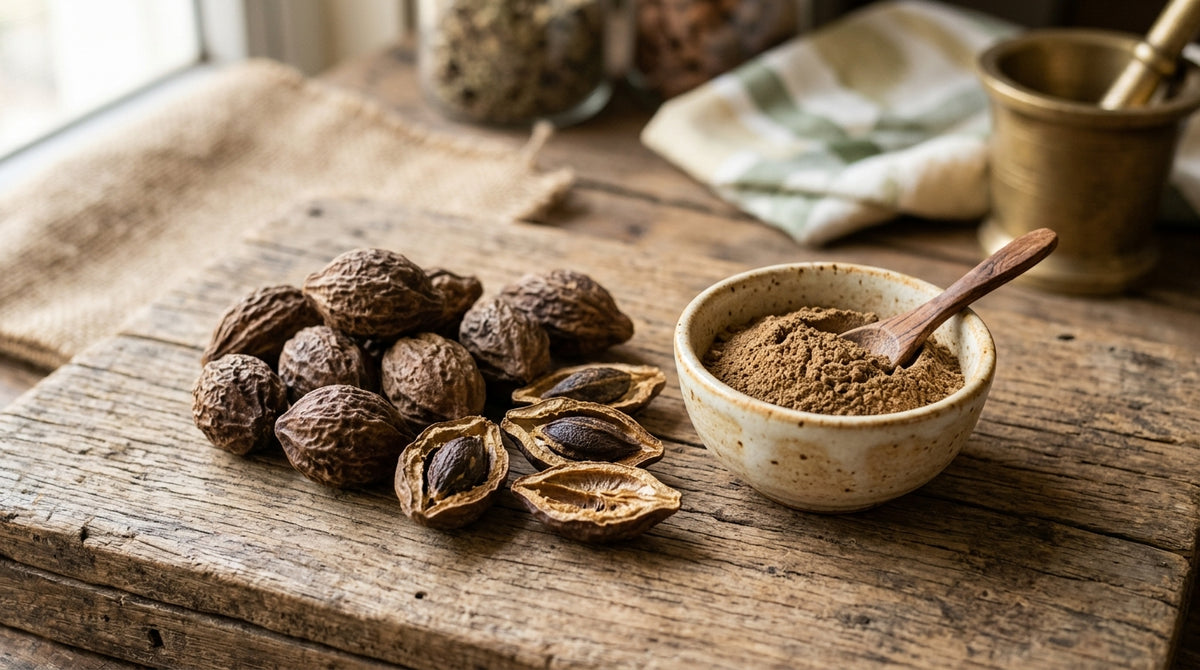
Harad (Haritaki, Terminalia chebula) is a small astringent fruit that Ayurveda calls the "king of herbs" for digestive health. Traditionally used as a gentle laxative, digestive tonic and oral-health support, it is one of the three fruits in Triphala. It is a traditional-use herb — not a medical treatment. People with specific health conditions should consult a doctor before using it regularly.
- Harad (Terminalia chebula), called Haritaki in Sanskrit, is one of the three herbs in Triphala and is traditionally regarded as a digestive tonic, laxative support, and oral-health herb in Ayurvedic medicine.
- The small variety (Chhoti Harad) is used whole or powdered for digestive support; the large variety (Kabuli Harad) is preferred for constipation; both are available as raw fruit and powder.
- Typical traditional dose is ½–1 teaspoon of harad powder with warm water at bedtime for digestive support — dose and timing vary by Ayurvedic constitution.
- Pregnant women, people with low blood pressure, and those on blood-thinning or diabetic medications should consult a doctor before taking harad regularly.
- Dhanyawad Ayurved sells Harad (Chhoti) raw and powder at ₹125–₹135 per 100g from their Dwarka, New Delhi store.
What Is Harad?
Harad is the dried fruit of Terminalia chebula, a large deciduous tree native to South Asia and found across India, Nepal, Sri Lanka and southern China. The fruit has been used in Ayurvedic medicine for over 2,000 years and features prominently in classical texts including the Charaka Samhita, where it is described as one of the most important herbs for digestive and systemic health.
The name Haritaki in Sanskrit is said to derive from hara (Shiva, destroyer of disease) and hari (yellow-green, the colour of unripe fruit). In Triphala — Ayurveda's most famous three-herb formula — harad is paired with amla (Indian gooseberry) and baheda (belleric myrobalan).
Harad Names in Different Languages
| Language / System | Name |
|---|---|
| Hindi / Pansari | Harad, Harar |
| Sanskrit / Ayurveda | Haritaki, Abhaya, Pathya, Vijaya |
| English | Chebulic Myrobalan, Black Myrobalan |
| Botanical | Terminalia chebula Retz. |
| Tamil | Kadukkai (கடுக்காய்) |
| Telugu | Karakkaya (కరక్కాయ) |
| Marathi | Hirda (हिरडा) |
| Bengali | Haritaki (হরীতকী) |
| Gujarati | Hirdo (હિરડો) |
How to Identify Genuine Harad
Harad comes in several grades and two common sizes. Here is what to look for:
- Chhoti Harad (Small): Small, oval, olive-sized fruits with 5 ridges running lengthwise. Dark brown to black when dry. Strongly astringent taste with slightly bitter undertones.
- Kabuli Harad (Large): Larger, rounder, smoother fruit — imported from Afghanistan/Kabul. Milder taste, preferred for laxative use.
- Colour check: Good-quality dried harad is uniformly dark brown to black. Bleached or pale grey fruit may have been treated.
- Taste test: Chew a small piece — genuine harad is powerfully astringent (mouth-puckering), then slightly sweet on the finish.
- Powder: Harad powder is light brown to grey-brown. It has an earthy, astringent smell. Very pale or white powder may be diluted.
Traditional Uses and Health Benefits of Harad
All uses below are based on traditional Ayurvedic practice and historical use. Harad is a dietary supplement — it does not treat, cure or prevent any disease.
Digestive Support
Harad is best known in Ayurveda as a digestive tonic (deepana-pachana). It is traditionally used to support bowel regularity, ease bloating, and strengthen digestive fire (agni). The tannins and anthraquinone compounds in harad are associated with its laxative and astringent actions, though research in humans is still limited.
Constipation Support
Kabuli harad (large harad) is the preferred variety for constipation support in Ayurvedic practice. ½–1 teaspoon of harad powder with warm water at bedtime is a classic traditional preparation. It acts gently — unlike harsh stimulant laxatives — and is traditionally described as appropriate for long-term digestive balance when used at modest doses.
Oral and Dental Health
Harad powder has traditionally been used as a tooth powder or mouth rinse in Ayurvedic dental care (dantadhavana). It is astringent and is said to support gum firmness and oral hygiene. Dabbing harad powder on the gums or gargling with harad-infused water is a traditional home practice.
Triphala and Harad
Harad is one-third of Triphala — Ayurveda's most studied herb combination. In Triphala, harad provides the Vata-balancing effect while amla balances Pitta and baheda balances Kapha. If you are already taking Triphala, you are already getting harad and do not need additional supplementation.
What Are the Health Benefits of Chebulic Myrobalan (Myrobalan)?
Myrobalan is the English botanical trade name for chebulic myrobalan fruits, which include harad. Traditional uses attributed to these fruits include digestive support, mild laxative action, and astringent properties for oral health. Harad tannins (chebulinic acid, ellagic acid, gallic acid) have been studied in laboratory settings for antioxidant properties, though clinical evidence in humans is early-stage.
Which Harad Is Used for Constipation?
Kabuli Harad (large variety, also called Kabuli Haritaki) is traditionally preferred for constipation because it is considered gentler and milder than Chhoti Harad. Chhoti Harad is considered more astringent and is often used for digestive tone and oral health rather than acute constipation. For general digestive support, Triphala (which contains Chhoti Harad) is used year-round.
How to Use Harad
| Use / Goal | Form | Traditional Dose | When to Take |
|---|---|---|---|
| Digestive support | Powder | ½ tsp with warm water | After meals or at bedtime |
| Constipation support | Powder (Kabuli) | 1 tsp with warm water | At bedtime |
| Oral health | Powder | Rub a pinch on gums | After brushing |
| Triphala preparation | Mixed with amla, baheda | Equal parts, ½ tsp mix | At bedtime with warm water |
| Infusion / decoction | Whole fruit, boiled | 1 fruit in 200 ml water | Strain and drink warm |

Is It Safe to Take Harad Daily?
At traditional doses (½–1 teaspoon of powder or 1 whole fruit), harad is considered safe for most healthy adults when used for limited periods. Long-term daily use at higher doses may cause loose stools, dehydration or nutrient-absorption issues due to its laxative effect. Ayurvedic practice typically recommends harad in cycles (8–12 weeks) rather than uninterrupted year-round use, unless as part of Triphala in a small mixed dose. If you plan to take harad daily for more than 1–2 months, discuss it with a doctor or qualified Ayurvedic practitioner.
Triphala vs Harad: Which Is Better?
They serve different purposes. Triphala is a balanced tri-herb formula suited to long-term regular use for general digestive balance — it is well-tolerated across constitutions and is the most commonly recommended Ayurvedic digestive support. Single harad (especially Kabuli) has stronger laxative action and may be more appropriate for specific short-term constipation support. Triphala contains harad as one-third of its composition, so for most people Triphala is the better starting point.
Side Effects and Cautions
Harad is generally well-tolerated at traditional doses. Potential concerns include:
- Diarrhoea and cramps: Excess harad (especially Kabuli) can cause loose stools and abdominal cramping — start with ½ teaspoon and assess your response.
- Dehydration: As with any laxative herb, drink adequate water.
- Low blood pressure: Harad may have mild blood-pressure-lowering properties — people with hypotension or on antihypertensives should be cautious.
- Blood sugar: Harad may affect blood glucose levels — consult a doctor if you are on diabetic medication.
- Drug interactions: May interact with blood-thinning medications (Warfarin) and immunosuppressants — consult your doctor.
See a doctor if: you have chronic constipation, unexplained abdominal pain, rectal bleeding, significant unintended weight loss, or if you are on regular prescription medications. Do not use harad as a substitute for medical evaluation of bowel complaints.
Who Should Avoid Harad?
- Pregnant women: Harad in medicinal doses is not recommended during pregnancy — consult your doctor.
- Children under 5: Do not use herbal laxatives in young children without paediatric advice.
- People who are severely dehydrated or have diarrhoea: Do not add a laxative herb to an already loose situation.
- Post-surgery recovery: Avoid until cleared by your surgeon.
What Are the Uses of Hawaban Harde?
Hawaban Harde (also written Haban Harde or Hawa-band Harde) is a traditional Unani preparation — the name refers to a specially processed or dried form of harad used in Unani medicine for abdominal complaints, constipation and digestive weakness. It is essentially processed harad (sometimes with added herbs) and shares the same underlying properties as standard harad, applied within the Unani medical framework.
Buy Harad from Dhanyawad Ayurved
Dhanyawad Ayurved's Harad (Chhoti) is available in both raw and powder forms at ₹125 (raw) and ₹135 (powder) per 100 g, sourced and sold from Dhanyawad Ayurved Vatika, Dwarka, New Delhi. See also our complete Harad guide in Hindi for traditional identification tips and regional names.
Related reading: Triphala Powder guide | Gokhru (Small Caltrops) benefits | Aloo Bukhara benefits
Frequently Asked Questions
What is Harad good for?
Harad is traditionally used for digestive support, constipation relief, oral hygiene and as part of Triphala. It is one of Ayurveda's most valued digestive herbs, with a 2,000-year history of use in the Indian subcontinent. It is a traditional supplement — not a treatment for any diagnosed condition.
Can I take Harad powder every day?
At a small dose (½ teaspoon or less), harad can be taken daily for 1–2 months by most healthy adults. For longer use, reduce the dose or take it as part of Triphala. If you experience loose stools, skip a day and reduce the amount. People on regular medications should consult a doctor first.
What are the side effects of Haritaki (Harad)?
At excess doses: loose stools, abdominal cramps, dehydration. With certain medications: possible interaction with blood thinners and anti-diabetic drugs. Pregnant women should avoid medicinal doses. At traditional small doses, harad is generally well-tolerated in healthy adults.
Is Harad the same as Haritaki?
Yes — Harad is the common Hindi/Pansari name and Haritaki is the Sanskrit/Ayurvedic name for the same herb (Terminalia chebula). Both refer to the dried fruit of this tree.
How should I take Harad powder for constipation?
½–1 teaspoon of Kabuli harad powder mixed in a glass of warm water, taken at bedtime, is the traditional Ayurvedic approach. Drink an additional glass of water after. If you do not see results in 2–3 days or if cramps occur, stop and consult a doctor — persistent constipation needs medical evaluation.
What is the difference between Harad and Baheda?
Both are part of Triphala. Harad (Terminalia chebula) is the digestive tonic and mild laxative. Baheda (Terminalia bellirica) is primarily used for respiratory support and Kapha-balancing. Together with amla, they form the Triphala triad in which each herb balances a different dosha.
Sources
Written by the Dhanyawad Ayurved team and reviewed by Vaidya Ravinder Arora (40+ years), Dhanyawad Ayurved Vatika, Dwarka, New Delhi. This article describes traditional uses for general information. It is not medical advice. Consult a qualified doctor or Ayurvedic practitioner before using any herb therapeutically.

