
Dant Manjan: Ayurvedic Tooth Powder Benefits, Uses & How to Choose the Best
Ayurvedic dant manjan (tooth powder) traditionally supports strong teeth, healthy gums and fresh breath — ingredients, correct usage method and which type suits which concern.
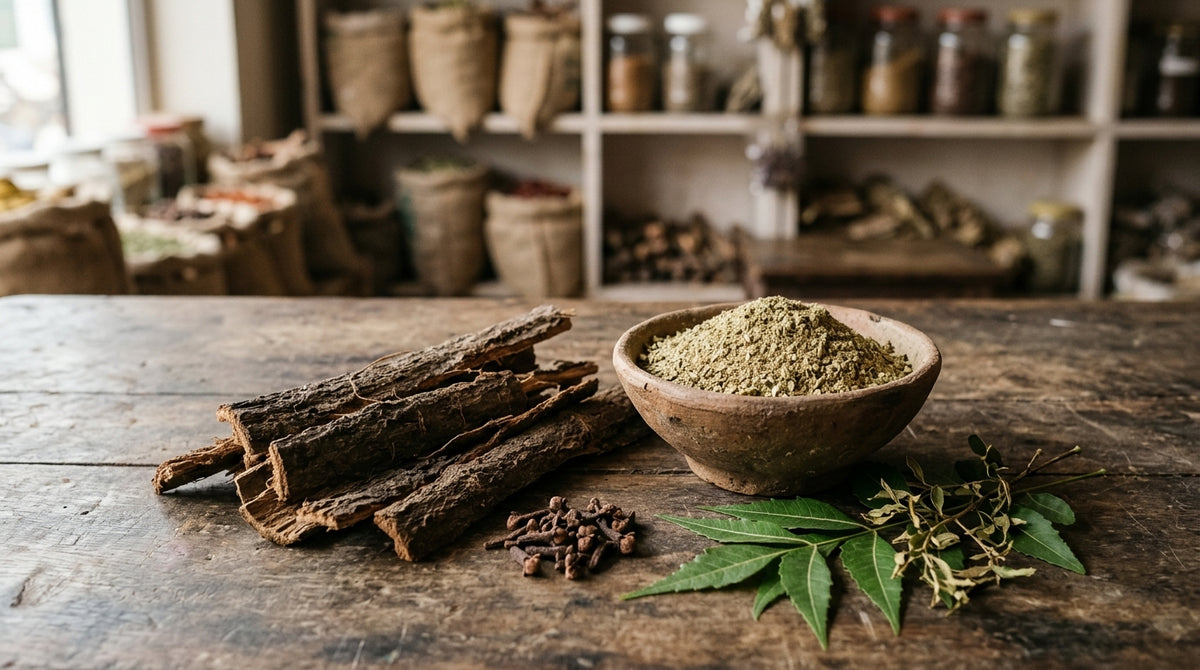
Dant manjan is a traditional Ayurvedic herbal tooth powder made from astringent barks, mineral salts and aromatic herbs. It is traditionally used to support gum firmness, reduce tartar build-up and maintain fresh breath. It is a supportive herbal product — not a replacement for professional dental care.
- Dant manjan is an Ayurvedic herbal tooth powder traditionally used to support gum health, reduce plaque and keep breath fresh — it is a supportive herbal product, not a dental treatment.
- Dandasa (the inner bark of Ziziphus mauritiana) is the core ingredient that gives authentic dant manjan its mild astringent, gum-firming properties.
- Apply a small amount on your index finger or a soft toothbrush, massage gently for 2 minutes, then rinse — avoid scrubbing hard to protect enamel.
- People with active cavities, gum disease or dental pain should see a dentist — dant manjan is a maintenance aid, not a substitute for clinical treatment.
- Dhanyawad Ayurved Dandasa Dant Rakshak Manjan (₹145 / 50g) contains no artificial colour, fluoride or synthetic abrasives and is available at Dwarka and across India.
What Is Dant Manjan?
The word manjan comes from the Sanskrit mardana (to rub/cleanse). Dant manjan is a dry herbal powder used for teeth and gum cleaning in Indian households for centuries, well before synthetic fluoride toothpastes arrived. Unlike toothpaste, it contains no foam-generating SLS (sodium lauryl sulphate), no artificial sweeteners and typically no synthetic abrasives. The powder is applied directly on the finger or a soft brush and massaged onto the teeth and gums.
Ingredient Names Across Languages
| Ingredient | Hindi | English | Botanical Name |
|---|---|---|---|
| Dandasa | डाँडासा / बेर की छाल | Indian Jujube Bark | Ziziphus mauritiana |
| Neem | नीम | Indian Lilac | Azadirachta indica |
| Laung | लौंग | Clove | Syzygium aromaticum |
| Kali Mirch | काली मिर्च | Black Pepper | Piper nigrum |
| Sanchal / Kala Namak | सेंधा नमक / काला नमक | Rock Salt / Black Salt | mineral |
| Harad | हरड़ | Chebulic Myrobalan | Terminalia chebula |
What Makes Dandasa Special in Dant Manjan?
Dandasa — the dried inner bark of the Ziziphus mauritiana (Indian Jujube / Ber) tree — is the ingredient that sets traditional dant manjan apart from flavoured herbal toothpastes. In Ayurvedic texts, dandasa is classified as kashaya (astringent) in taste and sheeta (cooling) in potency. This astringency is traditionally considered to:
- Firm and tone the gum tissue (dantamula shodhana)
- Reduce swelling around the gum line
- Help tighten slightly loose gums over regular use
Genuine dandasa bark is cream-white to light brown, with a rough outer surface and a mild astringent taste. Fine-quality dandasa is not bitter or strongly acrid.
Traditional Benefits of Dant Manjan
1. Gum Firmness and Bleeding Gums Support
Astringent barks in dant manjan (dandasa, harad, babool) are traditionally used to support gum tissue tone. Ayurvedic texts recommend astringent tooth powders (kashaya dantadhavana) for dantamula shotha (gum swelling) and for gums that bleed easily. This is a traditional-use claim — active gum disease (periodontitis) requires dental treatment.
2. Fresh Breath (Halitosis Support)
Clove (laung), cinnamon (dalchini) and black pepper in traditional manjan formulas provide natural antimicrobial action against odour-causing oral bacteria. Regular twice-daily use is traditionally considered more effective for morning breath than occasional use.
3. Plaque and Tartar Control
Mild abrasive powders (laung charcoal, saindhava namak) combined with the massaging action of finger application are traditionally used to dislodge soft plaque deposits between teeth. This is a maintenance role — hardened tartar must be removed by a dentist.
4. Tooth Sensitivity — Mild Support
Certain manjan blends include rock salt (sendha namak) and neem bark, traditionally used to support tooth sensitivity. However, if you experience sharp pain while eating hot, cold or sweet foods, a dentist consultation is needed to rule out cavities or exposed dentin.
5. Avoiding Synthetic Ingredients
People who prefer to avoid SLS (sodium lauryl sulphate), artificial colours, synthetic flavours or parabens in oral care often choose dant manjan as a cleaner alternative. It is also typically lower-cost per use than standard toothpaste.

How to Use Dant Manjan Correctly
| Step | What to Do | Why It Matters |
|---|---|---|
| 1. Take a small amount | A pinch (~0.25 g) on your index finger or soft brush | More powder ≠ more cleaning; excess causes discomfort |
| 2. Wet slightly | Dampen your finger/brush with water before taking the powder | Reduces abrasion; spreads more evenly |
| 3. Massage gently | Small circular motions, teeth + gum line, 2 minutes | Circular motion removes plaque better than scrubbing |
| 4. Rinse thoroughly | Rinse 2–3 times with clean water | Removes powder residue and released debris |
| Frequency | Once or twice daily (morning recommended) | Consistent use gives best results over 4–8 weeks |
Avoid: Do not apply with a hard-bristled brush — use only soft/extra-soft bristles. Do not swallow the powder. Children under 6 should not use powder forms without paediatric dental advice.
Dant Manjan vs. Toothpaste — Which Is Better?
| Feature | Ayurvedic Dant Manjan | Standard Fluoride Toothpaste |
|---|---|---|
| Fluoride | None (natural only) | Yes (cavity prevention, evidence-backed) |
| Foaming agents | None / minimal | SLS in most brands |
| Abrasiveness | Low to moderate (natural) | Variable (RDA score 50–200) |
| Preservatives / colours | None in quality products | Often present |
| Gum-toning herbs | Yes (astringent barks) | Rarely |
| Suitable for | Maintenance, gum care, sensitivity support | Cavity prevention (fluoride essential for high-risk) |
Practical note: If you live in a low-fluoride area or are at moderate-to-high risk of cavities (as assessed by your dentist), do not discontinue fluoride toothpaste without professional advice. Many people use dant manjan for an evening massage or for gum care in addition to fluoride toothpaste in the morning.
क्या Ayurvedic Dant Manjan Safe है? — Is Ayurvedic Tooth Powder Safe?
For most healthy adults, a well-formulated Ayurvedic dant manjan made from food-grade herbs and minerals is safe for daily use. Key things to check: no synthetic abrasives (silica excess), no undisclosed heavy metals, and no artificial dyes. If manjan causes increased tooth sensitivity, any burning in the gums, or staining, stop use and consult a dentist.
Dhanyawad Ayurved Dandasa Dant Rakshak Manjan — कहाँ से खरीदें?
Dhanyawad Ayurved Dandasa Dant Rakshak Manjan (₹145 / 50g) is formulated around authentic dandasa (Indian Jujube bark) with supporting herbs — no synthetic abrasives, no artificial colour and no fluoride. It is available at Dhanyawad Ayurved Vatika, Sector 13, Dwarka, New Delhi and ships across India within 24 hours.
Related reading: Dandasa Herbal Mouth Wash — gargling and oil-pulling traditions in Ayurvedic oral care.
Safety and When to See a Dentist
- Cavities / tooth decay: Dant manjan cannot reverse cavities — see a dentist for fillings.
- Gum disease (periodontitis): Active gum disease with bone loss requires professional scaling; manjan is a maintenance tool only.
- Tooth pain or sensitivity: Persistent sharp pain needs clinical diagnosis; do not self-treat with herbal powders alone.
- Children under 6: Do not use powder forms; risk of inhalation or ingestion.
- Pregnant / nursing: Clove (eugenol) in large amounts is cautioned — stick to standard toothpaste unless advised by your obstetrician.
Red flags — see a dentist promptly: Swollen or pus-discharging gums, a loose adult tooth, jaw pain, persistent bad taste or mouth sores that do not heal in 2 weeks.
Frequently Asked Questions
Is dant manjan good for teeth?
Yes, for maintenance purposes — quality Ayurvedic dant manjan traditionally supports gum health and fresh breath with natural astringent herbs and no synthetic additives. It is not a substitute for fluoride toothpaste if you are at risk of tooth decay, and it cannot treat existing cavities or gum disease.
How to use powder for teeth?
Take a pinch on a damp index finger or soft toothbrush. Massage in small circles on teeth and gums for 2 minutes. Rinse thoroughly 2–3 times. Use once or twice daily. Avoid hard bristles and do not swallow.
Which Ayurvedic dant manjan is best?
Look for one with dandasa (Ziziphus bark), neem and clove as primary ingredients, free from synthetic dyes, artificial abrasives and undisclosed mineral additives. Dhanyawad Ayurved Dandasa Dant Rakshak Manjan lists all its herbs and contains no synthetic additives.
Is Dabur Lal Dant Manjan good?
Dabur Lal Dant Manjan is a widely-used commercial product with a long track record in Indian households. It contains akarkara, laung and other herbs. It is an option for general use; however, it also contains red iron oxide as colourant. Compare ingredients against your preferences — some people prefer uncoloured, single-ingredient herb blends.
How is Vithoba Dant Manjan?
Vithoba is another traditional brand with a clove-heavy formula and a long market presence. It works well for freshness and mild gum care. As with all commercial manjan products, verify the ingredient list and choose based on specific concerns — gum care, sensitivity support, or freshness.
Can I use dant manjan every day?
Yes — once or twice daily use of a gentle Ayurvedic manjan is considered safe for most adults. Avoid over-application (more powder does not improve results) and use a soft brush or finger technique to prevent enamel wear.
Does dant manjan whiten teeth?
Traditional dant manjan may remove surface stains from tea, coffee or tobacco over consistent use through gentle abrasion — it does not chemically bleach teeth. For whitening beyond stain removal, consult a dental professional. No herbal powder changes the natural colour of tooth enamel.
What are dandasa benefits for teeth?
Dandasa (Ziziphus mauritiana bark) is traditionally valued for its astringent (kashaya) property that helps firm gum tissue, reduce gum-line swelling and tone the oral mucosa. It is the botanical base of Dhanyawad Ayurved's Dant Rakshak Manjan and is what distinguishes it from generic herbal toothpowders.
Sources
Written by the Dhanyawad Ayurved team and reviewed by Vaidya Ravinder Arora (40+ years), Dhanyawad Ayurved Vatika, Dwarka, New Delhi. This article describes traditional uses for general information. It is not medical advice. Consult a qualified doctor or Ayurvedic practitioner before using any herb therapeutically.

