
Alsi (Flaxseed) Benefits: Uses, How to Take, Dose and Side Effects
Alsi (flaxseed, Linum usitatissimum) is one of the richest plant sources of omega-3 fatty acids, soluble fibre and lignans. The critical rule for getting any benefit: always grind it first — whole seeds pass through largely undigested. This guide covers what it offers, how to use it correctly and who should be careful.
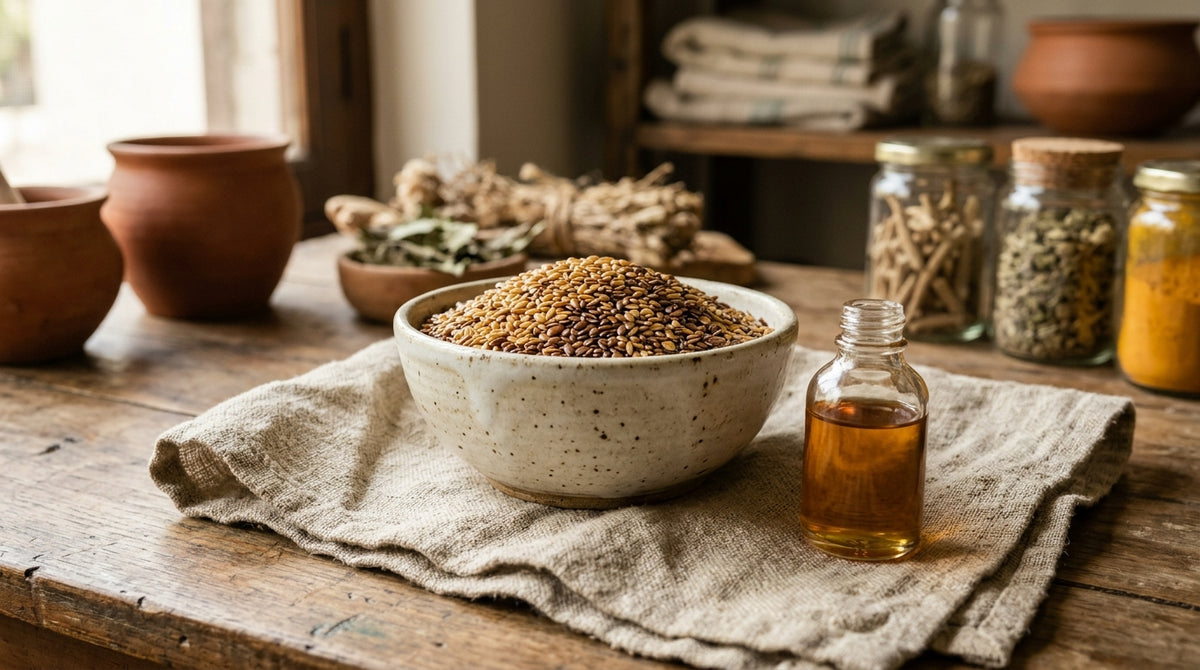
Alsi — flaxseed (Linum usitatissimum) — is one of the oldest cultivated plant foods on earth and one of the richest sources of plant omega-3 fatty acid (ALA), soluble dietary fibre and lignans. It is traditionally used in Ayurveda for digestion, skin nourishment and hormonal balance. The single most important rule: always grind or buy ground alsi — whole seeds pass through the gut largely undigested and deliver very little of their nutrition.
- Alsi (flaxseed, Linum usitatissimum) is one of the richest plant sources of omega-3 fatty acid ALA, soluble fibre and lignans — all three working together to support digestion, heart health and hormonal balance.
- Whole flaxseeds pass through the gut mostly undigested — always grind or use pre-ground alsi to actually absorb its nutrients.
- One to two tablespoons of ground alsi daily, added to roti dough, dal or curd, is the standard traditional amount — safe and practical for most adults.
- People on blood-thinning medicines, those with thyroid conditions and pregnant women should consult a doctor before adding alsi regularly to their diet.
- Dhanyawad Ayurved supplies pure raw alsi at ₹180 per kg — grind at home just before use for best freshness.
What Is Alsi (Flaxseed)?
Alsi is the seed of the flax plant (Linum usitatissimum L.), a slender annual herb in the family Linaceae. Wild flax fibres found in a cave in Georgia date back over 30,000 years, making flax one of the oldest plants known to have been used by humans. Domesticated cultivation for food and medicine began in the Fertile Crescent (modern Syria and Turkey) around 9,000 years ago — grown for both its fibres (to make linen) and its seeds. In India it is known as alsi or teesi, and in Ayurveda as Atasi or Uma.
Seeds come in two colours: brown (the traditional Indian variety) and golden (a North American variant). Both are nutritionally similar — brown alsi has a slightly nuttier flavour, while golden alsi is milder. Dhanyawad Ayurved stocks brown whole alsi, the standard pansari variety used in traditional Ayurvedic practice. For a full introduction to the herb — names, identification, and its role in Indian cooking — see Alsi in English: What Is Flaxseed.
Names in Other Languages
| Language / Region | Name |
|---|---|
| Hindi / Pansari | अलसी (Alsi), तीसी (Teesi) |
| Sanskrit / Ayurveda | Atasi, Uma, Masarina |
| English | Flaxseed, Linseed, Common Flax |
| Botanical | Linum usitatissimum L. |
| Marathi | Javas (जवस) |
| Tamil | Alivirai (அலிவிரை) |
| Bengali | Tisi (তিসি) |
| Punjabi | Alsi (ਅਲਸੀ) |
Nutritional Highlights
Three nutrients set alsi apart from most other seeds:
| Nutrient | Per 100 g (approx.) | Why it matters |
|---|---|---|
| Omega-3 ALA | ~23 g | The principal plant source of omega-3 fatty acid |
| Dietary fibre (total) | ~27 g | Supports digestion and healthy bowel movement |
| Lignans | ~800 mg | Plant phytoestrogens — highest of any known food |
| Protein | ~18 g | Good vegetarian protein source |
| Magnesium | ~392 mg | Bone and muscle support |
(Approximate values sourced from published nutritional databases including Wikipedia/USDA.)
Key Benefits of Alsi
Digestive Support
Alsi's soluble fibre forms a gel in the gut that softens stools and supports regular bowel movement. It is traditionally used in Ayurvedic practice to relieve mild constipation and reduce bloating. Adding 1–2 tablespoons of ground alsi to roti dough is one of the simplest ways to increase dietary fibre without changing your meals significantly.
Heart Health Support
Long-chain omega-3 fatty acids (EPA and DHA, found in fish) are associated with heart health. Alsi supplies ALA — the plant-form omega-3 that the body partially converts to EPA and DHA — making it the best plant-based alternative for people who do not eat fish. Alsi is therefore traditionally and nutritionally valued as heart-supportive food. Traditional Ayurvedic texts also considered alsi a hridya (heart-nourishing) food. If you have a diagnosed heart condition or are on medication, consult your doctor before making significant dietary changes and do not stop your medicine.
Benefits for Women
Alsi's lignans are phytoestrogens — plant compounds that can interact with oestrogen receptors in the body. They are traditionally and scientifically associated with supporting hormonal balance, reducing menopause-related hot flushes and maintaining regular menstrual cycles. The Hindi companion post अलसी के फायदे covers this in more depth. Women with hormone-sensitive conditions should consult a doctor before using alsi regularly.
Skin and Hair Nourishment
Alsi's omega-3 content supports cell membrane health, which is reflected in skin moisture and elasticity. Flaxseed oil (linseed oil) is applied externally to hair and skin in traditional Indian practice, and ground alsi in the daily diet is considered supportive for a healthy scalp and natural hair lustre. These are supportive traditional uses — not treatments for any skin or hair condition.
Blood Sugar Management Support
Alsi's soluble fibre slows the digestion of carbohydrates, which may help moderate post-meal blood sugar rises. This is a supportive dietary effect, not a medical treatment. People with diabetes must not reduce or stop their medication based on dietary changes alone — consult your doctor before adding alsi regularly to your diet if you are on anti-diabetic medicine.

How to Use Alsi: The Essential Rule
Whole seeds pass largely undigested — the hard outer shell resists digestion and the nutrients stay locked inside. You must either:
- Grind whole seeds in a home grinder (blender or coffee grinder) just before use, or
- Buy pre-ground alsi powder from a reliable supplier.
Ground alsi oxidises quickly because of its high ALA content, so grind only what you will use in about one week and store it in an airtight container in the refrigerator.
Daily Dose and Practical Methods
| Method | How to use |
|---|---|
| Roti dough | Mix 1–2 tbsp ground alsi into wheat flour before kneading |
| Dal or curry | Sprinkle 1 tbsp ground alsi just before serving |
| Curd or chaas | Stir 1 tsp ground alsi into a bowl of curd or buttermilk |
| Smoothie | Add 1 tbsp ground alsi to any smoothie or lassi |
| Roasted whole | Lightly roast and use as a topping or mouth freshener — less effective for nutrition than ground |
Recommended amount: 1–2 tablespoons (approximately 7–14 g) of ground alsi per day for adults. Start with 1 teaspoon and increase gradually to avoid digestive discomfort.
Flaxseed Oil vs Whole Flaxseeds
Flaxseed oil concentrates the ALA omega-3 but contains no fibre or lignans. It should not be used for high-heat cooking as the ALA degrades rapidly. Use it cold — as a salad dressing or added to food after cooking. Whole ground seeds remain the better all-round option for most people because they provide fibre, lignans and omega-3 together.
Alsi vs Chia Seeds — Which Is Better?
| Property | Alsi (Flaxseed) | Chia Seeds |
|---|---|---|
| Omega-3 ALA | Highest (~23 g/100 g) | High (~18 g/100 g) |
| Lignans | Highest of any food | Negligible |
| Fibre | Very high (~27 g) | Very high (~34 g) |
| Must grind? | Yes — whole seeds undigested | No — can eat whole |
| Availability in India | Widely available, very affordable | Expensive, limited |
| Traditional Ayurvedic use | Centuries of documented use | Mexican origin — relatively new in India |
For most Indian households, alsi is the more practical and economical choice. Dhanyawad Ayurved's pure raw alsi is available at ₹180 per kg — grind as needed at home.
Side Effects and Who Should Be Careful
Alsi is generally well tolerated, but consider the following:
- Bloating and gas: Too much fibre too quickly can cause discomfort — start with a small amount and increase gradually.
- Blood-thinning medications: ALA omega-3 has a mild blood-thinning effect. If you take warfarin or aspirin, consult your doctor first.
- Diabetes medication: Alsi may affect blood sugar levels. Do not reduce your prescribed medicine — ask your doctor before regular use.
- Thyroid conditions: Alsi contains compounds that may affect thyroid function at high doses. Consult your doctor if you have a thyroid disorder.
- Pregnancy and breastfeeding: Lignans have hormonal activity — avoid excessive amounts and consult a doctor before regular use during pregnancy.
Frequently Asked Questions
What happens if I eat flaxseeds every day?
Eating 1–2 tablespoons of ground alsi daily is considered safe and beneficial for most adults. Regular use may support digestion, normal bowel movement, and provide omega-3 and fibre. Whole unground seeds will pass through undigested and provide little benefit — always grind them first.
Which is better — chia seeds or flax seeds?
Both are nutritionally excellent. Alsi has more lignans and ALA omega-3; chia seeds are slightly higher in fibre and can be eaten whole. For Indian households, alsi is more affordable and has a longer Ayurvedic tradition. Chia seeds are easier to use (no grinding needed) but much more expensive. Both are useful; use whichever suits your budget and routine.
Is alsi good for skin?
Alsi's omega-3 content traditionally supports skin moisture and cell health. Regular dietary use is considered supportive for skin health. Flaxseed oil can also be applied topically. These are traditional supportive uses — not treatments for skin conditions. Consult a dermatologist for specific skin problems.
How can I use alsi seeds?
The most practical method: grind 1–2 tablespoons and mix into roti dough, dal, curd or a smoothie daily. Store ground alsi in the fridge in an airtight container. Roasted whole alsi makes a pleasant snack or topping, but grinding remains essential for maximum nutritional absorption.
What is the biggest disadvantage of flaxseed?
The main disadvantage is that whole seeds must be ground — this adds a step many people forget. Excessive amounts (more than 4–5 tablespoons daily) can cause digestive discomfort or interfere with medications. For people on blood-thinning medicines, thyroid medication or anti-diabetic drugs, supervision by a doctor is advisable before regular use.
Can I drink flaxseed water daily?
Flaxseed water (soaked overnight and the gel drunk in the morning) is a traditional practice and generally safe in moderate amounts. It provides some of the soluble fibre and hydration benefits. Use 1 tablespoon of whole seeds soaked in 1 glass of water overnight, then drink the water with the seeds (or strain them). This is a gentler way to introduce alsi into your routine.
Sources
Written by the Dhanyawad Ayurved team and reviewed by Vaidya Ravinder Arora (40+ years), Dhanyawad Ayurved Vatika, Dwarka, New Delhi. This article describes traditional uses for general information. It is not medical advice. Consult a qualified doctor or Ayurvedic practitioner before using any herb therapeutically.

