
Aloo Bukhara in English – What Is It, Benefits, How to Identify and Use
Aloo Bukhara in English is dried plum (Prunus domestica). Learn what it is, its traditional uses, benefits, how to identify genuine dried aloo bukhara and the safe daily amount.
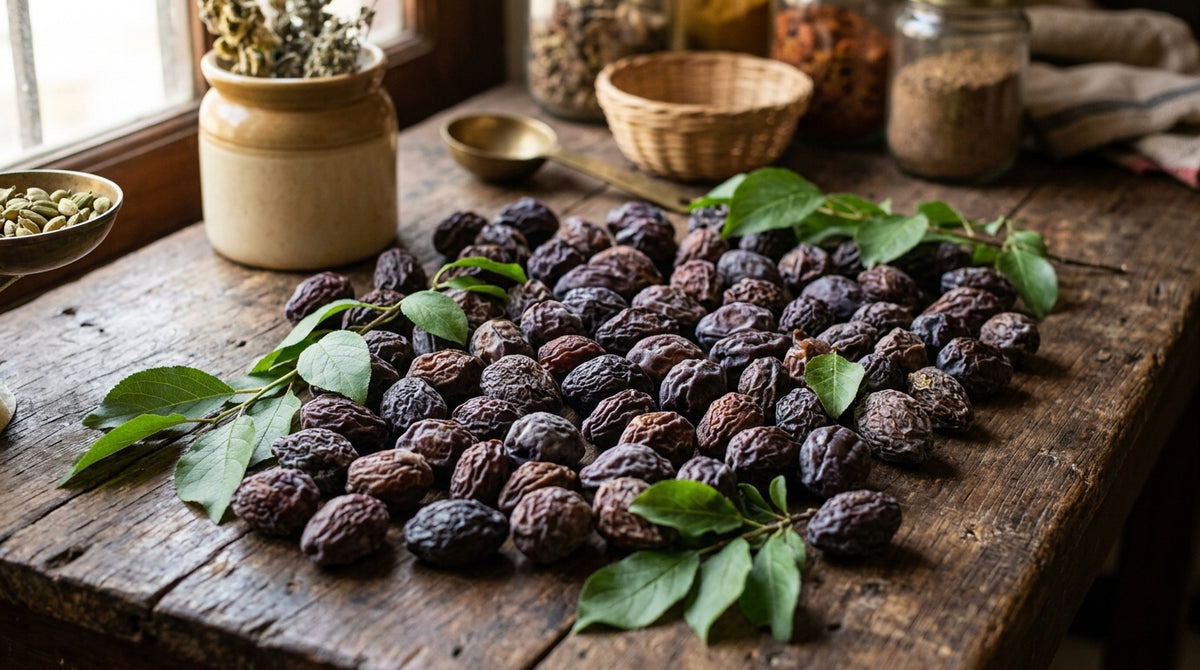
Aloo Bukhara in English is dried plum — the dried form of Prunus domestica, a sweet-tart stone fruit native to Central Asia. Aloo bukhara has been prized for centuries in Ayurvedic, Unani and Persian traditions as a digestive tonic, restorative food and nutritional powerhouse rich in fibre, potassium and iron. Dhanyawad Ayurved stocks premium sun-dried aloo bukhara as a genuine pansari herb.
- Aloo Bukhara (Dried Plum) in English is Prunus domestica — a dried stone fruit with deep roots in Indian, Persian and Ayurvedic traditions.
- Dried aloo bukhara is a good source of dietary fibre, potassium, iron and antioxidants, traditionally used for digestion, bone health and energy.
- Soaking 3–5 pieces overnight and eating with the soaking water is the most traditional method for digestive support.
- Dried plums are high in sugar — people with diabetes should limit intake and consult their doctor before using regularly.
- See a doctor if you have persistent digestive issues, kidney stones, or a known stone-fruit allergy before using aloo bukhara medicinally.
What Is Aloo Bukhara?
Aloo bukhara is the dried fruit of Prunus domestica — the European or common plum — a stone fruit (drupe) belonging to the rose family (Rosaceae). The fresh plum has a smooth purple, red or yellow skin enclosing sweet-tart flesh and a hard central stone (pit). When sun-dried or mechanically dehydrated, the plum shrivels into the dark, wrinkled, intensely flavoured fruit known in South Asia as aloo bukhara.
The plant is widely cultivated across Central Asia, Afghanistan, Iran, Pakistan and northern India. Afghanistan and Pakistan are historically the most important sources of the dried aloo bukhara sold in Indian pansari shops and Ayurvedic stores.
The name has a clear geographical origin. "Aloo" means plum in Persian and Hindi-Urdu — the same root that gives us the Farsi word for plum (آلو). "Bukhara" refers to the ancient city of Bukhara in modern-day Uzbekistan — historically one of the great trading centres on the Silk Road and renowned for exporting dried fruits, including plums, across the subcontinent. So "aloo bukhara" literally means "plum of Bukhara" — a name that is a small piece of Silk Road history.
Dried aloo bukhara is distinguished from fresh plum (taaza aloo bukhara), which is a seasonal, soft fruit. The dried form is what is sold in pansari shops and used in Ayurvedic, Unani and traditional Persian recipes.
Names in Other Languages
| Language / Region | Name |
|---|---|
| Hindi / Urdu / Pansari | आलू बुखारा (Aloo Bukhara) |
| English | Dried Plum / Prune / European Plum |
| Persian / Farsi | آلو بخارا (Aloo Bukhara) |
| Sanskrit / Ayurveda | Alubukhara |
| Punjabi | Aloo Bukhara / Aloocha |
| Bengali | Aloo Bukhara / Bari Aloo Bukhara |
| Marathi | Aloo Bukhara |
| Botanical | Prunus domestica L. (Rosaceae) |
How to Identify Genuine Aloo Bukhara
- Appearance: oval, wrinkled, 2–4 cm long; dark purple-brown to black exterior. Good-quality Afghan or Pakistani aloo bukhara may appear slightly translucent and amber-dark when held up to light — a sign of proper sun-drying.
- Texture: chewy and slightly sticky to the touch; never rock-hard, crumbly or slimy. The flesh should yield slightly when pressed.
- Taste: sweet-tart with a rich, complex flavour — like a concentrated plum with a hint of caramel. No fermented, overly sour or off-notes should be present.
- Pit: genuine aloo bukhara contains a firm stone (pit) inside. Pitted varieties with the stone removed are also available and are equally genuine — they are simply a different commercial grade, more convenient for cooking.
- White coating: a whitish crystalline film on the surface is harmless sugar bloom — natural sugars crystallising during drying. It does not indicate spoilage.
- Avoid: grey-green mould (discard immediately); a strongly sour or fermented smell (old or poorly stored stock); artificially coloured bright-red "fresh plums" sold as aloo bukhara — these are fresh or semi-dried and are a different product entirely.
- Top grade: Afghan and Pakistani-origin aloo bukhara is considered the finest — slightly translucent skin, more aromatic, intensely flavoured. This is what quality pansari stores stock.
Aloo Bukhara vs Other Dried Fruits
| Aloo Bukhara (Dried Plum) | Khajoor (Date) | Kismis (Raisin) | Anjeer (Fig) | |
|---|---|---|---|---|
| Fruit type | Stone fruit (drupe) | Stone fruit | Berry | Syconium |
| Fibre | High (7.1 g/100g) | Moderate | Moderate | Very high |
| Iron | Moderate | Low | Moderate | Moderate |
| Potassium | Very high | High | Moderate | Moderate |
| Traditional use | Digestion, bone, fever | Energy, iron | Blood, cooling | Constipation, bones |
Traditional Uses of Aloo Bukhara
Aloo bukhara has been used in Ayurvedic, Unani and Persian traditional medicine for centuries. The following are traditional uses recorded in classical texts and practice — they are not a substitute for medical treatment.
- Digestive tonic: soaking 3–5 pieces overnight and eating them with the soaking water on an empty stomach is a long-standing home remedy traditionally used for constipation and sluggish digestion. Unani medicine classifies dried plum as a fruit that supports bowel regularity and eases IBS-type discomfort.
- Fever and inflammation support: in Unani medicine, aloo bukhara is considered a cooling fruit (mizaj: barid-tar — cold and moist). It is traditionally used in fevers and inflammatory conditions as a soothing, hydrating food, particularly in combination with other cooling herbs.
- Nutritive and restorative: dried aloo bukhara is traditionally given to people recovering from illness, weakness or anaemia as an easily digestible, energy-dense food. Its iron, potassium and natural sugar content make it a practical recovery food.
- Bone health: Ayurvedic and Unani practitioners have traditionally recommended aloo bukhara for strengthening bones and joints, drawing on its calcium, potassium and vitamin K content.
- Liver and blood support: classical Unani texts record dried plum as a "blood-purifying" food — traditionally used to support liver function and blood quality. In modern framing, this likely reflects its antioxidant content and general nutritive effect on the body.
Health Benefits (Evidence-Based)
Digestive Health
Dried aloo bukhara is one of the better-documented dietary fibre sources among dried fruits, providing approximately 7.1 g of fibre per 100g. Dietary fibre adds bulk to stool, supports bowel regularity and may help with mild constipation. This is consistent with the traditional overnight-soak method used in Ayurvedic and Unani practice. If you have IBS, Crohn's disease or any diagnosed digestive condition, speak to your doctor before using aloo bukhara as a regular remedy.
Bone Health
Dried plums contain calcium, potassium and vitamin K — all nutrients involved in bone metabolism and maintenance. Some research suggests dried plums may be one of the more effective fruit-based foods for supporting bone density. Important: if you have osteoporosis or a diagnosed bone condition, do not replace prescribed treatment with aloo bukhara — speak to your doctor about how diet can complement your treatment.
Heart Health
Aloo bukhara is an excellent source of potassium (approximately 732 mg per 100g), a mineral that may support blood pressure management as part of a balanced diet. Dietary fibre may also help with cholesterol levels. Important: aloo bukhara does not treat heart disease or hypertension. If you have a heart condition or are on blood pressure medication, consult your doctor and do not stop prescribed medicines.
Iron and Energy
Dried aloo bukhara contains iron and is traditionally given to support haemoglobin and energy levels, particularly during recovery from illness. To improve iron absorption, pair aloo bukhara with a source of vitamin C — for example, eating it with a glass of lemon water. Iron from plant sources (non-haem iron) is less readily absorbed than iron from meat, so pairing with vitamin C makes a meaningful difference.
Antioxidants and Skin Health
Dried plums are rich in polyphenol antioxidants, including neochlorogenic and chlorogenic acids. Antioxidants help the body manage oxidative stress, which is associated with ageing and inflammation. Traditional Unani and Persian medicine used aloo bukhara preparations as a skin-supporting and anti-ageing food. Eating aloo bukhara as part of a balanced diet is a gentle, food-first approach to supporting skin health from within.
How to Use Aloo Bukhara
| Method | How | Best for |
|---|---|---|
| Soaked overnight | 3–5 pieces soaked in 1 glass water overnight; eat fruit and drink water on empty stomach | Constipation, digestion |
| As snack | 2–3 pieces as mid-morning or evening snack | Energy, iron |
| In cooking / rice | Add to biryani, pulao, chutneys or meat dishes | Flavour, traditional recipes |
| In milk | Boil 3 pieces in milk, drink warm | Constipation, recovery |
Nutritional Information (per 100g dried aloo bukhara, approx.)
| Nutrient | Amount (approx. per 100g) |
|---|---|
| Calories | 240 kcal |
| Carbohydrates | 63 g |
| Dietary fibre | 7.1 g |
| Sugars | 38 g |
| Potassium | 732 mg |
| Calcium | 43 mg |
| Iron | 0.9 mg |
| Vitamin K | 59 µg |
Note: approximate values sourced from USDA standard nutrition data via Wikipedia (Prune). Actual values may vary by variety, origin and drying method.
Dhanyawad Ayurved Vatika stocks premium-grade Aloo Bukhara (Dried Plum) — sun-dried, naturally processed, available in 100 g packs at ₹80 and 1 kg at ₹720. Available at our Dwarka, New Delhi store and online. For other digestive herbs, see: Anjeer in English (Dried Fig), Isabgol (Psyllium Husk) benefits, Methi Dana (Fenugreek Seeds).
Safety and Who Should Be Careful
- Diabetes: dried aloo bukhara contains approximately 38g of natural sugars per 100g — a significant amount. People with diabetes should limit intake to 2–3 pieces per day, monitor blood sugar closely, and consult their doctor before using regularly. Do not stop or reduce diabetes medicines on account of eating aloo bukhara.
- Kidney stones (oxalate stones): plums contain oxalates, which can contribute to oxalate-type kidney stones in people who are susceptible. If you have a history of kidney stones, consult your doctor before eating aloo bukhara regularly.
- IBS and loose motion: the high fibre content that makes aloo bukhara useful for constipation can worsen diarrhoea or loose stools in people with IBS or a sensitive gut. Do not exceed 5 pieces per day; start with 2–3 and see how your body responds.
- Stone-fruit allergy: allergy to plums and related stone fruits (peaches, apricots, cherries) is rare but possible. Stop immediately and seek medical advice if you notice itching, swelling or any allergic reaction after eating aloo bukhara.
- Vitamin K and blood thinners: aloo bukhara contains approximately 59 µg of vitamin K per 100g. High vitamin K intake can interact with anticoagulant medicines such as warfarin. If you are on blood thinners, consult your doctor before adding aloo bukhara to your regular diet.
See a doctor if you experience severe abdominal pain, blood in stool, unexplained weight loss or persistent digestive symptoms. These may be signs of a condition that needs medical attention and should not be managed with dietary changes alone.
Frequently Asked Questions
What is aloo bukhara called in English?
Aloo bukhara in English is dried plum — also called prune. The botanical name is Prunus domestica (family Rosaceae). In everyday English, "prune" and "dried plum" are used interchangeably, though in some markets "prune" specifically refers to varieties of plum bred and dried for their sweetness. Fresh plums are also called "aloo bukhara" in South Asia when they are in season, but the pansari and Ayurvedic product is always the dried form.
What are the benefits of eating aloo bukhara daily?
Eating 3–5 dried aloo bukhara daily (preferably soaked overnight) may support digestive regularity, provide dietary fibre, potassium, iron and vitamin K, and offer antioxidant support. Traditional Ayurvedic and Unani use emphasises its role as a digestive tonic and restorative food. These are food-level benefits, not medical treatments. If you have a health condition, consult your doctor about how aloo bukhara fits into your diet.
What are plums called in India?
In India, plums are called aloo bukhara in Hindi and Urdu. Fresh plums sold seasonally in markets may also be called "aloo bukhara" or "aloocha." The dried, preserved form — which is what most pansari shops and Ayurvedic stores stock — is also called aloo bukhara. In Punjabi, both fresh and dried plums are called aloo bukhara or aloocha. In Bengali, the fruit may be referred to as "bari aloo bukhara." In Odia, dried plum is also known as aloo bukhara (ଆଲୁ ବୁଖାରା), the same name retained from the Hindi-Urdu pansari tradition.
What are the nutritional facts for 100 g of aloo bukhara?
Per 100g of dried aloo bukhara (approximate values): 240 kcal, 63g carbohydrates, 7.1g dietary fibre, 38g sugars, 732 mg potassium, 43 mg calcium, 0.9 mg iron and 59 µg vitamin K. Dried aloo bukhara is notably high in potassium and dietary fibre compared to most other dried fruits. Values are approximate and may vary by variety and origin.
Can I eat aloo bukhara if I have diabetes?
Dried aloo bukhara is high in natural sugars and should be eaten with caution by people with diabetes. If you have diabetes, limit your intake to 2–3 pieces per day, monitor your blood sugar after eating, and discuss with your doctor before using aloo bukhara regularly. Do not stop or reduce your diabetes medicines because of aloo bukhara — it is a food, not a treatment for diabetes. Fresh plums have a lower glycaemic impact than dried, but the same caution applies.
How many aloo bukhara should I eat per day?
For most healthy adults, 3–5 dried aloo bukhara per day is a reasonable amount. The overnight-soak method (3–5 pieces in water overnight, eaten on an empty stomach) is the most traditional approach for digestive support. Eating more than 5–6 per day adds significant sugar and calories and may cause loose stools due to the high fibre content. People with diabetes should limit to 2–3 pieces and consult their doctor.
What is the English name for Kamrakh?
Kamrakh is the Hindi name for star fruit, also called carambola (botanical name Averrhoa carambola). It is a completely different fruit from aloo bukhara: kamrakh is a tropical, waxy, star-shaped fruit with a sour-sweet taste, eaten fresh or juiced. Aloo bukhara is a dried stone fruit (plum, Prunus domestica). Both are found in Indian pansari shops but they are unrelated plants with different uses.
Why is aloo bukhara so costly?
Premium aloo bukhara is expensive because the best quality — Afghan Ghazni province and Pakistani origin — is imported, carefully hand-sorted and sun-dried over several weeks immediately after the June–July harvest. Import logistics, seasonal availability and careful grading all add to the cost. Afghan and Kashmiri aloo bukhara command higher prices than domestically grown varieties because of their larger size, more intense flavour and low moisture content. Cheaper domestic varieties exist but are considered inferior quality for Ayurvedic and pansari use.
Sources
Written by the Dhanyawad Ayurved team and reviewed by Vaidya Ravinder Arora (40+ years), Dhanyawad Ayurved Vatika, Dwarka, New Delhi. This article describes traditional uses for general information. It is not medical advice. Consult a qualified doctor or Ayurvedic practitioner before using any herb therapeutically.

