
Tej Patta in English – Indian Bay Leaf vs Bay Leaf, Uses and Benefits
Tej Patta in English is Indian Bay Leaf (Cinnamomum tamala), a spice with its own distinct aroma and traditional uses different from European bay leaf.
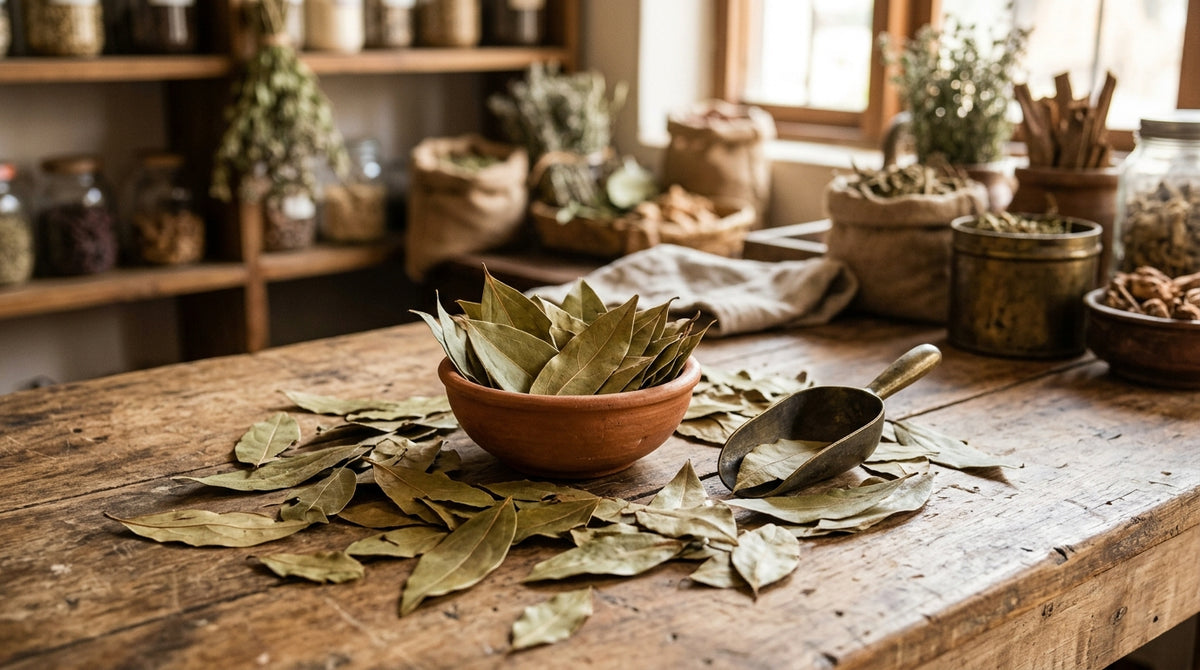
Tej Patta in English is called Indian Bay Leaf. Its botanical name is Cinnamomum tamala, a tree in the cinnamon family (Lauraceae). It is not the same as the European bay leaf (Laurus nobilis) used in Western cooking — the two plants are from different families entirely and have different aromas, flavours and uses.
- Tej Patta in English is called Indian Bay Leaf; its botanical name is Cinnamomum tamala, a tree in the cinnamon family (Lauraceae).
- Tej Patta is not the same as European bay leaf (Laurus nobilis) — they look similar but come from different plant families and have distinctly different flavours.
- In Indian cooking, tej patta adds a cinnamon-like, clove-like warmth to rice, biryanis, curries and garam masala blends.
- In Ayurveda, tej patta (Tamalapatram) is traditionally classified as a digestive, warming herb used to support digestion and reduce Vata and Kapha.
- Tej Patta should not be eaten whole — it is used to flavour dishes and removed before eating, as the leaf is tough and may cause a choking risk.
Tej Patta Names in All Languages
Tej Patta is known by different names across India and the world. The name changes depending on the language and region, which often causes confusion in markets and recipes:
| Language / Reference | Name for Tej Patta |
|---|---|
| Hindi | तेज पत्ता (Tej Patta) |
| English | Indian Bay Leaf / Indian Cassia Leaf |
| Sanskrit | Tamalapatram / Tejapatra / Patra |
| Tamil | பிரியாணி இலை (Biriyani Ilai) / தாளிசபத்திரி (Thalisa Pattiri) |
| Malayalam | തേജപത്ര (Tejapatra) / ഇലവര്ഗം (Ilavargam) |
| Bengali | তেজপাতা (Tejpata) |
| Urdu | تیج پتہ (Tej Patta) |
| Marathi | तमालपत्र (Tamalapattra) |
| Gujarati | તજ ના પાન (Taj na Pan) |
| Botanical name | Cinnamomum tamala (Buch.-Ham.) T.Nees & Eberm. |
| Family | Lauraceae (the laurel / cinnamon family) |
Is Tej Patta a Cinnamon Leaf?
This is a very common question. The short answer is: tej patta comes from the same plant family (Lauraceae) and even the same genus (Cinnamomum) as cinnamon — but it is NOT the same as cinnamon leaf.
Cinnamomum tamala (tej patta) is a close botanical relative of Cinnamomum verum (true cinnamon) and Cinnamomum cassia (cassia cinnamon), but it is a different species. The leaves of tej patta do have a mild cinnamon-clove-like fragrance, which is why they are sometimes called "Indian cinnamon leaf" or "cassia leaf" in export markets. However, the spice used as cinnamon — the rolled bark sticks — comes from the trunk and branches of the cinnamon tree, not its leaves. Tej patta is specifically the dried leaf of Cinnamomum tamala and has its own distinct culinary and medicinal character.
Are Tej Patta and Bay Leaf the Same?
No — this is probably the biggest source of confusion around tej patta. Despite both being called "bay leaf" in everyday language, Indian bay leaf (tej patta) and European bay leaf are completely different plants:
| Feature | Tej Patta (Indian Bay Leaf) | European Bay Leaf | Cassia Leaf |
|---|---|---|---|
| Botanical name | Cinnamomum tamala | Laurus nobilis | Cinnamomum cassia |
| Plant family | Lauraceae (cinnamon genus) | Lauraceae (laurel genus) | Lauraceae (cinnamon genus) |
| Origin | Himalayan foothills, NE India | Mediterranean region | China, SE Asia |
| Leaf shape | Broad oval, 3 prominent veins | Narrow lance-shape, single midrib | Similar to tej patta, narrower |
| Aroma | Cinnamon + clove warmth | Herbal, slightly medicinal, eucalyptus-like | Stronger cinnamon, more pungent |
| Culinary use | Indian biryanis, dals, curries, garam masala | European stews, soups, stocks, marinades | Chinese five-spice, some Indian blends |
| Can be substituted? | Not ideally — flavour profile is different | Not ideally | Closer to tej patta but stronger |
The confusion arises because English speakers and many Indian-English cookbooks translate "tej patta" as "bay leaf" — but if you use European bay leaves in Indian biryani expecting tej patta flavour, the result will be noticeably different.
How to Identify Genuine Tej Patta
Tej patta is sometimes adulterated with other Cinnamomum species or even unrelated leaves. Here is how to identify authentic Cinnamomum tamala:
- Three prominent veins: Genuine tej patta has three distinct parallel veins running from the base to the tip of the leaf. This is the most reliable identifying feature. European bay leaf has only a central midrib with smaller lateral veins.
- Shape: The leaf is broadly oval to elliptic, 7–15 cm long, with a smooth edge and a slightly pointed tip.
- Colour: Dried tej patta is a dull olive-green to brownish-green. The upper surface is smoother than the lower.
- Smell when crushed: Crush a small piece — genuine tej patta releases a distinctive warm cinnamon-clove aroma. If it smells purely herbal or medicinal, it may be European bay leaf.
- Texture: The dried leaf is tough, stiff and papery. It should not crumble easily into powder.
- Stem attachment: The leaf stem (petiole) is short, with a slight reddish tinge when fresh.
What are the Benefits of Tej Patta?
Tej patta is primarily a culinary spice, but Ayurveda has long classified it as a medicinal herb. Here are five traditionally recognised benefits:
1. Digestive Support
Tej patta is classified in Ayurveda as deepana (digestive stimulant) and pachana (digestive). The volatile oils in the leaf — including eugenol and cinnamaldehyde — are traditionally thought to stimulate digestive secretions, reduce gas and ease bloating. Using tej patta in cooking dal, rice and curries is a traditional way to make heavier meals easier to digest.
2. Warming and Kapha-Reducing
In Ayurveda, tej patta (Tamalapatram) has ushna veerya (heating potency) and is classified as Vata and Kapha reducing. This makes it traditionally useful in the cooler months or for people with a Kapha-dominant constitution who experience sluggish digestion, heaviness and congestion.
3. Blood Sugar Support (Traditional Use)
Bay leaves have been studied for potential effects on blood sugar management, particularly in the context of type-2 diabetes. Some research has examined Laurus nobilis (European bay leaf), and by extension Indian bay leaf preparations have been used in traditional medicine for this purpose. Important: tej patta is not a treatment for diabetes. If you have diabetes or prediabetes, do not use any herbal preparation as a substitute for medical treatment — consult your doctor.
4. Respiratory Comfort
The warming essential oils in tej patta are traditionally used for respiratory comfort. Tej patta decoction (kadha) with ginger and honey is a traditional home remedy in North India for cough, congestion and cold. These are traditional uses; tej patta does not treat respiratory diseases.
5. Aromatic Culinary Benefits
Beyond health, tej patta adds a distinctive layered flavour to food — the cinnamon-clove warmth enriches the base of curries, biryani and garam masala blends. Good flavour in food encourages eating slowly and mindfully, which supports better digestion — an indirect but real benefit.

How to Use Tej Patta in Cooking
| Dish / Use | How to Use Tej Patta | Quantity |
|---|---|---|
| Biryani | Add 2–3 whole leaves to hot ghee at the start of cooking along with whole spices; remove before serving | 2–3 leaves per serving |
| Dal (Lentils) | Temper (tadka) with ghee, cumin, tej patta — add leaves first to hot ghee, then other spices | 1–2 leaves |
| Rice (Pulao) | Add to the water when cooking rice, or add to ghee at start of pulao | 1–2 leaves per cup of rice |
| Chai / Kadha | Add 1 leaf to boiling water with ginger and cardamom; simmer 5 minutes, strain and drink | 1 leaf per cup |
| Garam Masala blend | Dry-roast and grind with other whole spices (cloves, cardamom, cinnamon, black pepper) | 4–5 leaves per batch |
| Curry base | Fry in oil/ghee with onions at the start; the leaf flavours the oil as onions cook | 1–2 leaves |
| Khichdi / Congee | Add to the pot during cooking for a gentle warming flavour | 1 leaf |
Important: Always remove tej patta leaves before serving. The dried leaf is tough and may cause a choking hazard if accidentally swallowed whole. It is not meant to be eaten.
How to Store Tej Patta
Dried tej patta (the form available in most shops) should be stored in an airtight glass or metal container away from light, heat and moisture. Properly stored dried leaves maintain their aroma for 12–18 months. Keep them whole — do not grind until needed, as powdered tej patta loses its fragrance within a few weeks.
Fresh tej patta leaves are rarely available outside of growing regions. If you do have fresh leaves, wrap them in a lightly damp cloth and refrigerate; use within 1–2 weeks. For longer storage, spread fresh leaves on a tray in a shaded, well-ventilated spot to air-dry over 5–7 days, then store as above.
Signs that your tej patta has lost quality: no aroma when crushed, dull brown colour, or musty smell. Replace with a fresh batch for best flavour in cooking.
Who Should Not Drink Bay Leaf Tea?
Tej patta tea (kadha) is generally safe in culinary amounts. However, the following people should be cautious or avoid it in medicinal quantities:
- Pregnant women: Large medicinal amounts of tej patta may stimulate uterine contractions. Normal culinary use in food is considered safe, but do not take concentrated tej patta decoctions or supplements during pregnancy without consulting a doctor.
- People on blood-thinning medication: Bay leaf compounds may have mild anticoagulant effects. If you take warfarin, aspirin for blood thinning, or other anticoagulants, consult your doctor before drinking tej patta tea regularly.
- Allergy to Lauraceae plants: Those allergic to cinnamon, laurel or related plants may react to tej patta. If you notice any itching, rash or throat tightness after consumption, stop immediately.
- Diabetes (on medication): If tej patta tea is used for blood sugar support alongside prescribed diabetic medication, the combined effect may lower blood sugar excessively. Do not use as a substitute for prescribed treatment; consult your doctor.
Why is Bay Leaf (Tej Patta) Expensive?
The price of tej patta can vary significantly depending on several factors:
- Grade and quality: Hand-selected, premium-grade leaves with intact colour and strong aroma command higher prices than mixed or broken leaf grades.
- Source: Tej patta grown in the Himalayan foothills (Uttarakhand, Himachal Pradesh) is considered superior in aroma and is priced accordingly. Lower grades come from plains-grown or farmed trees.
- Dried vs fresh: Drying, sorting and packaging add to cost. Sun-drying with controlled conditions produces better colour retention.
- Organic certification: Certified organic tej patta carries a premium.
- Market confusion: In international markets, "Indian bay leaf" commands a premium because it is less commonly available than European bay leaf. Import/export costs and labelling requirements add to the final price.
Where to Buy Tej Patta
Dhanyawad Ayurved offers premium-quality Tej Patta (Indian Bay Leaf) — available as whole dried leaves or powder in a 100 g pack at ₹650. Sourced with attention to quality and stored properly to preserve aroma. Use in biryanis, dals, curries, chai and garam masala blends.
For related reading on warming Indian spices and herbs, see also: दालचीनी के फायदे (Cinnamon Benefits) and Laung in English — Clove Guide.
See a Doctor If
Tej patta is a culinary spice and traditional herb, not a treatment for any medical condition. See a qualified doctor promptly if you notice:
- Symptoms of a serious allergic reaction: throat tightness, difficulty breathing, hives
- Blood sugar that remains uncontrolled despite medication
- Signs of a swallowed leaf: difficulty swallowing, throat irritation or abdominal discomfort after accidentally ingesting a whole leaf
- Any digestive condition that worsens despite dietary changes
Frequently Asked Questions
Is tej patta a cinnamon leaf?
Tej patta (Cinnamomum tamala) belongs to the same genus as cinnamon but is a different species — it is not the same as a cinnamon leaf. The leaf has a mild cinnamon-clove aroma because of its botanical relationship to cinnamon, but the spice called "cinnamon" comes from the bark of the tree, not the leaf. Tej patta is its own distinct spice.
What is tej patta called in English?
Tej patta is called Indian Bay Leaf in English. Its botanical name is Cinnamomum tamala. It is also sometimes called Indian cassia leaf or Malabar leaf in spice trade. Do not confuse it with European bay leaf (Laurus nobilis), which has a completely different aroma and flavour profile.
Are tej patta and bay leaf the same thing?
No — they look similar but are very different. Tej patta (Cinnamomum tamala) is from the cinnamon family and has three prominent leaf veins, with a cinnamon-clove fragrance. European bay leaf (Laurus nobilis) is from the laurel family, has one central midrib, and smells herbal and medicinal. They are not interchangeable in recipes for best results.
What are the benefits of tej patta?
In Ayurveda, tej patta is traditionally used to support digestion, reduce gas and bloating, warm the body in cold weather, and ease respiratory congestion. It may also traditionally support healthy blood sugar balance — though this is not a proven medical use and should never replace prescribed treatment. Its primary everyday benefit is as a warming culinary spice that aids digestion.
Who should not drink bay leaf tea?
Pregnant women should avoid concentrated tej patta decoctions (normal cooking amounts are fine). People on blood-thinning medication or diabetic medication should consult their doctor before regularly drinking tej patta tea. Those with an allergy to cinnamon or Lauraceae plants should also avoid it. If you experience any itching, throat tightness or unusual symptoms, stop and see a doctor.
How do I use tej patta in chai?
Add one whole dried tej patta leaf to your pot when boiling water for chai. Let it simmer for 3–5 minutes along with ginger, cardamom and other spices before adding tea leaves and milk. It adds a gentle cinnamon-clove warmth to the chai. Remove the leaf before drinking — do not eat it. It blends particularly well with ginger and cardamom in a warming winter kadha.
Sources
Written by the Dhanyawad Ayurved team and reviewed by Vaidya Ravinder Arora (40+ years), Dhanyawad Ayurved Vatika, Dwarka, New Delhi. This article describes traditional uses for general information. It is not medical advice. Consult a qualified doctor or Ayurvedic practitioner before using any herb therapeutically.

