
Period Pain Home Remedies: Heat, Ajwain, Ginger and When to See a Doctor
Ten home remedies for period pain — heat pads, ajwain water, ginger tea, yoga poses and more — with guidance on when cramps need medical attention.
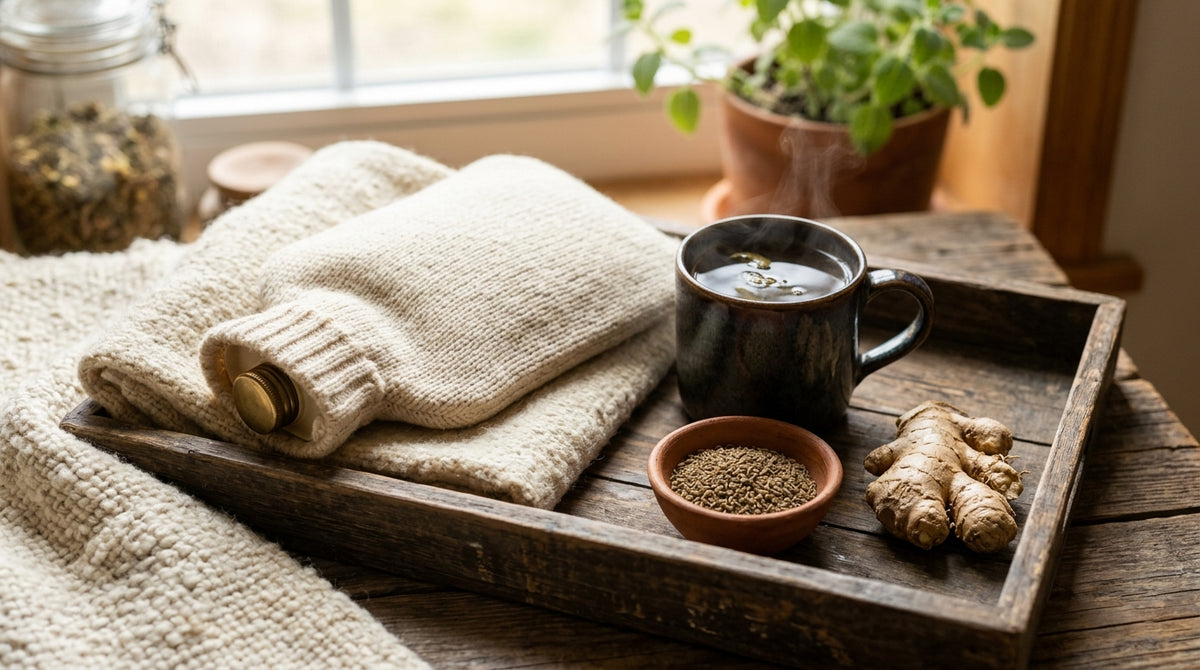
Most menstrual cramps respond well to heat, hydration, light movement and herbal support like ajwain water, ginger tea and turmeric milk. These are supportive measures that ease discomfort during periods; they are not treatments for the underlying cause. If cramps are severe, worsening or affect your daily life, speak to a doctor.
- A hot water bottle or heat pad applied to the lower abdomen is one of the most effective and fast-acting remedies for menstrual cramps.
- Ajwain (carom seeds) water is traditionally used in Ayurveda to ease abdominal cramping and bloating associated with periods.
- Ginger tea made from fresh ginger supports the body during menstruation and may help ease discomfort according to traditional use.
- Gentle yoga poses, particularly Supta Baddha Konasana and Balasana, may ease lower-abdominal tension during the first days of a period.
- See a doctor if cramps are severe enough to stop daily activity, last more than three days, or are getting worse each cycle.
What causes period pain (dysmenorrhoea)?
Period pain — medically called dysmenorrhoea — is caused by the uterus contracting to shed its lining. These contractions are triggered by prostaglandins, hormone-like chemicals produced in the uterine lining. Higher prostaglandin levels generally mean stronger, more painful cramps. Primary dysmenorrhoea is the common type with no underlying condition; secondary dysmenorrhoea is linked to conditions such as endometriosis, uterine fibroids or adenomyosis.
Common symptoms include aching or cramping pain in the lower abdomen, pain that may radiate into the lower back and inner thighs, nausea, loose motions, headache and fatigue. Symptoms typically start one to two days before the period and ease within two to three days of flow beginning.
| Type | Cause | Who it affects | Needs a doctor? |
|---|---|---|---|
| Primary dysmenorrhoea | Prostaglandins cause uterine contractions | Most menstruating people; often teens and young adults | Rarely, unless severe |
| Secondary dysmenorrhoea | Endometriosis, fibroids, adenomyosis | Often starts in the 30s; pain may worsen with age | Yes — needs diagnosis and treatment |
10 period pain home remedies that help
1. Heat therapy — heat pad or hot water bottle
Applying consistent warmth to the lower abdomen relaxes the uterine muscle and reduces the intensity of cramps. Use a hot water bottle wrapped in a thin cloth, a heat pad, or a warm towel. Apply for 15–20 minutes at a time, up to three times a day. Heat works partly by increasing local blood flow and partly by relaxing the smooth muscle in the uterus. It is one of the simplest, most accessible and most effective period pain remedies.
2. Ajwain (carom seeds) water
Ajwain (carom seeds) is traditionally used in Ayurveda to ease abdominal cramps, gas and bloating — all common during menstruation. Boil one teaspoon of ajwain seeds in two cups of water for five minutes, strain, add a pinch of black salt and sip warm. Ajwain's active compound thymol has antispasmodic properties traditionally recognised in classical texts. Drink one cup in the morning on the first two days of your period. Pregnant women should avoid concentrated ajwain preparations.
3. Ginger tea
Ginger (Zingiber officinale) has been used in traditional Ayurvedic and herbal medicine for abdominal discomfort and warming the body during menstruation. It is traditionally consumed as a warm tea during the first days of a period as a supportive remedy. Grate or slice a one-inch piece of fresh ginger into two cups of simmering water, steep for five minutes, strain, add honey to taste and sip warm. Alternatively, mix half a teaspoon of dry ginger powder (saunth) in warm water. Take two to three cups per day on the first two to three days of menstruation.
4. Turmeric milk (haldi doodh)
Turmeric contains curcumin, a compound with anti-inflammatory properties widely studied in published research. Stir half to one teaspoon of turmeric powder into a glass of warm milk, add a pinch of black pepper (which significantly increases curcumin absorption) and a teaspoon of honey. Drink one cup at bedtime on days when cramps are most intense. This is a time-honoured Ayurvedic preparation traditionally used to support women's comfort during menstruation.
5. Fenugreek seed water (methi dana)
Fenugreek seeds (Trigonella foenum-graecum) are traditionally used in Ayurveda to support hormonal balance and ease menstrual discomfort. Soak one teaspoon of fenugreek seeds in a glass of water overnight, strain in the morning and drink on an empty stomach. The seeds contain fibre and plant compounds traditionally credited with reducing cramping. Avoid high amounts of fenugreek during pregnancy. For more on this herb, see Methi Dana (Fenugreek) benefits.
6. Warm cinnamon (dalchini) water
Cinnamon is traditionally used in Ayurvedic and Unani medicine to ease abdominal pain. Simmer a small piece of cinnamon bark or a quarter teaspoon of cinnamon powder in one cup of water for five minutes, strain and sip warm with honey. Cinnamon has antispasmodic and warming properties according to classical Ayurvedic references; it is commonly added to period-support herbal preparations.
7. Yoga and gentle movement
Light movement keeps circulation flowing and may ease cramping. Gentle yoga poses useful during periods include Child's Pose (Balasana), Reclining Bound Angle Pose (Supta Baddha Konasana) and Legs Up the Wall (Viparita Karani). These open the lower abdomen and reduce tension in the pelvic floor. Even a slow 20-minute walk can reduce cramp intensity compared to complete bed rest. Avoid inversions and vigorous twists on the heaviest flow days.
8. Hydration and warm fluids
Dehydration worsens cramps. Aim to drink at least eight to ten glasses of warm or room-temperature water daily during your period. Herbal teas — ajwain, ginger, cinnamon — count toward fluid intake. Avoid cold drinks and fizzy beverages as these may increase bloating and muscle tension. Warm soups and broths are also helpful, especially if nausea is part of your symptoms.
9. Warm Epsom salt bath or sitz bath
A warm bath with Epsom salt (magnesium sulfate) relaxes the muscles of the lower abdomen and back. The warmth has the same effect as a heat pad on a larger surface area, while magnesium is absorbed transdermally and may ease muscle cramps. Add two cups of Epsom salt to a warm bath and soak for 15–20 minutes. If a full bath is not possible, a warm sitz bath for the lower body achieves a similar effect for pelvic discomfort.
10. Dietary adjustments during your period
During the first two to three days, reduce intake of red meat, processed foods, refined sugar, cold beverages and high-sodium snacks — all of which can worsen bloating and inflammation. Focus on warm, easy-to-digest foods: khichdi, dal, warm soups, cooked vegetables and fruits like papaya (traditionally used in Ayurveda to support uterine health). Iron-rich foods such as leafy greens and lentils help replenish iron lost through flow.
Why does heat help cramps?
Heat relieves period cramps through two main mechanisms. First, it relaxes the uterine muscle directly, reducing the intensity of the contractions that cause pain. Second, warmth dilates blood vessels in the area, increasing blood flow and helping to wash out the prostaglandins responsible for cramp-causing contractions. The NHS recommends heat pads and hot water bottles on the abdomen as a self-care measure for period pain alongside other remedies such as exercise and warm baths.
What kills period cramps fast?
For the fastest relief, combine a heat pad on the lower abdomen with a cup of warm ginger tea and light movement. The heat relaxes muscle spasm; ginger has anti-inflammatory properties; and movement keeps blood circulating. This combination can noticeably ease discomfort within 20–30 minutes. Salt water or ajwain water also helps if bloating is accompanying the cramps. These are supportive measures — if cramps are severe enough to require prescription-strength pain relief, speak to a doctor who can investigate the cause.

Why do I have cramps at the end of my period?
Cramps toward the end of your period are common and usually happen because the uterus is still contracting to expel the last of the lining. Prostaglandin levels generally peak at the start of flow and fall off, but some people experience a secondary wave of cramping as flow lightens. End-of-period cramping can also be related to constipation (which is common as progesterone falls), pelvic floor muscle tension, or, in some cases, secondary dysmenorrhoea from an underlying condition. If end-of-period cramps are severe or new, consult a doctor.
How to stop cramps in buttocks and lower back during period?
Cramps that radiate into the buttocks, lower back and thighs are caused by referred pain from uterine contractions — the same nerve pathways serve the uterus, lower back and inner thighs. Apply a heat pad to the lower back as well as the abdomen. Gentle yoga poses such as Pigeon Pose or lying on your back with knees pulled to chest help release the piriformis and gluteal muscles. A warm bath or sitz bath relaxes the whole pelvic region. If buttock or leg cramping is severe, see a doctor to rule out endometriosis or pelvic inflammatory disease.
At what age are periods most painful?
Menstrual pain tends to be most intense in the teenage years and early twenties, when prostaglandin production is typically at its highest. For many people, primary dysmenorrhoea improves significantly with age, often after the mid-twenties, and sometimes after pregnancy. However, if period pain starts worsening in your late twenties, thirties or forties — especially if it was manageable before — this warrants medical investigation to rule out endometriosis, adenomyosis or fibroids, as these conditions can develop and progress over time.
Dhanyawad Women's Health Capsule — Ayurvedic support
If you are looking for consistent daily support for overall menstrual wellness and vitality, Dhanyawad Ayurved's Women's Health Capsule is a traditional Ayurvedic formulation containing herbs traditionally used to support hormonal balance, reduce fatigue and maintain a healthy menstrual cycle. Priced at ₹480 for 60 capsules, it is intended as a daily supplement supporting women's overall wellness — not a treatment for period pain or any medical condition. Take as directed on the pack or as advised by a qualified practitioner. Do not stop any prescribed medication in favour of this product. For further Ayurvedic reading, see Ashwagandha ke fayde and Safed pani ka ilaj.
When to see a doctor — red flags
Home remedies are suitable for mild to moderate primary dysmenorrhoea. See a doctor if you experience any of the following:
- Cramps severe enough to prevent you from attending work, school or daily activities despite home care.
- Pain that is worsening cycle after cycle, or is a new type of pain you have not had before.
- Cramps that last more than three days into your period.
- Heavy bleeding (soaking a pad or tampon every hour for two or more consecutive hours).
- Pain during intercourse, bowel movements or urination — these may indicate endometriosis.
- Fever alongside pelvic pain — this may indicate an infection.
- Irregular cycles or cycles that have changed significantly.
Always consult a doctor before using any herbal supplement if you have PCOD, endometriosis, thyroid conditions, diabetes or are on prescribed medication. Do not self-diagnose or discontinue any prescribed treatment.
Frequently Asked Questions
What is the fastest home remedy for period pain?
A heat pad applied to the lower abdomen combined with a warm cup of ginger or ajwain tea gives the fastest relief. The heat relaxes uterine muscle spasm while the herbal tea supports the body from within. This combination can ease discomfort noticeably within 20–30 minutes, though it does not remove the underlying cause of cramps.
Can ajwain stop period cramps?
Ajwain water is traditionally used in Ayurveda to reduce abdominal cramping and bloating. Boil one teaspoon of ajwain seeds in water, strain and sip warm. It may ease discomfort associated with periods, particularly when gas or abdominal spasm is involved. It is a supportive remedy, not a treatment for dysmenorrhoea.
Is ginger good for menstrual cramps?
Ginger has traditionally been used in Ayurvedic and herbal medicine to warm the body, ease abdominal discomfort and reduce nausea — all common during menstruation. Warm ginger tea with honey is a simple, traditionally used preparation that can be taken two to three times a day on the heaviest flow days. These are supportive measures based on traditional use, not a treatment for the underlying cause of period pain.
Why should I see a doctor for period pain?
Primary dysmenorrhoea (no underlying cause) can usually be managed at home. However, secondary dysmenorrhoea caused by endometriosis, fibroids or adenomyosis requires medical diagnosis and treatment — it will not resolve with home remedies alone. If your cramps are severe, worsening, or accompanied by heavy flow, pain during intercourse or pelvic pain outside your period, see a doctor promptly.
Can yoga help with period cramps?
Yes. Gentle yoga poses such as Child's Pose, Reclining Bound Angle and Legs Up the Wall reduce tension in the pelvic floor and lower abdomen. Even a slow walk helps maintain circulation and can ease cramping compared to complete bed rest. Avoid vigorous twists and inversions on heavy flow days.
What foods make period cramps worse?
Foods that may worsen cramps include red meat, high-sodium processed foods, refined sugar, cold drinks and large amounts of caffeine. These can increase inflammation, worsen bloating or cause water retention, all of which amplify cramping. During your period, favour warm, cooked foods — dal, khichdi, cooked vegetables — and stay well hydrated with warm fluids.
Sources
Written by the Dhanyawad Ayurved team and reviewed by Vaidya Ravinder Arora (40+ years), Dhanyawad Ayurved Vatika, Dwarka, New Delhi. This article describes traditional uses for general information. It is not medical advice. Consult a qualified doctor or Ayurvedic practitioner before using any herb therapeutically.

