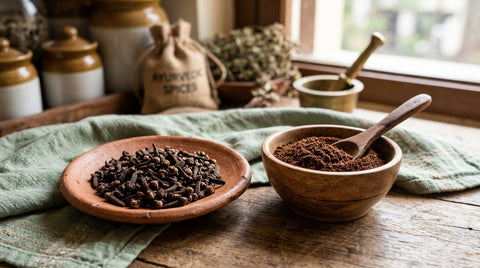
Laung (Clove) Benefits – Uses, How to Take and Side Effects
Laung (Syzygium aromaticum, Clove) is Ayurveda's foremost oral and digestive spice, rich in eugenol. Benefits, how to use, dosage, side effects and difference from other spices. Available ₹180/100g.
Laung (Hindi: लौंग) is the dried flower bud of Syzygium aromaticum — one of the most valued spices in Indian cooking and Ayurvedic medicine. Its key active compound, eugenol, gives clove its distinctive sharp, warm aroma and most of its traditional properties: tooth pain relief, digestive support, antimicrobial action and antioxidant activity. As a culinary spice, it is safe and beneficial. As a medicine in large amounts, it requires caution. Dhanyawad Ayurved offers whole raw Laung at ₹180/100g. It is not a treatment for any diagnosed condition.
- Laung (Clove, Syzygium aromaticum) contains eugenol — a naturally occurring compound responsible for its characteristic pungent aroma and most of its traditional medicinal properties.
- The most well-known traditional use is for tooth pain: placing a clove or a drop of clove oil on an aching tooth provides temporary relief; this does not replace a dental consultation.
- As a culinary spice, 2–4 cloves per day is considered safe for most healthy adults; medicinal doses (clove oil, large amounts of powder) carry a risk of gastric irritation and blood-thinning effects.
- People on blood-thinning medication or those with bleeding disorders should consult a doctor before using clove medicinally — eugenol has anticoagulant properties.
- Laung supports oral and digestive wellness as a traditional spice; it is not a treatment for any diagnosed condition.
What is Laung (Clove)?
Laung is the dried, unopened flower bud of the clove tree (Syzygium aromaticum, formerly Eugenia caryophyllata), a tropical evergreen in the myrtle family (Myrtaceae). The buds are harvested before they open, then sun-dried until they turn dark brown. Each bud has a distinctive nail shape (the word "clove" comes from the Latin clavus, meaning nail).
Native to the Maluku Islands (Spice Islands) of Indonesia, clove is now cultivated in Zanzibar, Madagascar, Sri Lanka and Kerala. For centuries it was one of the most traded and fought-over spices in the world. In Ayurveda, it is classified as lavanga, a katu (pungent), tikta (bitter) and ushna (heating) herb with particular affinity for the oral cavity, respiratory system and digestion.
| Language / Classification | Name |
|---|---|
| Hindi | लौंग / Laung |
| Sanskrit / Ayurveda | Lavanga / Devakusuma / Shriprasa |
| English | Clove |
| Botanical name | Syzygium aromaticum (L.) Merr. & L.M.Perry |
| Tamil | கிராம்பு (Krambu) |
| Telugu | లవంగం (Lavangam) |
| Marathi | लवंग (Lavang) |
| Part used | Dried flower bud; also clove oil from buds |
Read the full Hindi-language guide with traditional uses, Ayurvedic perspective and how to use at home: लौंग के फायदे – Hindi Guide.
What are the benefits of eating cloves?
1. Oral health and tooth pain relief
The most famous traditional use of clove across cultures — from ancient Ayurvedic practice to traditional Chinese medicine and European herbalism — is for tooth pain and oral health. Eugenol, the main compound in clove oil, has well-documented local anaesthetic and antimicrobial properties. Placing a whole clove or a small amount of clove oil on an aching tooth or inflamed gum can temporarily reduce discomfort. This is a traditional first-aid measure — it does not treat the underlying problem. See a dentist for any persistent tooth pain, infection, abscess or sensitivity. Clove oil applied directly in large amounts can damage gum tissue; use sparingly.
2. Digestive support and appetite stimulation
In Ayurveda, clove is classified as a deepana (digestive-fire stimulating) and pachana (digestive) herb. It stimulates the secretion of digestive enzymes, reduces flatulence, relieves bloating and helps with nausea. The traditional Indian practice of chewing 1–2 cloves after a heavy meal, or adding cloves to rice and biryani during cooking, reflects this centuries-old understanding of its digestive properties. The PMC-indexed review on clove confirms significant antimicrobial activity of clove extracts, which is relevant to the digestive environment.
3. Antioxidant activity
Clove is one of the most antioxidant-rich spices measured by ORAC (Oxygen Radical Absorbance Capacity) scores. Eugenol and other phenolic compounds in clove — including gallic acid, kaempferol and rhamnetin — act as free radical scavengers. High antioxidant intake through dietary spices is associated with general health benefits in population studies. Adding cloves to your food regularly is a simple, culinary way to increase antioxidant intake.
4. Antimicrobial properties
Laboratory studies and the PMC-indexed phytochemistry review confirm that clove extracts show significant antimicrobial activity against a wide range of bacteria and fungi, including pathogens relevant to oral health. Eugenol is used in dentistry as a component of zinc oxide eugenol paste for tooth socket management and root canal sealing — confirming its antimicrobial and local anaesthetic properties in clinical use. As a whole spice in food, clove contributes to the antimicrobial environment in the mouth and digestive tract.
5. Blood sugar support (traditional use)
Some traditional Ayurvedic formulations use clove as one of several herbs in blends aimed at supporting normal blood sugar metabolism. Laboratory and animal studies suggest eugenol may influence insulin sensitivity. This remains a traditional-use benefit — clove is not a diabetes treatment and must not replace prescribed anti-diabetic medication. If you have diabetes, consult your doctor before using clove medicinally.
6. Anti-inflammatory effects
Eugenol is a well-studied anti-inflammatory compound. It inhibits prostaglandin synthesis via a COX-inhibitory mechanism, similar in principle to common non-steroidal anti-inflammatory drugs — but at the low doses found in culinary use, the effect is mild. This anti-inflammatory property contributes to clove's traditional reputation for soothing inflamed gums, reducing muscle pain when used in massage oil, and supporting the body's normal inflammatory response.
7. Respiratory support
The warming, expectorant nature of clove makes it a traditional ingredient in kadha (herbal decoction) for colds, coughs and congestion. Its antimicrobial and anti-inflammatory properties may help soothe irritated respiratory mucous membranes. In traditional Indian households, cloves are added to masala chai during winter for this purpose. For persistent or worsening cough, seek medical assessment — do not rely only on home remedies.

How to use Laung (Clove)
| Method | Amount | Use |
|---|---|---|
| Whole in cooking | 2–4 cloves per dish | Biryani, dals, rice, curries |
| Chew after meals | 1–2 whole cloves | Breath freshening, digestive support |
| Clove water | 2–3 cloves in 1 cup boiling water, steep 5 min | Digestive, mild antimicrobial support |
| Kadha (decoction) | 2 cloves + ginger + tulsi, boil 10 min | Cold and cough support |
| Clove oil on tooth | 1 drop diluted in carrier oil | Temporary tooth pain relief — see dentist |
Buy whole Laung (Clove) from Dhanyawad Ayurved: Laung – 100 g ₹180. Stocked at Dhanyawad Ayurved Vatika, Dwarka, Delhi, and shipped across India.
How much clove per day is safe?
As a culinary spice, 2–4 whole cloves per day is considered safe for most healthy adults. Using cloves in everyday cooking falls well within this range. As a medicinal preparation (clove oil, high-dose supplements), larger amounts carry risks:
- Gastric irritation: Excess clove powder or oil can cause stomach lining irritation, heartburn and nausea.
- Blood-thinning effect: Eugenol inhibits platelet aggregation. People on warfarin, aspirin or other anticoagulants should not use clove oil medicinally without medical supervision.
- Liver strain (very high doses): Very large doses of eugenol (far beyond culinary amounts) have been associated with liver toxicity in case reports — this applies to clove oil supplements, not food use.
- Children: Clove oil should never be given to children undiluted. Even diluted clove oil can cause seizures in young children in large amounts. As a culinary spice in normal cooking amounts it is safe.
Who should see a doctor before using clove medicinally
Culinary use of 2–4 cloves daily is safe for most people. If you are considering higher medicinal doses (clove oil, concentrated supplements), consult your doctor if you:
- Take blood-thinning or antiplatelet medication (warfarin, aspirin, clopidogrel)
- Have a diagnosed bleeding disorder
- Have liver disease or are on hepatotoxic medication
- Are pregnant or breastfeeding
- Have known allergies to eugenol or other spices in the Myrtaceae family
See a dentist or doctor immediately for tooth pain, oral infection, abscess, persistent gum swelling, or any cough lasting more than 3 weeks. Do not use clove as a substitute for professional dental or medical treatment.
For more information on Laung in English: What is Laung in English?
Frequently Asked Questions
What happens if we eat a clove daily?
Eating 1–2 whole cloves daily as a digestive spice or breath freshener is a common practice and generally safe for healthy adults. Regular culinary use provides antioxidants, mild digestive support and oral freshness. If you notice stomach upset or heartburn, reduce the amount or stop. Those on blood-thinning medication should check with their doctor before making cloves a daily habit.
Is it okay to drink clove water every day?
Clove water (2–3 cloves steeped in hot water for 5 minutes) consumed daily is safe for most healthy adults as a mild digestive and wellness drink. It provides eugenol and other phenolic antioxidants in small amounts. Avoid boiling cloves for a long time or using large quantities — this concentrates eugenol and may cause gastric irritation. People on anticoagulants should consult a doctor.
How many cloves per day is safe?
As whole cloves in food: 2–4 per day is safe for most adults. As clove oil: only use 1–2 drops diluted in a carrier oil for topical application; consuming undiluted clove oil internally is not recommended without professional guidance. Children should not be given clove oil medicinally. For specific health conditions, consult an Ayurvedic practitioner or doctor for personalised guidance.
Are cloves safe for kidneys?
In normal culinary amounts, cloves are not harmful to healthy kidneys. However, very high doses of eugenol (from clove oil supplements) have been associated with kidney and liver stress in rare case reports. If you have kidney disease or are on dialysis, consult your nephrologist before using any herbal supplement, including clove, medicinally.
Can I take cloves morning or night?
Traditional Ayurvedic practice suggests chewing 1–2 cloves in the morning on an empty stomach or after meals for digestive benefit. Some people take clove water in the morning as a metabolic stimulant. Clove's warming and stimulating nature means large amounts at night may interfere with sleep in sensitive individuals — but 1–2 cloves at night in warm milk or tea is a traditional sleep-and-immunity preparation in some regions.
What is the difference between Laung and Kali Mirch (Black Pepper)?
Laung (Clove, Syzygium aromaticum) and Kali Mirch (Black Pepper, Piper nigrum) are distinct spices with different active compounds, plants and properties. Clove's key compound is eugenol (anaesthetic, antimicrobial); black pepper's is piperine (digestive stimulant, bioavailability enhancer). Both are ushna (warming) in Ayurveda but clove is more effective for oral health while black pepper is stronger for respiratory support. Both are frequently combined in Trikatu and warming spice blends.
Sources
Written by the Dhanyawad Ayurved team and reviewed by Vaidya Ravinder Arora (40+ years), Dhanyawad Ayurved Vatika, Dwarka, New Delhi. This article describes traditional uses for general information. It is not medical advice. Consult a qualified doctor or Ayurvedic practitioner before using any herb therapeutically.