Kaunch Beej Benefits: Uses, How to Take, Dose and Side Effects
Kaunch Beej (Mucuna pruriens) is a traditional Ayurvedic rasayana herb rich in natural L-DOPA. Learn its benefits, how to take it, the right dose, white vs black varieties, and who should avoid it.
Kaunch Beej — also called Cowhage or Velvet Bean (Mucuna pruriens) — is one of Ayurveda's most valued rasayana (rejuvenating) herbs. It is traditionally used to support general energy, nervous system function and overall vitality. Its key active compound, natural L-DOPA, is a direct precursor to the neurotransmitter dopamine. Kaunch Beej is a herbal wellness product — it does not treat or cure any disease.
- Kaunch Beej (Mucuna pruriens) is an Ayurvedic rasayana and adaptogen traditionally used to support general energy, nervous system function and overall vitality — not a treatment for any disease.
- Its primary active compound is natural L-DOPA (levodopa), a precursor to the neurotransmitter dopamine, which makes it unique among Ayurvedic herbs.
- The commonly recommended dose is 3–5 g of powder per day taken with warm milk; white (safed) kaunch is milder and often preferred for general wellness, while black (kala) kaunch is considered more potent.
- Anyone taking Parkinson's medications, MAO inhibitors, diabetes drugs or antipsychotics must consult a doctor before using kaunch beej — L-DOPA content can interact with these medicines.
- See a doctor if you experience nausea, vomiting, rapid heartbeat or skin rash after use.
What is Kaunch Beej?
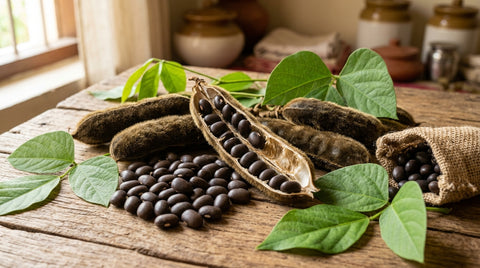
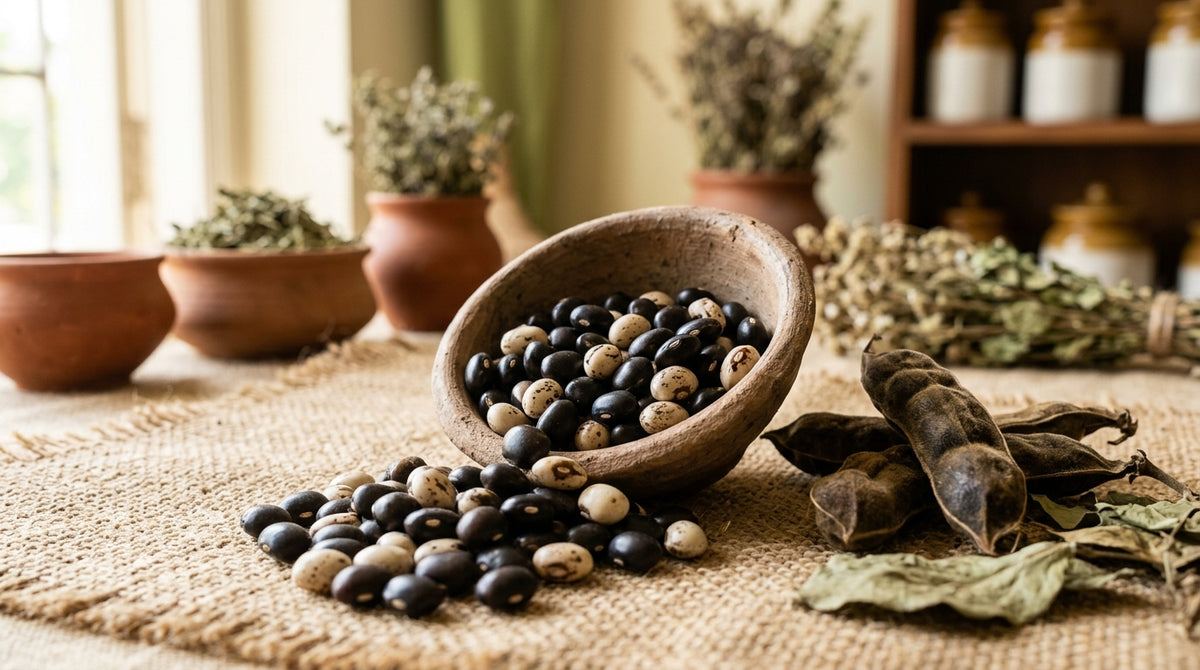
Kaunch Beej is the seed of a tropical climbing legume (Mucuna pruriens) native to India, Africa and South-East Asia. The plant's pods are covered in dense, fine hairs that cause intense itching on contact — hence the English names Cowhage and Cowitch. The seeds themselves, however, are smooth, glossy and range from near-black to mottled grey-white.
In Ayurveda, the herb is known as Kapikacchu (कपिकच्छु) and is listed in both Vajikarana (general vitality support) and Rasayana (rejuvenation) categories in the Charaka Samhita. It has been used in Ayurvedic practice for over 2,000 years. In Unani medicine it is known as Kiwach and is similarly valued as a general tonic.
Modern research interest in Kaunch Beej centres on its natural L-DOPA (3,4-dihydroxy-L-phenylalanine) content — a direct precursor to dopamine that the brain uses for motor control, mood and motivation. The seeds contain approximately 3–6% L-DOPA by dry weight, which is notably higher than many other natural sources.
Kaunch Beej names in different languages
| Language / Region | Name |
|---|---|
| Sanskrit | Kapikacchu, Atmagupta, Kandura |
| Hindi | Kaunch, Kiwanch, Konch |
| English | Velvet Bean, Cowhage, Cowitch |
| Botanical | Mucuna pruriens |
| Tamil | Poonaikkaali (பூனைக்காலி) |
| Telugu | Pilliadugu |
| Bengali | Alkushi (আলকুশি) |
| Marathi | Kuhili, Khaj Kuhili |
What are the benefits of Kaunch Beej?
1. Nervous system and dopamine support
Kaunch Beej's natural L-DOPA content makes it unique among Ayurvedic herbs. L-DOPA is the direct precursor to dopamine — a neurotransmitter involved in mood, focus, motivation and fine motor control. Traditional Ayurvedic texts valued Kapikacchu for its nervine (nervous system-nourishing) properties, and this aligns with its known biochemistry. Kaunch Beej is a traditional nervous system support herb — it should never replace prescribed medicines for neurological conditions. Anyone with a diagnosed neurological condition must consult a doctor before use.
2. General energy and rasayana (adaptogenic) properties
Rasayana herbs in Ayurveda are those traditionally held to support normal nourishment, tissue quality and overall vitality over the long term. Kaunch Beej is one of the most respected rasayana herbs in classical Ayurveda. It is traditionally used to support general stamina and resilience — not as an acute energy drink, but as a long-term nourishing support taken consistently over 30–90 days.
3. Antioxidant properties
Kaunch Beej seeds contain several phenolic compounds, flavonoids and antioxidants alongside L-DOPA. Antioxidants help protect cells from oxidative stress. This makes the herb potentially useful for general wellness maintenance, though Kaunch Beej is primarily valued for its nervine and adaptogenic profile rather than its antioxidant content specifically.
4. Blood sugar support (consult your doctor)
Some preliminary research suggests Mucuna pruriens extracts may influence blood glucose levels. This is likely related to its alkaloid and fibre content. If you are managing diabetes or are on blood-sugar-lowering medication, consult your doctor before taking kaunch beej — the interaction may affect your medication levels and require monitoring. Do not reduce or stop your diabetes medicine without medical advice.
5. Joint and musculoskeletal support
Kaunch Beej is classified as a vata-shamaka herb in Ayurveda — one that helps balance the Vata dosha, which governs movement, joints and the nervous system. Traditional use includes combining Kaunch Beej with Ashwagandha and Shatavari for general musculoskeletal support. This is traditional-use framing; Kaunch Beej is not a treatment for arthritis or joint disease.
White (Safed) vs Black (Kala) Kaunch Beej — which is better?
| Variety | Appearance | Traditional profile | Common use |
|---|---|---|---|
| Safed (White) Kaunch | White or cream seeds | Milder, considered cooler in potency | General wellness, suitable for daily use |
| Kala (Black) Kaunch | Dark / black seeds | More potent, stronger nervine action | Specific traditional formulas under guidance |
For general daily wellness use, Safed (white) Kaunch Beej powder is more commonly recommended by Ayurvedic practitioners. Black Kaunch is considered more potent and is typically used in specific formulations under an Ayurvedic physician's guidance.

How to take Kaunch Beej — dose and method
| Form | Dose (adult) | Timing | Method |
|---|---|---|---|
| Powder (churna) | 3–5 g | Morning and evening, after meals | Warm milk or warm water |
| Decoction (kadha) | 10–15 ml | Once daily, morning | Boil seeds, strain and drink |
| Capsule / tablet | As per label | After meals | With water |
Traditional method: Mix 3–5 g of Kaunch Beej powder in one glass of warm milk. A little jaggery or honey may be added for taste. Taking it after the evening meal before bed is the most common traditional practice. Ayurvedic rasayana courses are typically 30–90 days followed by a 2–4 week break.
Kaunch Beej with Ashwagandha and Safed Musli: This three-herb combination is found in traditional Ayurvedic practice where all three rasayana herbs are combined for general nourishment support. Consult an Ayurvedic physician before starting all three together as the combined effect depends on your individual constitution and health status.
How to identify genuine Kaunch Beej
The Kaunch plant is a climbing vine with distinctive pod-and-seed features that help identify the authentic raw herb:
- Pods: Dark brown, 5–10 cm long, covered in dense golden or russet irritating hairs — handle with care.
- Seeds: Oval, smooth, glossy — black (kala) varieties are near-black or dark brown; white (safed) varieties are cream to light grey with dark markings (hilum).
- Powder: Genuine Kaunch Beej powder is cream to light brown, with a mild legume-like aroma. Very white or heavily perfumed powder may indicate adulteration.
- Buy from verified Ayurvedic suppliers. Dhanyawad Ayurved sources directly for quality.
Where to buy — Dhanyawad Ayurved Kaunch Beej
Dhanyawad Ayurved Kaunch Beej Powder (₹85 / 100 g) is pure Mucuna pruriens seed powder — no additives, colours or synthetic fragrances. Prepared at Dhanyawad Ayurved Vatika, Sector 13, Dwarka, New Delhi. At the standard dose of 3–5 g per day, one 100 g pack provides approximately 20–33 days of use. Despatched across India within 24 hours.
To read this article in Hindi: कौंच बीज के फायदे (हिंदी में).
Side effects and precautions
- Parkinson's medications (levodopa / carbidopa): Kaunch Beej contains natural L-DOPA. Taking it alongside prescribed levodopa may alter the total dose and interact unpredictably. Do not combine without your neurologist's approval.
- MAO inhibitors: Combination with MAO inhibitor antidepressants can cause serious side effects — avoid without medical supervision.
- Diabetes medication: May affect blood sugar levels — monitor closely and inform your doctor.
- Antipsychotic / mental health medications: L-DOPA can interact with dopaminergic pathways — inform your psychiatrist before use.
- Pregnancy and breastfeeding: Use only under medical supervision.
- Children under 12: Not recommended without a paediatrician's advice.
- Excess dose: Nausea, vomiting, headache or rapid heartbeat may occur — keep to the recommended amount.
When to see a doctor
Kaunch Beej is a general wellness supplement, not a medicine. See a doctor promptly if:
- You experience nausea, vomiting or severe stomach pain after use
- You notice rapid or irregular heartbeat
- Skin rash, hives or allergic reaction appears
- You are on any prescription medication — especially for neurological, psychiatric, cardiovascular or metabolic conditions
For any diagnosed neurological, psychiatric or metabolic condition, Kaunch Beej is not a substitute for medical treatment.
Frequently Asked Questions
What are the benefits of velvet bean (Kaunch Beej)?
Kaunch Beej is traditionally used in Ayurveda to support general energy, nervous system function and long-term vitality as a rasayana (rejuvenating) herb. Its natural L-DOPA content makes it unique. It also has antioxidant properties and is traditionally used for general joint and musculoskeletal support. It is not a treatment for any disease.
Which is better — white (safed) or black (kala) Kaunch Beej?
Safed (white) Kaunch is milder and commonly recommended for general daily wellness use. Kala (black) Kaunch is considered more potent in traditional texts and is used in specific Ayurvedic formulations, generally under a practitioner's guidance. For everyday use, start with Safed Kaunch Beej powder.
How do you make Kaunch Beej powder?
Dry the seeds completely in sunlight, then grind in a clean grinder to a fine powder. Sieve to remove coarse particles. Store in an airtight glass jar away from moisture and direct sunlight. Dhanyawad Ayurved's Kaunch Beej Powder is pre-processed and ready to use.
What does Kaunch Beej do for general energy?
As a rasayana herb, Kaunch Beej is traditionally used to support long-term nourishment, tissue quality and overall vitality. Its natural L-DOPA and adaptogenic compounds may support normal energy metabolism and nervous system function. Results are gradual — typical traditional courses run 30–90 days. It is a wellness support, not a stimulant.
How much does 1 kg of Kaunch Beej cost?
Kaunch Beej prices vary by quality and form. At Dhanyawad Ayurved, Kaunch Beej Powder is ₹85 per 100 g, which works out to approximately ₹850 per kilogram. Raw seeds are available separately — contact the store for bulk pricing.
Can Kaunch Beej be taken every day?
At the recommended dose (3–5 g), daily use is accepted in the Ayurvedic tradition for healthy adults. However, if you are on any medication or have a health condition, check with your doctor first. Traditional Ayurvedic practice recommends a 2–4 week break after each 30–90 day course rather than indefinite uninterrupted use.
What does Kaunch Beej do for men?
As a rasayana and vata-shamaka herb, Kaunch Beej is traditionally used by men for general energy, stamina and nervous system support during physically and mentally demanding periods. Its natural L-DOPA content supports normal dopamine metabolism, which is involved in focus, motivation and motor function. Kaunch Beej is a traditional wellness herb — it is not a treatment for any condition. Consult a doctor before use if you take any prescription medication.
Sources
Written by the Dhanyawad Ayurved team and reviewed by Vaidya Ravinder Arora (40+ years), Dhanyawad Ayurved Vatika, Dwarka, New Delhi. This article describes traditional uses for general information. It is not medical advice. Consult a qualified doctor or Ayurvedic practitioner before using any herb therapeutically.