
Ayurvedic herbs for digestion: ajwain, hing, trikatu and how they're used
Ayurveda has relied on herbs like ajwain, hing, trikatu, haritaki and saunf for centuries to support healthy digestion and a balanced Agni. This guide explains what each herb does, practical ways to use them at home, and how a modern Ayurvedic formulation like Pachan Shakti Capsule brings them together. Read on for clear, evidence-informed answers to the most common questions about Ayurvedic digestive support.
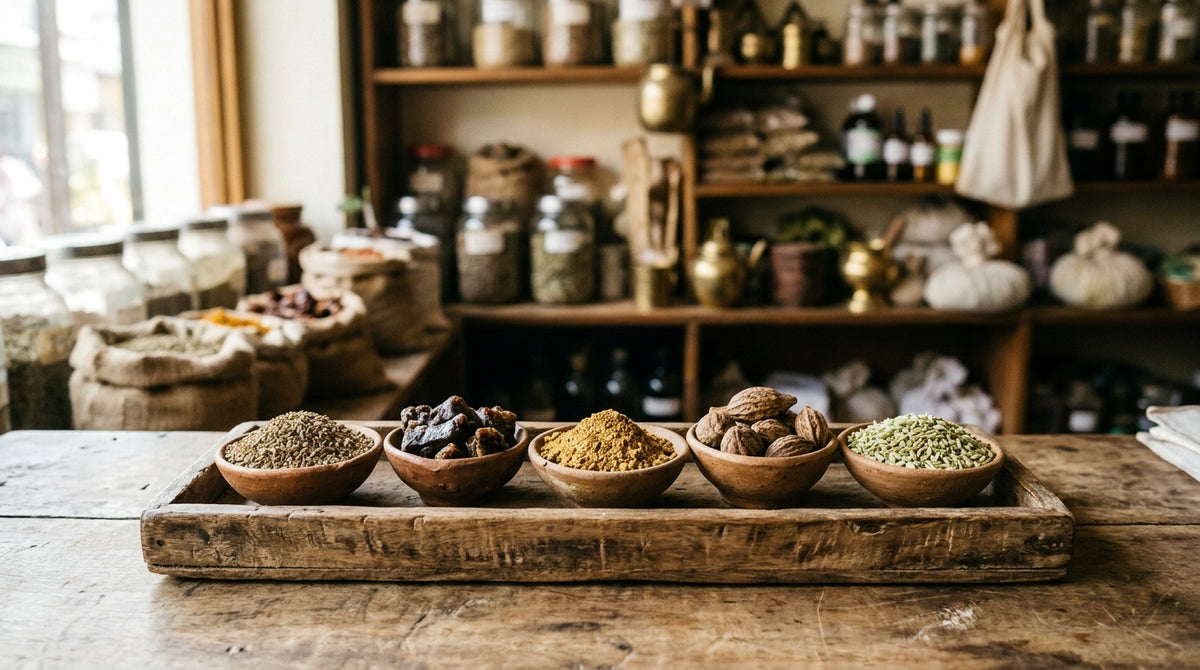
In Ayurveda, healthy digestion depends on a strong Agni (digestive fire). The herbs most traditionally used to support it are ajwain (carom seeds), hing (asafoetida), trikatu (a blend of ginger, black pepper and long pepper), haritaki and saunf (fennel). Used correctly, these herbs may help ease gas, bloating, sluggish digestion and occasional constipation.
- Ayurveda understands digestive health through the concept of Agni, the digestive fire that governs how well food is processed and absorbed.
- Ajwain, hing, trikatu, haritaki and saunf are among the most traditionally used Ayurvedic herbs for gas, bloating, slow digestion and constipation.
- Most of these herbs can be used at home as teas, powders or post-meal spices, but dosage and timing matter for best results.
- Dhanyawad Ayurved Pachan Shakti Capsule combines classical Ayurvedic herbs in a convenient 60-tablet pack priced at ₹360.
- Blood in the stool, unexplained weight loss, severe abdominal pain or persistent fever are red flags that require prompt medical attention.
How Ayurveda Understands Digestion
Ayurveda does not treat digestion as a purely mechanical process. At the centre of its digestive philosophy is Agni — the metabolic fire that governs how food is broken down, nutrients are absorbed and waste is eliminated. When Agni burns steadily, digestion is smooth, energy is stable and the mind feels clear. When it is weakened — by irregular meals, cold or heavy food, stress, or incompatible food combinations — the result is partially digested matter that Ayurveda calls ama, a sticky residue considered the root of many chronic complaints.
Modern medicine recognises several common digestive disorders that Ayurvedic herbs are traditionally used to support alongside standard care. These include:
- Functional dyspepsia — upper abdominal discomfort, bloating and early fullness without an identifiable structural cause.
- Irritable bowel syndrome (IBS) — alternating constipation, diarrhoea and cramping linked to gut-brain dysfunction.
- Gastro-oesophageal reflux (GERD) — acid travelling back into the oesophagus, causing heartburn.
- Constipation — infrequent or difficult passage of stool.
- Diarrhoea and loose motions — frequent, watery or unformed stools, often triggered by infections or dietary imbalance.
- Flatulence and gas — excess intestinal gas causing discomfort or bloating.
- Gastritis — inflammation of the stomach lining, often linked to H. pylori, NSAIDs or stress.
Ayurvedic herbs do not replace medical diagnosis or treatment for these conditions, but many are traditionally used to provide day-to-day digestive support.
Key Ayurvedic Herbs for Digestion
The table below lists the five herbs covered in this guide with their common names and key details.
| Hindi Name | English Name | Sanskrit Name | Botanical Name | Part Used | Primary Digestive Use |
|---|---|---|---|---|---|
| Ajwain | Carom Seeds / Bishop's Weed | Yavani | T. ammi (Apiaceae) | Seeds | Gas, bloating, indigestion |
| Hing | Asafoetida | Hingu | Ferula assa-foetida | Resin (gum) | Gas, IBS-type spasms, flatulence |
| Trikatu | Three-Pepper Blend | Trikatu | Zingiber officinale, Piper nigrum, Piper longum | Rhizome / Fruit | Slow digestion, metabolic support, ama reduction |
| Haritaki | Chebulic Myrobalan | Haritaki / Abhaya | Terminalia chebula | Fruit (dried) | Constipation, bowel regulation |
| Saunf | Fennel | Shatapushpa / Misreya | Foeniculum vulgare | Seeds | Post-meal digestion, acidity, bloating |
Ajwain (Carom Seeds — Apiaceae family)
Ajwain, or carom seeds, are among the most widely used digestive herbs in Indian households. The active compound thymol gives ajwain its sharp, thyme-like aroma. Traditionally, ajwain is used to relieve gas, bloating and abdominal discomfort that follows a heavy or oily meal. A simple home preparation involves roasting a teaspoon of ajwain seeds, adding a pinch of black salt and chewing them after meals. Ajwain water — seeds steeped in warm water — is another commonly used form. Classical Ayurvedic texts describe ajwain as a deepana herb, meaning it kindles digestive fire without aggravating Pitta significantly at moderate doses.
Hing / Asafoetida (Ferula assa-foetida)
Hing is the dried resin of a large perennial herb native to Afghanistan and Iran. Its pungent, sulphurous smell transforms on cooking into a rich, onion-garlic flavour that makes it a staple in Indian cooking — particularly in lentil and bean dishes that are prone to causing gas. In Ayurvedic tradition, hing is classified as a vata-pacifying herb, which means it is especially valued for digestive complaints associated with erratic bowel movements, cramping and excess gas. It is traditionally used to ease intestinal spasms and may help reduce the discomfort linked with IBS-type symptoms. A small amount — typically a pinch — is enough; larger quantities can irritate the gut.
Trikatu (Ginger + Black Pepper + Long Pepper)
Trikatu, meaning "three pungents", is a classical Ayurvedic formulation combining dried ginger (Zingiber officinale), black pepper (Piper nigrum) and long pepper (Piper longum) in equal proportions. Each ingredient independently supports digestion, but together they are considered synergistic. Trikatu is traditionally used in cases of slow or sluggish digestion — what Ayurveda calls mandagni — where food sits heavily in the stomach and metabolism feels slow. It may also help the body absorb fat-soluble nutrients. Trikatu is best taken in small amounts (250–500 mg) with warm water before meals.
Haritaki (Terminalia chebula)
Haritaki holds a revered place in Ayurveda, sometimes called the "king of herbs" in classical texts. It is one of the three fruits that make up Triphala, the most commonly used Ayurvedic bowel formula. On its own, haritaki is traditionally used as a gentle laxative that supports regular bowel movements without the harsh purging associated with stimulant laxatives. It is considered a rasayana — a rejuvenating herb — and is thought to support overall gut tone over time. Haritaki is most commonly used as a powder mixed with warm water taken before bed for those dealing with occasional constipation. For loose motions, classical texts typically recommend it in smaller doses combined with other astringent herbs.
Saunf / Fennel (Foeniculum vulgare)
Saunf — fennel seeds — are the mildest of the five herbs listed here and are widely given even to infants and the elderly for digestive discomfort. The volatile oils in fennel, particularly anethole, are thought to relax smooth muscle in the intestinal wall, which may help ease cramping and reduce bloating. Fennel seeds chewed after meals are a classic post-dinner ritual across India, serving both as a mouth freshener and a digestive aid. Fennel tea — a teaspoon of seeds steeped in hot water for five minutes — supports gentle, daily digestive comfort. Saunf is particularly traditionally used for acidity and that uncomfortable heavy feeling after a large meal.
How to Use These Herbs — Practical Guide
| Herb | Common Form | Typical Amount | Timing | Caution |
|---|---|---|---|---|
| Ajwain | Seeds, ajwain water, powder | ½–1 tsp seeds | After meals | Avoid in excess during pregnancy; may aggravate Pitta in large amounts |
| Hing | Resin (cooked in food), capsule | A pinch (cooked) | During cooking | Avoid in pregnancy and with blood-thinning medication; not for raw use |
| Trikatu | Powder, tablet, capsule | 250–500 mg | Before meals with warm water | Avoid in hyperacidity, gastritis or ulcers; not suitable for children |
| Haritaki | Powder, tablet | 1–3 g powder | Before bed with warm water | Avoid during pregnancy; reduce dose if loose stools occur |
| Saunf | Seeds (chewed), tea | 1 tsp seeds or 1 cup tea | After meals | Generally safe; very large amounts may affect hormone-sensitive conditions |
What Is the Best Home Remedy for Digestion?
There is no single best home remedy because the right approach depends on the specific complaint. That said, several combinations are time-tested across Ayurvedic households:
- For gas and bloating after meals: Chew half a teaspoon of ajwain with a pinch of rock salt, or sip warm ajwain water. Alternatively, saunf tea works gently for most constitutions.
- For sluggish digestion or heaviness: A small amount of trikatu powder in warm water before meals may help stimulate digestive fire.
- For occasional constipation: Haritaki powder (1–2 g) stirred into warm water before bed is one of the most traditionally used preparations in Ayurveda.
- For acidity and heartburn: Saunf tea or plain fennel seeds chewed after meals are commonly used. Avoid trikatu during acidity flares.
You can also read about additional home approaches in our post on pet me gas ka ilaj and acidity home remedies.

How to Reset Your Gut in Ayurveda
Ayurveda does not frame gut health as something to be "reset" overnight, but it does offer a structured approach to rebuilding Agni over days and weeks. The core steps are:
- Start the day with warm water. Drinking one to two glasses of warm or hot water first thing in the morning is a foundational Ayurvedic practice. It gently stimulates peristalsis and helps clear residue from the previous night's digestion.
- Eat at regular times. Ayurveda emphasises that Agni builds its strongest fire around midday. Making lunch the largest meal of the day and keeping dinner light and early supports the gut's natural rhythm.
- Avoid cold food and drinks during meals. Ice water or chilled drinks are thought to dampen digestive fire. Prefer room temperature or warm liquids alongside meals.
- Use deepana and pachana herbs. Deepana herbs (such as ajwain, hing and trikatu) stimulate Agni; pachana herbs (such as trikatu at higher doses and certain bitters) help digest accumulated ama.
- Rest after meals — but do not sleep. A short walk of five to fifteen minutes after dinner is recommended; lying down immediately after meals is discouraged.
- Support regular elimination. Haritaki or Triphala before bed can help establish consistent, comfortable bowel movements — which Ayurveda considers essential to overall gut health.
What Ayurvedic Medicine Can I Take for Loose Motions?
Loose motions or diarrhoea in Ayurveda are typically associated with excess Pitta or a Vata disturbance in the colon. The approach differs from constipation: herbs used here are more astringent and cooling rather than stimulating. Traditionally used options include:
- Haritaki in small doses — in larger doses haritaki is laxative, but in smaller amounts with honey it is traditionally used as an astringent to firm loose stools.
- Bilwa (Bael fruit) — the unripe bael fruit is one of the most widely used Ayurvedic preparations for loose motions and is considered particularly effective for chronic diarrhoea.
- Kutaja (Holarrhena antidysenterica) — bark and seeds are traditionally used for infective and amoebic diarrhoea in classical texts.
- Warm water with a pinch of hing — may help ease the intestinal cramping that accompanies loose motions.
For persistent or severe loose motions, especially with fever, blood or mucus in the stool, please see a qualified doctor immediately rather than relying on home remedies.
Dhanyawad Ayurved Pachan Shakti Capsule — What's Inside?
If preparing individual herb teas and powders every day feels impractical, a formulated Ayurvedic supplement may offer a more consistent approach. Dhanyawad Ayurved Pachan Shakti Capsule is a classical-inspired blend that brings together key Ayurvedic digestive herbs — including trikatu components and traditional deepana herbs — in a single convenient capsule.
Price: ₹360 for 60 tablets (a 30-day supply at the standard dose of two tablets daily).
The formulation is designed to:
- Support digestive fire (Agni) in those with sluggish or irregular digestion
- May help reduce post-meal gas and bloating
- Support regular bowel movements
- Be used consistently as a daily digestive supplement rather than an occasional remedy
As with all herbal supplements, Pachan Shakti Capsule is a support product. It is not a substitute for medical diagnosis or prescribed treatment. Always check with your Ayurvedic practitioner or doctor if you are on medication or managing a diagnosed digestive condition.
You may also find our guide to Dhanyawad Ayurved Gandharva Haritaki Tablets useful if constipation is your primary concern.
When to See a Doctor
Ayurvedic herbs and home remedies can support everyday digestive comfort, but they are not appropriate as the sole response to serious symptoms. Please consult a qualified medical doctor promptly if you notice any of the following red flags:
- Blood in the stool — whether bright red or dark and tarry — which may indicate bleeding in the digestive tract.
- Unexplained weight loss without changes in diet or activity.
- Severe or persistent abdominal pain that does not resolve with rest or simple remedies.
- Fever accompanying digestive symptoms, which may suggest an infection requiring medical treatment.
- Vomiting that is persistent, forceful or contains blood.
- Difficulty swallowing or a persistent feeling that food is stuck.
- Jaundice — yellowing of the skin or whites of the eyes.
These symptoms go beyond the scope of herbal support and require professional medical evaluation. Self-treating serious conditions with herbs alone may delay necessary care.
Frequently Asked Questions
What is the best Ayurvedic medicine for digestion and gas?
There is no single "best" preparation — it depends on your specific complaint and constitution. For gas and bloating, ajwain and hing are among the most traditionally used herbs. For slow digestion, trikatu is commonly recommended. A formulated product like Pachan Shakti Capsule combines multiple herbs and may be a practical choice for day-to-day digestive support.
Is Ayurvedic treatment safe for long-term use?
Many Ayurvedic digestive herbs — such as saunf, haritaki and ajwain — have a long history of culinary and medicinal use and are generally considered safe in typical dietary amounts. However, concentrated supplements or preparations containing multiple herbs should ideally be used under the guidance of a qualified Ayurvedic practitioner, particularly if you are pregnant, breastfeeding, managing a chronic condition or taking prescription medication.
What is an Ayurvedic tonic for digestion?
Classical Ayurveda offers several tonics for digestion. Triphala (a blend of haritaki, amalaki and bibhitaki) is perhaps the most widely used. Hingwashtak churna — a powder containing hing, ajwain and other digestive herbs — is another traditional option. Modern formulations like Pachan Shakti Capsule draw on these classical combinations and offer a convenient packaged format.
How long does it take to see results with Ayurvedic digestive herbs?
Immediate-relief herbs like ajwain and hing may ease gas and bloating within thirty to sixty minutes of use. Tonic herbs such as haritaki and Triphala typically need to be used consistently for two to four weeks before a noticeable difference in bowel regularity or overall digestive comfort becomes apparent. Ayurveda generally favours gradual, sustained improvement over quick fixes, and results vary between individuals based on diet, lifestyle and constitution.
What is the best natural remedy for loose stools?
For mild, short-term loose stools, staying well hydrated is the first priority. In Ayurvedic tradition, small doses of haritaki with honey, bael fruit preparation or a light rice gruel (peya) are traditionally used to help firm stools and ease gut irritation. Hing in warm water may also help with accompanying cramping. If loose stools persist beyond two days, are severe or are accompanied by fever or blood, seek medical attention promptly.
Can children use Ayurvedic digestive herbs?
Mild herbs like saunf (fennel) are traditionally used even for infants in small quantities, often as a dilute tea. However, stronger herbs such as trikatu, hing in concentrated form or haritaki at adult doses are generally not recommended for young children without the guidance of a paediatric Ayurvedic practitioner or doctor. Always start with the smallest possible amount, observe the child's response, and consult a healthcare professional if you are uncertain.
Sources
Written by the Dhanyawad Ayurved team and reviewed by Vaidya Ravinder Arora (40+ years), Dhanyawad Ayurved Vatika, Dwarka, New Delhi. This article describes traditional uses for general information. It is not medical advice. Consult a qualified doctor or Ayurvedic practitioner before using any herb therapeutically.

